Trump scales back tariffs, except on China

Add Axios as your preferred source to
see more of our stories on Google.
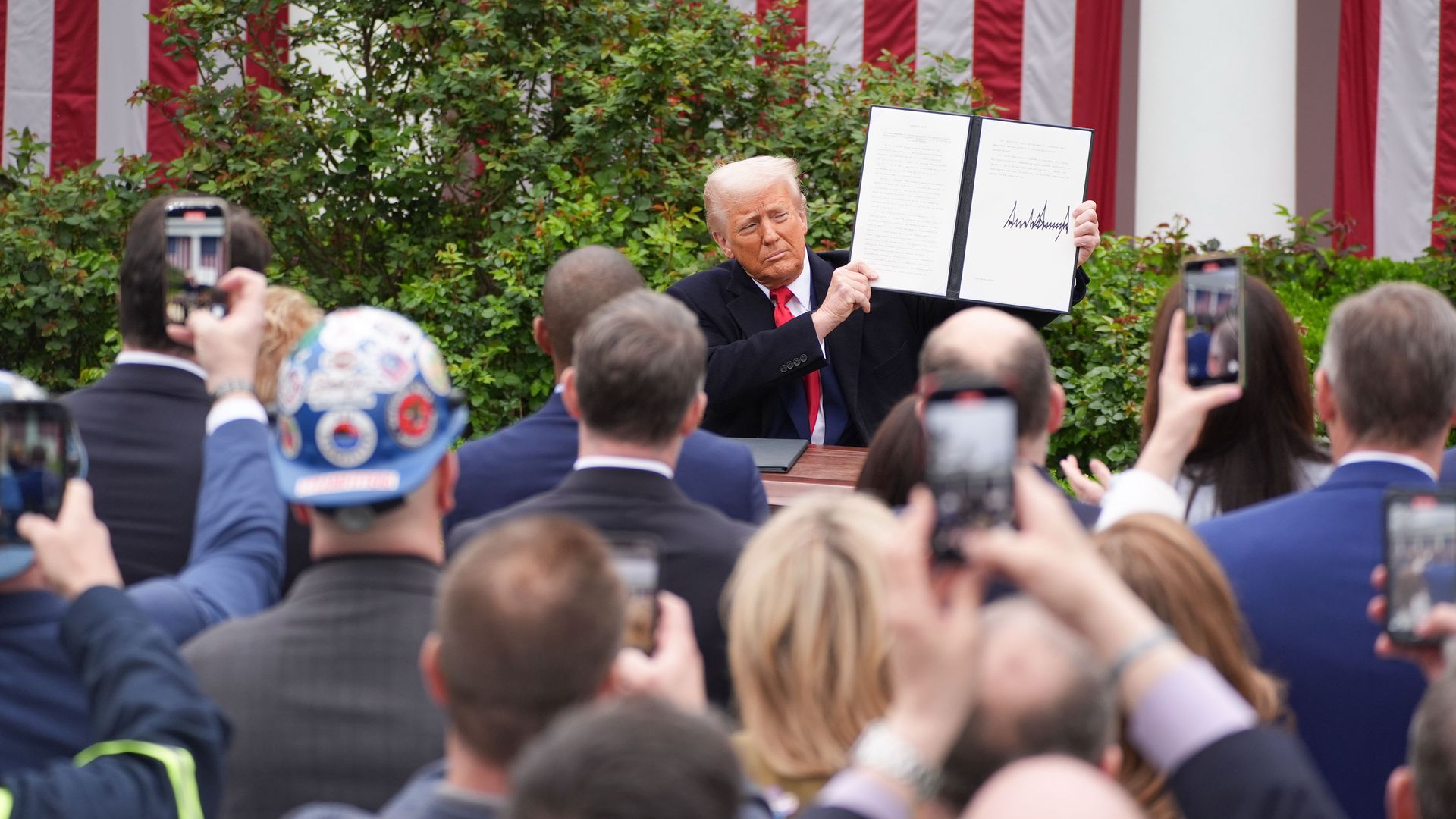
President Trump holding a recently signed tariff order in the Rose Garden. Photo: Demetrius Freeman/The Washington Post via Getty Images
President Trump paused the sweeping reciprocal tariffs the U.S. imposed this week, saying dozens of countries had reached out to negotiate new trade deals.
Why it matters: It's the relief global markets, U.S. allies and many Trump advisers wanted, as fears of a global crisis mounted. But Trump didn't back off fully, keeping 10% baseline tariffs in place while increasing tariffs on China to 125%.
- U.S. stocks promptly kicked off a ferocious rally, with the S&P 500 rising 7% in a matter of minutes. Gold, oil and cryptocurrencies surged as well, as investors quickly re-embraced risk.
The big picture: Since the day Trump took office, the global economy has been whipsawed by uncertainty over his trade plan — on and then off and then on, paused and then modified and then raised and then lowered.
- Meanwhile consumer and business confidence has plunged, the economy has slowed, and all sense of stability and permanency has evaporated.
Catch up quick: Trump announced the tariffs April 2 — a 10% base global tariff as of April 5, and sharply higher reciprocal tariffs on around 60 nations as of April 9.
- Economists had warned the tariffs could cause a severe global recession, and major investors warned of even worse, up to a possible "economic nuclear winter."
- Wednesday's 90-day pause, in effect, takes the tariff regime down to what many investors thought Trump would do in the first place.
Yes, but: While Trump lifted most of the global duties, he raised tariffs on China to 125%, blasting the country for retaliating to his initial levies.
- His global trade war has shifted, for the time being, to a U.S.-China trade war, though Treasury Secretary Scott Bessent declined to call it that when asked outside the White House.
- "The world is ready to work with President Trump to fix global trade, and China has chosen the opposite direction," Commerce Secretary Howard Lutnick said on X.
What they're saying: "It's about bad actors, and what we will see is, some of the very early countries are China's neighbors," Bessent said.
- "China is the most imbalanced economy in the history of the modern world, and they are the biggest source of the U.S. trade problem — and indeed, they are a problem for the rest of the world. "
Editor's note: This story was updated with additional reaction and developments.
