Menopause makes it on the policy map

Add Axios as your preferred source to
see more of our stories on Google.
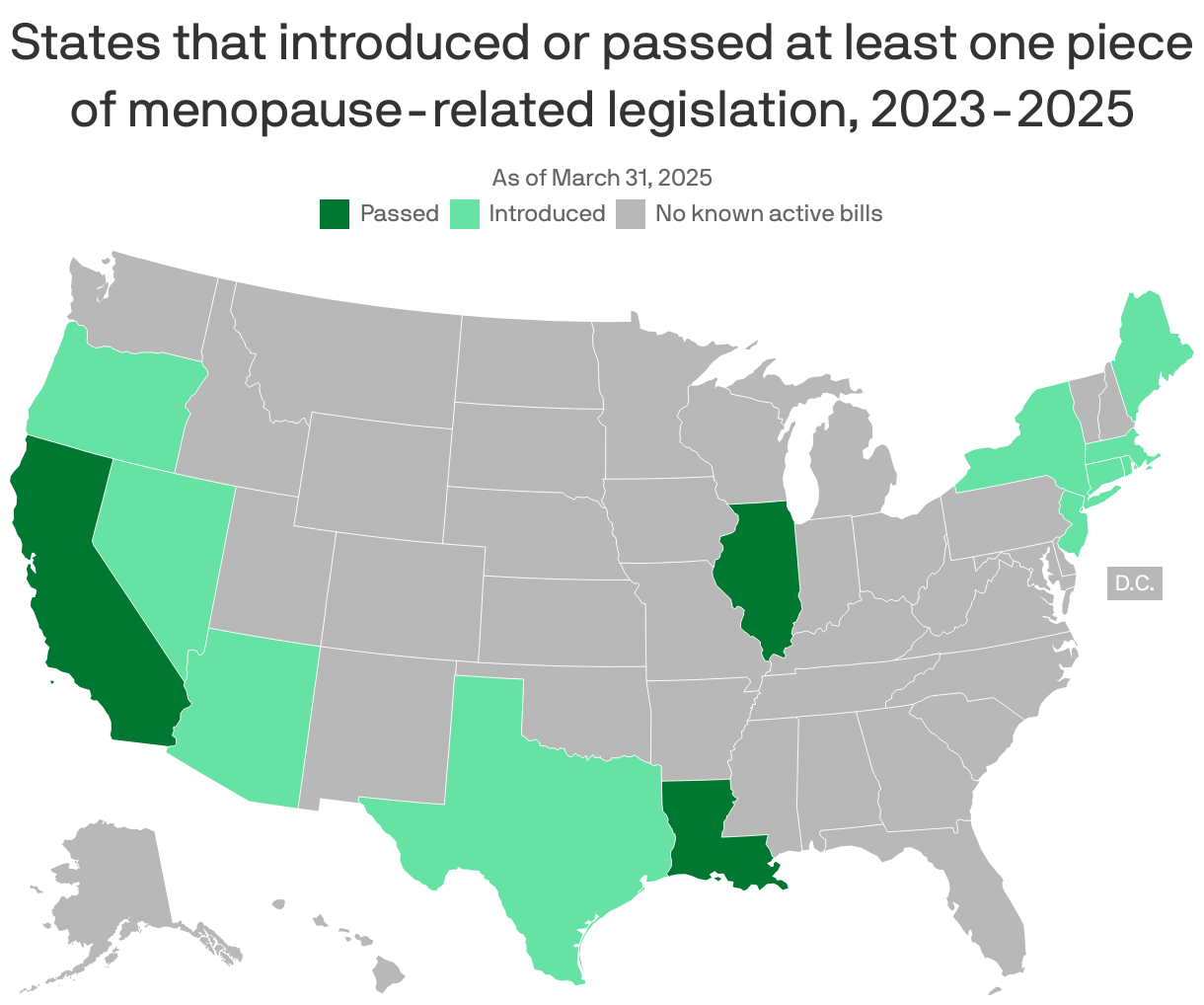
More than 20 bills focused on menopause care have been introduced across at least 13 states so far this year.
Why it matters: Menopause education isn't just having a moment. Changes that could permanently reshape insurance coverage and health care resources are being set in motion.
- Proposed legislation aims to improve affordability of menopause treatments, bolster workplace support and increase medical training.
Catch up quick: Menopausal symptoms can be so severe and varied that some women, including Oprah, feel like they're dying. Because most doctors receive little menopause education (even if they're OB-GYNs), symptoms are often dismissed or misdiagnosed.
- Even if patients connect with a menopause-certified provider, care and treatments might not be covered by insurance.
Halle Berry is among several celebrities trying to change the narrative.
- The actress recently appeared virtually before the Maine legislature to support a bill advancing perimenopause and menopause education, and attended a Michigan roundtable with Gov. Gretchen Whitmer.
State of play: One in four states has proposed menopause laws, note Jennifer Weiss-Wolf, a gender and politics advocate and executive director of the Birnbaum Women's Leadership Center at NYU Law, and Mary Claire Haver, a menopause-certified OB-GYN and bestselling author.
- Michigan, Illinois, West Virginia and Pennsylvania are states to watch, Weiss-Wolf says.
Between the lines: "The trajectory mirrors that of menstrual legislation where states also have led the way championing reforms [like eliminating the 'tampon tax' and mandating the provision of free period products]," Weiss-Wolf tells Axios. "Menstruation and menopause are issues that can transcend politics and polarization."
The bottom line: Menopause is being recognized as a policy and health care priority — with states joining the charge.
