Hundreds of student visas revoked in weeks since Mahmoud Khalil's arrest

Add Axios as your preferred source to
see more of our stories on Google.
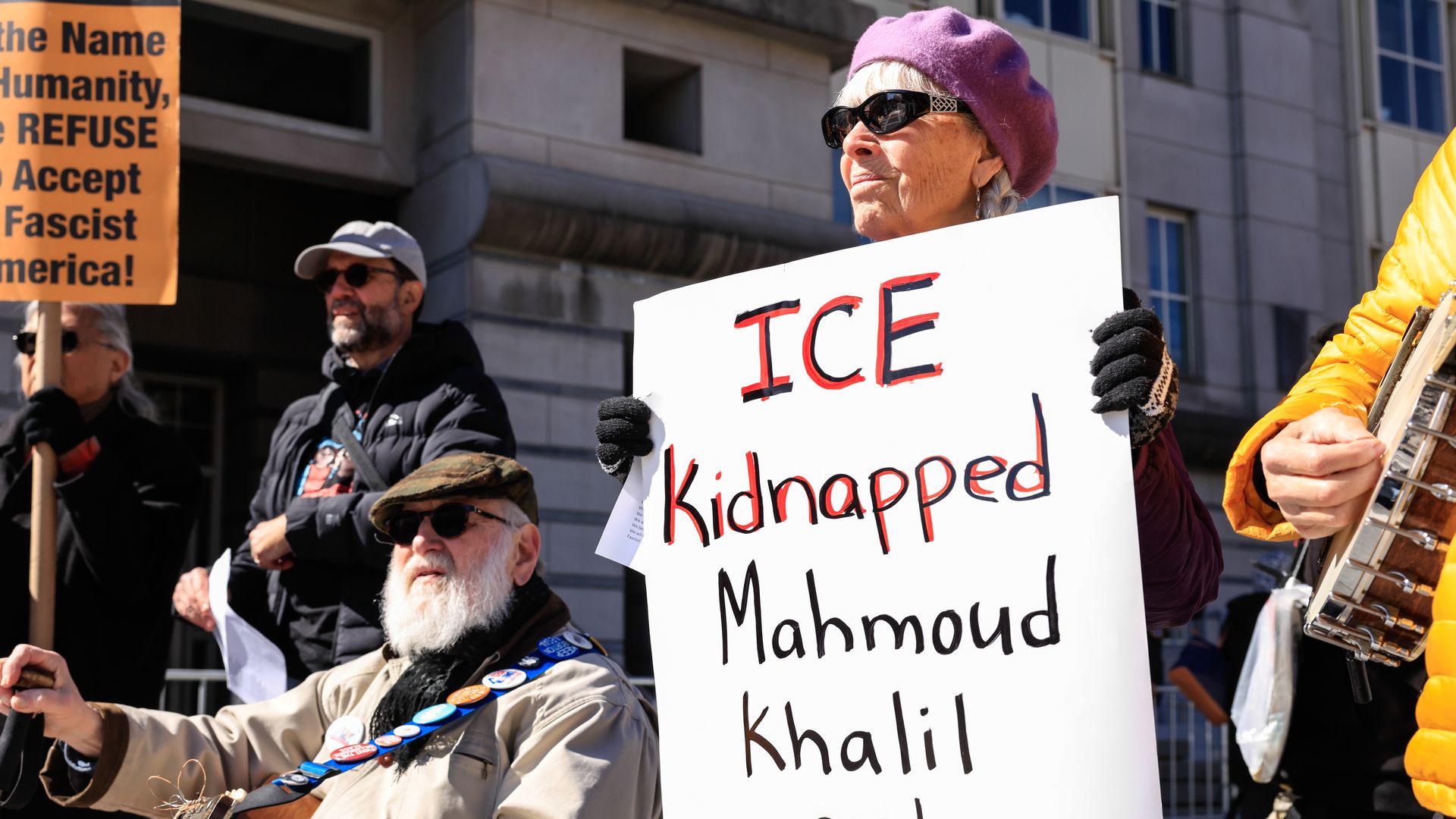
People take part in a protest against the arrest and detention of Mahmoud Khalil outside the Newark courthouse on March 27 in New Jersey. Photo: Kena Betancur/VIEWpress/Corbis via Getty Images
Nearly 400 students and recent graduates have seen their visas revoked by immigration officials in the weeks surrounding the arrest of Columbia alumnus Mahmoud Khalil, igniting concerns about First Amendment and immigration rights.
The big picture: The Trump administration has claimed that some of those impacted lost their status because they were affiliated with pro-Palestinian protests. For some, revocation was attributed to a crime or traffic offense and for others the reason is unknown.
- Khalil's March 8 arrest was the first high-profile incident following the announcement of Secretary of State Marco Rubio's "Catch and Revoke" effort, though it's unknown when the State Department and the departments of Homeland Security and Justice started implementing the policy.
- The State Department did not answer Axios' question about when the wave of revocations began.
- Khalil is a legal permanent resident. At the time of his arrest, Immigration and Customs Enforcement (ICE) informed him that his student visa was revoked, and upon learning he was a legal resident, they revoked his green card instead, his attorney said.
While the reasons for revoked visas and arrests vary, U.S. officials have accused some students and recent college graduates of supporting Hamas — which the U.S. has designated a terrorist group — but Khalil and others have yet to be charged with any crime.
- Legal permanent residents, or green card holders, like Khalil are not considered international students and do not have student visas, and typically only face deportment when charged with a crime.
- Since the program's launch, the administration's focus on campus speech and policy has only ballooned, placing schools' federal funds and contracts at risk of termination and university administration and students in the center of high-stakes political crosshairs.
- Late last month, Rubio estimated over 300 student visas had been revoked.
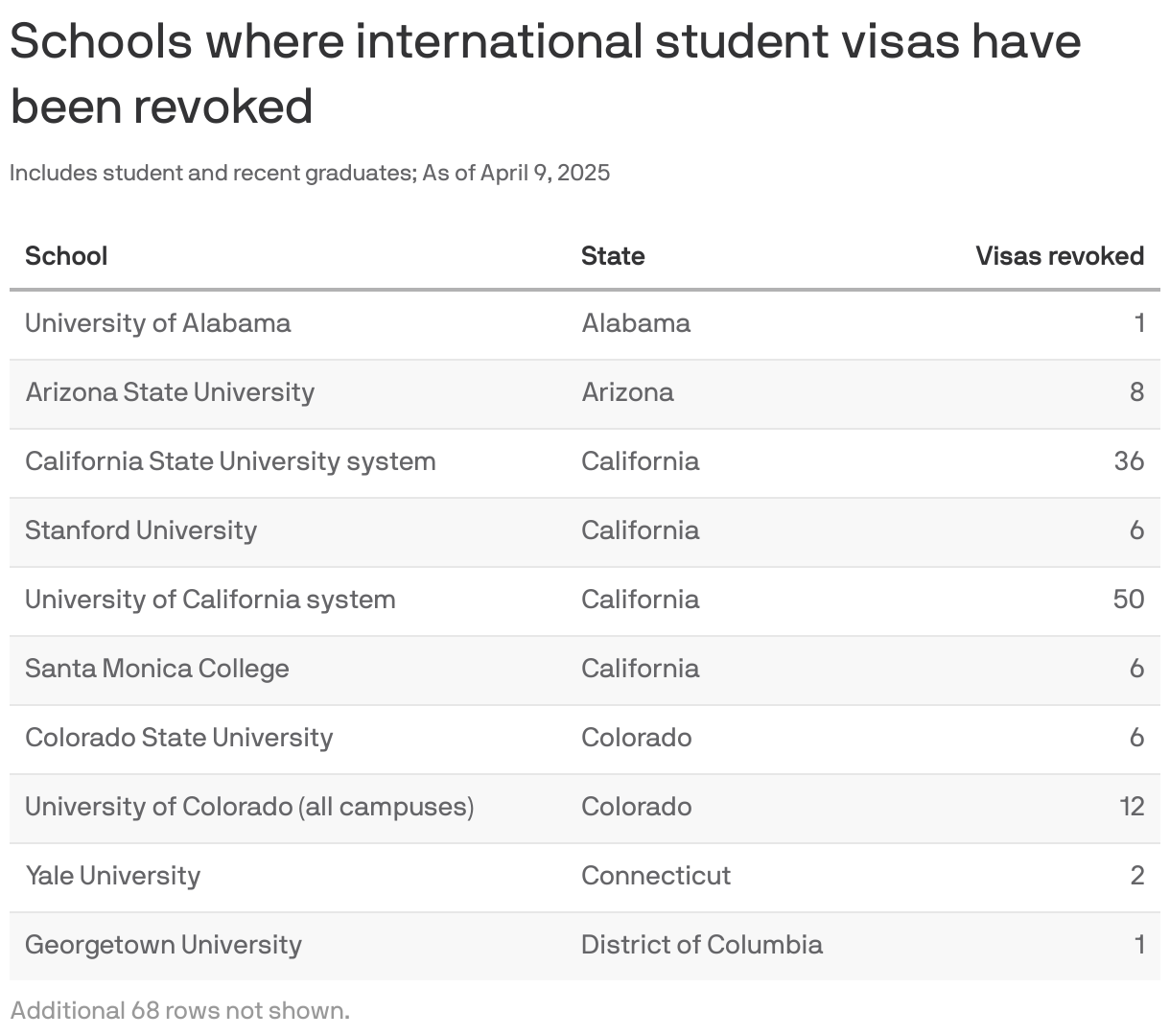
Zoom out: An Axios review of available data from universities and Insider Higher Ed showed nearly 400 students, recent graduates and individuals affiliated with universities on over 80 campuses nationwide have had their legal status changed by U.S. officials.
- That's left students who lost their legal status to remain in the U.S. in an anxious limbo as the threat of detainment and deportation looms.
Reality check: But the number of students affected could be far greater, with the burden falling to universities to track changes and inform those impacted.
Case in point: A student at Emerson College and a doctoral candidate at Dartmouth College who never partook in protests or had any criminal record both recently had their visas stripped, Axios' Steph Solis reported.
- In many such cases, universities have not been alerted by the administration but rather have uncovered students' altered statuses by auditing the online Student and Exchange Visitor Information System (SEVIS) database, which tracks students and scholars on F, M and J visas.
- If a student's SEVIS record is terminated, that means they have lost legal status in the U.S.
- UMass Boston, for example, notified students and faculty in an email that two current students and five other members of the university community had their visas revoked and non-immigrant statuses terminated without notice from federal authorities.
- University officials "only became aware because of the Office of Global Programs' proactive vigilance and monitoring" of SEVIS, the message read.
What they're saying: Asked about the situation on campuses across the country and the criteria used to revoke visas, State Department spokesperson Tammy Bruce told reporters Tuesday that "the department revokes visas every day in order to secure our borders and to keep our community safe."
- The criteria, she said "is applied appropriately," adding that the department is "not inclined to answer those specifics."
Go deeper: Former Costa Rican president, a Trump critic, says U.S. revoked his visa
Editor's note: This story and headline have been corrected to reflect that Mahmoud Khalil is a legal permanent resident (not in the U.S. on a student visa).
