Oil prices ride a highway to the danger zone

Add Axios as your preferred source to
see more of our stories on Google.
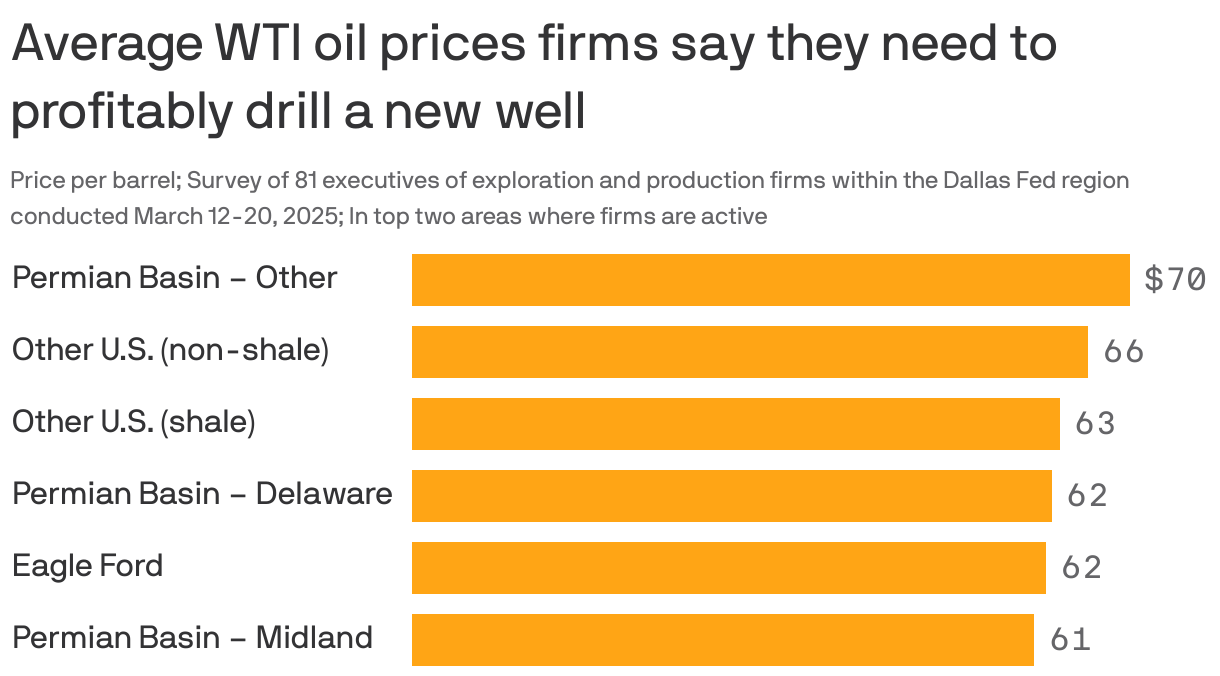
This chart helps explain why a prolonged trade war could slow or even halt U.S. oil production growth despite President Trump's goal of juicing output.
Why it matters: U.S. prices have fallen to levels where producers can no longer profitably drill new wells in major regions, per the latest Dallas Fed corporate survey.
- It includes the Midland and Delaware basins, the most prolific parts of the mammoth Permian basin.
State of play: The potential demand hit from new tariffs combined with new OPEC+ barrels have pushed prices to four-year lows.
- The U.S. benchmark WTI is down to $60.87 Monday morning and spent some time in the $59 range.
Yes, but: Lots of things influence production decisions, like estimates of how long a price slump will last, hedging strategies and more.
Flashback: Even before Trump's April 2 tariff announcement, DOE's independent stats arm was projecting just modest U.S. output growth in 2025 and 2026 (albeit from record levels).
Catch up quick: Oil companies' share prices have taken a hit since the tariff and OPEC+ announcements.
- For instance the SPDR S&P Oil & Gas Exploration and Production ETF, a fund of U.S. producers, is down 18% over the last week.
- Producers like Occidental Petroleum, ConocoPhillips, EOG Resources, Chevron and others are down double-digit percentages since Trump's announcement.
What we're watching: Demand projections following the tariff rollout and retaliation from other countries.
- Goldman Sachs just further cut its 2025 growth estimate to just 300,000 barrels per day, per Reuters and others.
- "The scale of the sell-off suggests the market is pricing in a significant demand hit as recession fears grow," ING said in a note.
