HHS cuts felt locally as regional offices close

Add Axios as your preferred source to
see more of our stories on Google.
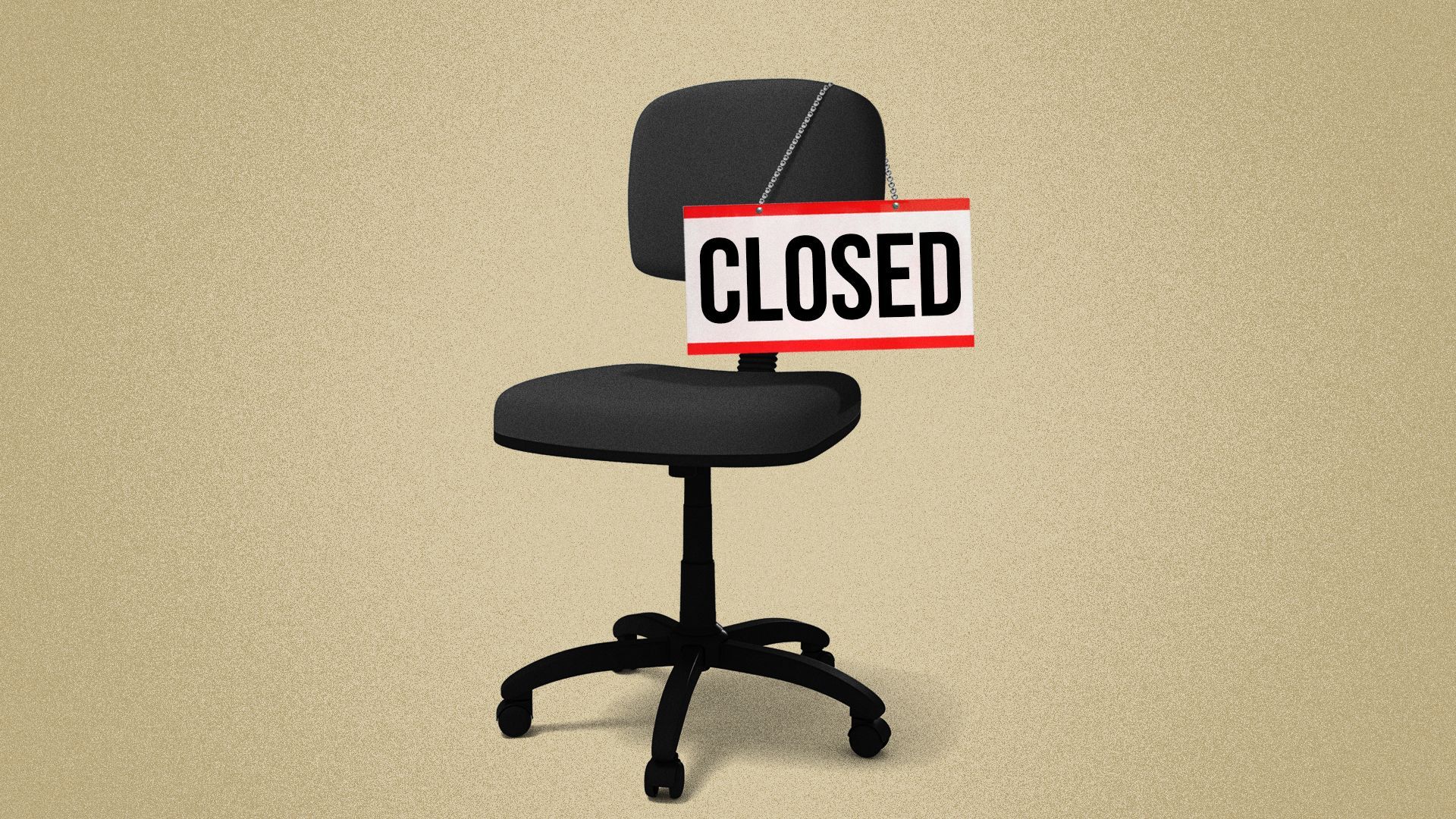
Illustration: Maura Losch/Axios
The reality of deep cuts to Health and Human Services hit home for many last week when half of the department's 10 regional offices closed, leaving 22 states and five territories without a local point of contact for heating assistance, child care programs, Meals on Wheels and more.
Why it matters: In the alphabet soup of federal health agencies, the department's regional offices not only act as a conduit for federal grants and aid, but also forge relationships between health departments, academic institutions and community-based organizations.
- "Given that rebuilding trust in public health and science starts locally, this could hamper communications and valuable partnership development," said Anand Parekh, chief medical adviser at the Bipartisan Policy Center, who previously worked at HHS for a decade.
Catch up quick: HHS last Tuesday moved to shutter regional offices in New York, Boston, Chicago, Seattle and San Francisco as part of its stated efforts to streamline and centralize operations.
- One Administration for Children and Families staffer in the Boston regional office said the team worked with child care programs, states and tribes in all six New England states.
- Shuttering the office could make child care less safe and affordable in the Northeast, the former employee said.
- "We're the primary wing that works directly with the grantees, and we maintain those relationships to administer the programs," the employee said. "We're being abruptly cut off from those folks, so the grantees don't know who to contact."
Across the country, the closing of the Seattle regional office cost about 200 jobs and wasn't widely communicated to members of the state's congressional delegation, the Seattle Times reported. It leaves local health departments and providers fending for themselves, according to Rep. Suzan DelBene (D-Wash.).
- The regional office in San Francisco served the widest geographic area, including three western states, Hawaii and Guam, American Samoa and the Northern Mariana Islands.
State of play: HHS is keeping regional offices in Philadelphia, Denver, Kansas City, Atlanta and Dallas.
- The department didn't elaborate on criteria for the closures or how the work would be redistributed, but has said it focused on the offices in the highest-cost cities.
- The regional offices have been in need of substantial reform and have demonstrated little value to HHS overall, said David Mansdoerfer, who worked as a senior health official in the first Trump administration.
- "I would doubt the public would see much of an operational impact by moving from 10 offices to five," Mansdoerfer told Axios.
Reality check: The work happening at those offices doesn't just disappear, other current and former HHS staff warned to Axios. Closing five regional offices could strain staff at remaining offices across the country.
- "Just as a practical matter, some of our regions were already very big geographically, and we already had people traveling long distances within their region," said Carole Johnson, who led the Health Resources and Services Administration during the Biden administration.
- "Logistically, where's the efficiency in that?" she added.
What to watch: Former House Speaker and Rep. Nancy Pelosi's district includes the HHS regional office in San Francisco. The California Democrat said in a statement that she's "examining all avenues to fight back" against the staff cuts.
- "This shortsighted office closure would lead to critical service slowdowns for San Franciscans to get the resources they need and detrimental impacts to our public health response capabilities — all in the name of so-called 'government efficiency,'" Pelosi said.
- Kennedy has said 20% of HHS staff laid off last week will be hired back.
