Swing-seat fears hit House GOP ahead of 2026

Add Axios as your preferred source to
see more of our stories on Google.
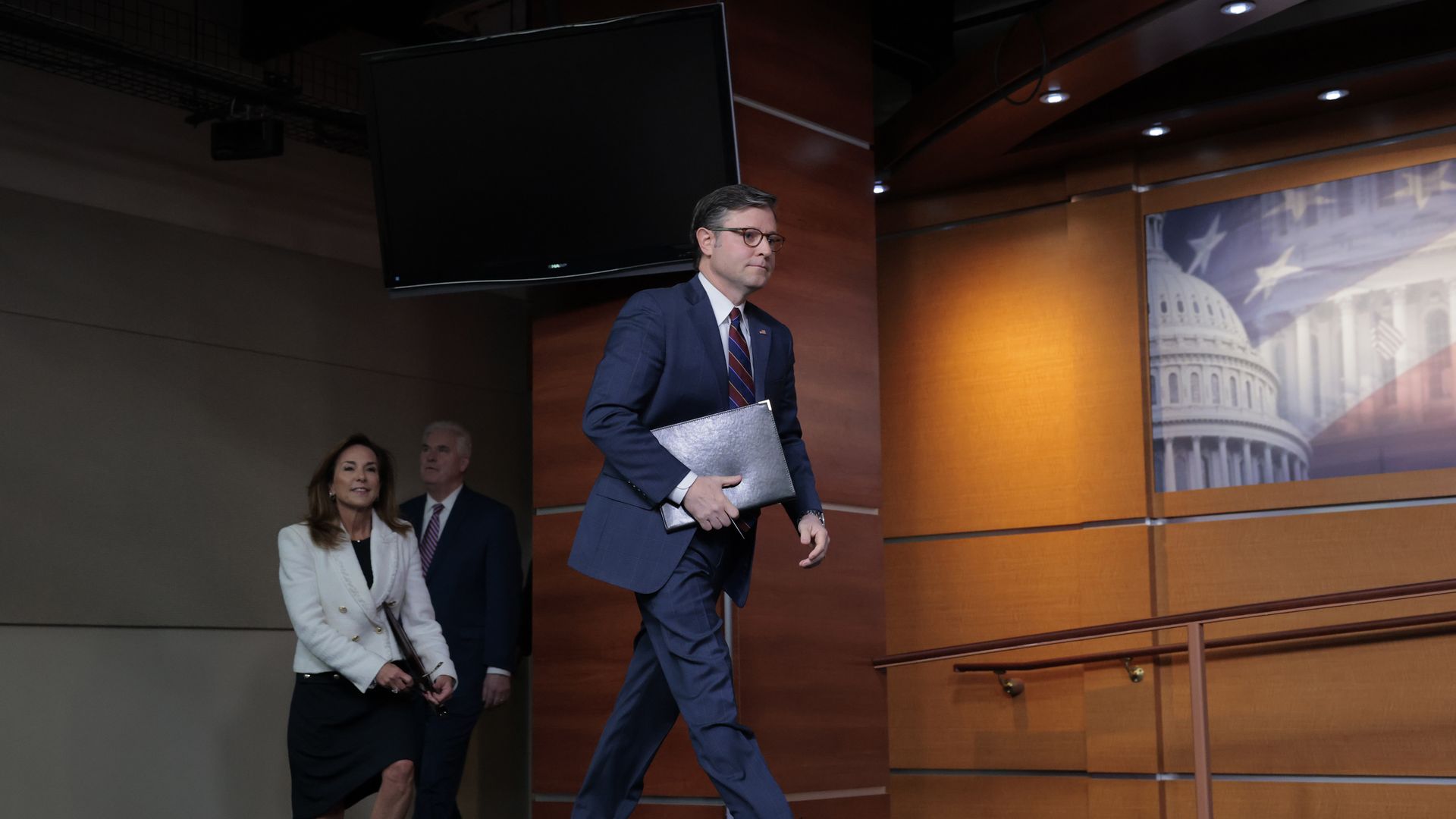
Photo: Anna Moneymaker/Getty Images
Top GOP operatives are alarmed that House Republicans ditching their seats to pursue higher office could cost Mike Johnson (R-La.) the speaker's gavel.
Why it matters: The GOP's eleventh-hour freakout over special elections —followed by Democrats cutting the margins in half from November in Florida's 1st and 6th congressional districts — is spreading into a broader fear about swing seats next year.
- "A House member in a competitive district who is considering jumping ship would seemingly have priorities misaligned with the president," said Bill Stepien, who was Trump's 2020 campaign manager.
- "Any time popular members of Congress from swing areas seek statewide office it creates challenges — usually expanding the map for the opposition party," said Robert Blizzard, a Republican pollster.
Zoom in: Republicans are most concerned about three House members eyeing statewide office:
- Rep. Mike Lawler (R-N.Y.) is considering running for New York governor. Trump lost Lawler's district by a percentage point in November, while Lawler won by six points.
- Rep. John James (R-Mich.) is weighing a run for Michigan governor. Trump won James' district by a percentage point in 2020 and six points in 2024. James won his race by six points.
- Andy Barr (R-Ky.) may launch a bid to replace retiring former Senate GOP leader Mitch McConnell. Trump won Barr's district by 15 points in November, and Barr won by 26. But Democrats hold a registration edge and Barr survived a competitive contest in 2018.
Zoom out: Trump, whose agenda will be stymied if Republicans take a beating next year, has expressed concern about the fragile House majority.
- Trump last week pulled his nomination of Rep. Elise Stefanik (R-N.Y.) to be UN ambassador, fearing her seat could be lost.
- Sitting incumbents, who benefit from preexisting name ID, fundraising operations and organizational structures, are generally better positioned than a new candidate.
- Should House Republicans move on, it could force the national party to spend money to defend seats that could otherwise be spent elsewhere.
NRCC spokesperson Will Kiley told Axios: "If a member decides to retire or run for another office, we simply ask for a heads up so we can ensure there's a strong candidate in place to defend the seat and build on our momentum to expand our Republican majority."
