Trump unleashes 10% global tariffs, with higher reciprocal rates

Add Axios as your preferred source to
see more of our stories on Google.
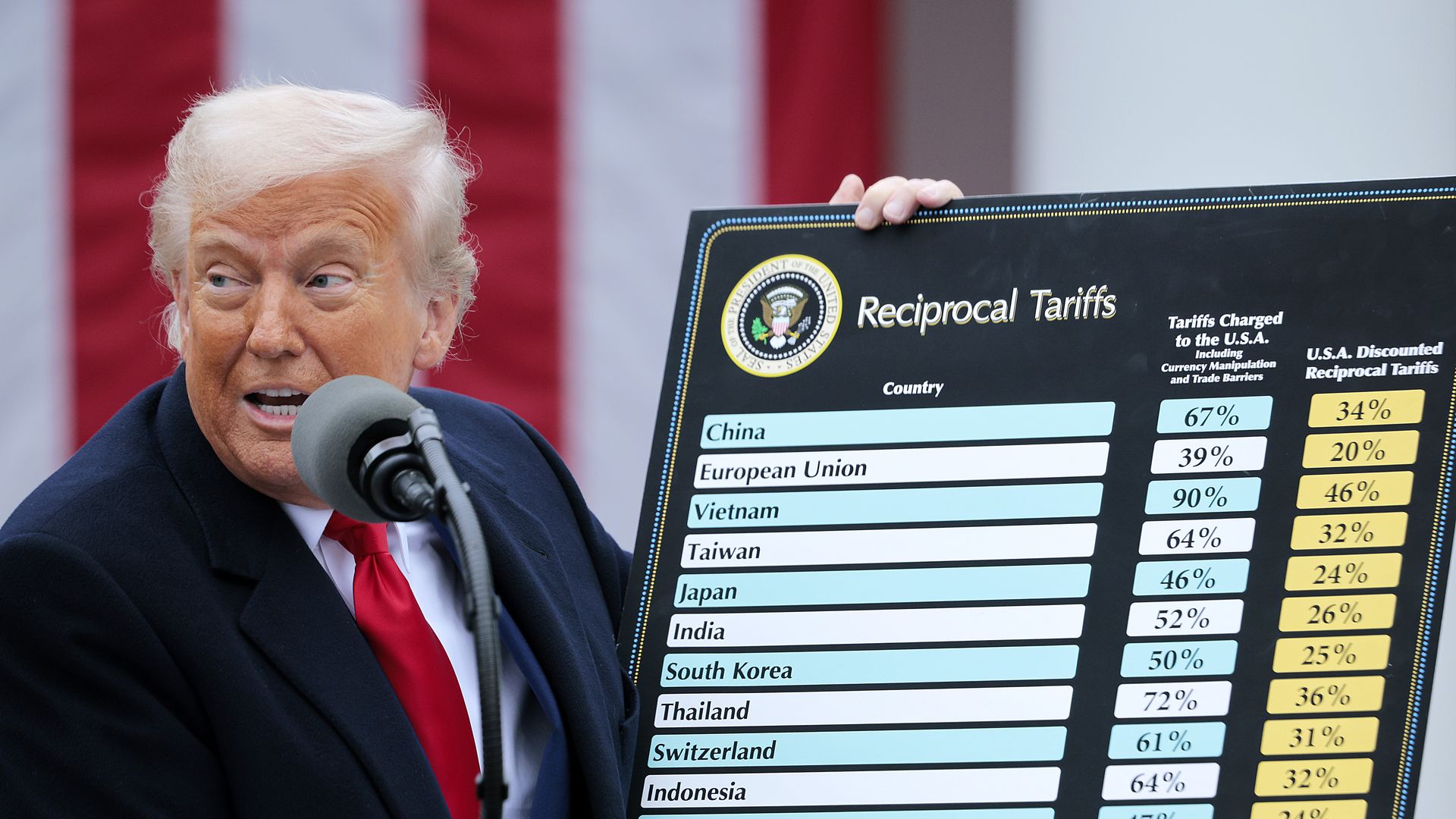
President Trump shows a table of reciprocal tariff rates in the Rose Garden. Photo: Chip Somodevilla/Getty Images
President Trump announced a baseline 10% tariff on U.S. imports, with steeper reciprocal levies on goods from a slew of other nations, including Europe, Japan and China.
Why it matters: Trump's announcement ends the free-trade era that has defined global commerce for decades — a move that risks higher consumer prices and economic damage.
What they're saying: "This is one of the most important days in my opinion, in American history," Trump said in remarks delivered at a "Liberation Day" event in the Rose Garden.
- "We will supercharge our domestic industrial base, we will pry open foreign markets and break down foreign trade barriers," Trump added.
- Stocks, which rose a bit as Trump started speaking, reversed sharply and fell as he unveiled the reciprocal rates.
By the numbers: The reciprocal tariffs hit dozens of nations, including some of the country's largest trading partners.
- Imports from the European Union, Japan and South Korea will be subject to tariffs of 20% or higher.
- Imports from Vietnam are subject to a tariff rate of 46%, while Taiwanese imports will face 32% tariffs.
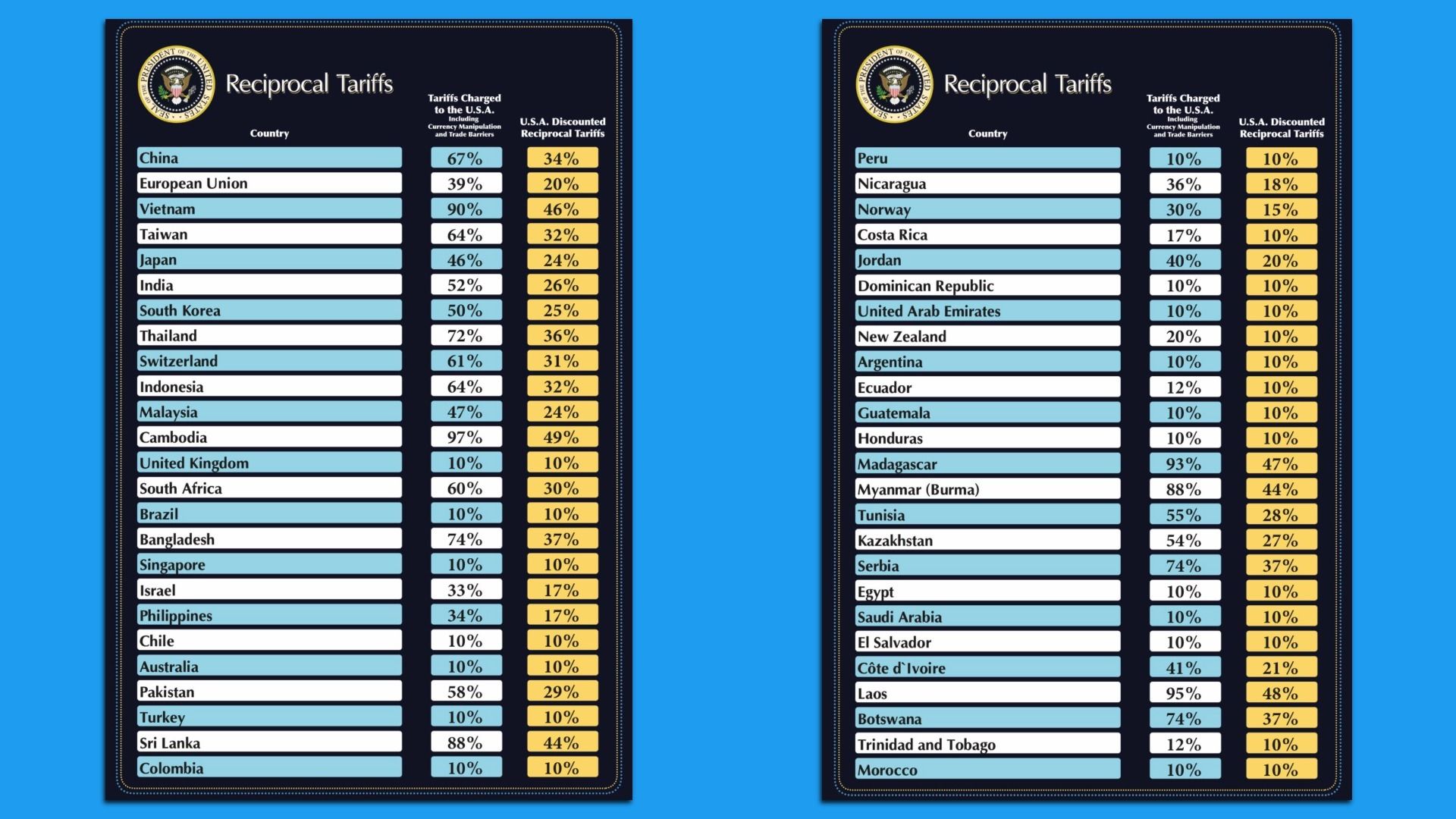
Details: The reciprocal tariffs have been tailored based on how unfairly the administration says the countries treat U.S. exporters.
- The rates, calculated by Trump's top economists at the Council of Economic Advisors, are meant to hit back at the tariff and non-tariff trade barriers.
- Trump said the published rates are half as high as the originally calculated levies.
What to watch: It is Trump's gamble to revive domestic manufacturing, raise revenues to offset tax cut costs and push other nations to adhere to non-trade related demands.
- "To all of the foreign presidents, prime ministers, kings, queens, ambassadors and everyone else who will soon be calling to ask for exceptions from these tariffs, I say 'terminate your own tariffs, drop your barriers. Don't manipulate your currencies,'" Trump said.
The trade actions unveiled on Wednesday come on top of 25% tariffs on foreign-made vehicles and auto parts announced last week that will take effect at midnight.
- Steel and aluminum imports face similar tariff rates, with taxes threatened on lumber and pharmaceuticals.
- The 25% tariffs applied on Canadian and Mexican imports that don't comply with the USMCA trade agreement will go into effect until the nations impose tighter border controls, senior officials said.
- When those tariffs are removed, the North American countries will be subject to the baseline tariffs.
The big picture: Economists see stronger odds of a recession this year, alongside higher prices and weaker growth as a result of the trade war.
- Trade policy uncertainty has businesses in limbo and stock markets on edge. Recent economic surveys show consumers planning to pull back on spending and bracing for higher prices.
- If widespread enough, a drop-off in demand and steady price increases would result in a dreaded outcome for Americans: economic "stagflation."
Go deeper: Trump's trade announcement is the start of global economic uncertainty
Brittany Gibson contributed.
Editor's note: This story has been updated with details from President Trump's event.
