Mar 27, 2025 - Business
The surprising winners and losers from Trump's auto tariffs


Add Axios as your preferred source to
see more of our stories on Google.
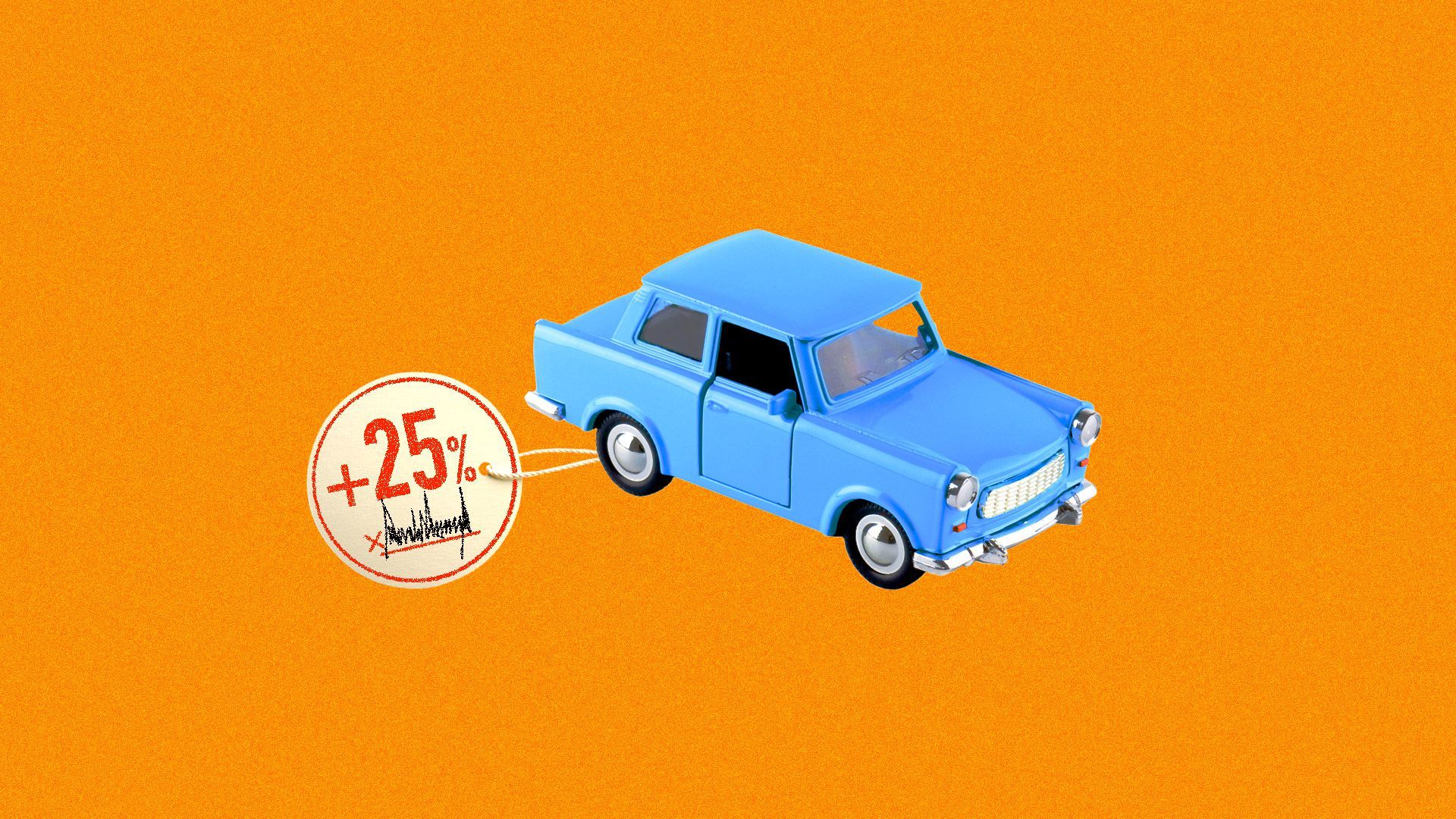
Illustration: Lazaro Gamio/Axios
President Trump's tariff hike on imported vehicles is poised to shake up the American auto industry and bludgeon car buyers.
Why it matters: Every new vehicle sold in the U.S. will be affected.
- Almost half of vehicles sold in the U.S. are assembled elsewhere — and there are no models sold here that are built purely with U.S.-made parts. Every car has at least 20% foreign-made components, according to the Department of Transportation.
Catch up quick: Trump on Wednesday announced 25% tariffs on autos and auto parts, arguing it'll create an incentive for car companies to produce vehicles in the U.S.
- Critics say consumers will pay the price as automakers pass along the extra costs.
Here's a breakdown of who's poised to win and lose if and when the tariffs take effect:
Winners:
- Auto parts retailers: Autozone and O'Reilly Automotive were among the S&P 500's biggest gainers Thursday as investors bet that car owners will opt to repair their vehicles more often instead of buying new ones.
- Dealerships: Dealers make most of their money on repairs. Plus, higher vehicle prices will be absorbed by automakers, not dealers.
- Efforts to entice foreign automakers to build here: Volvo and Volkswagen are among the automakers weighing plans to build more vehicles in the U.S. to avoid the tariffs.
Losers:
- New-car buyers: Automakers are likely to raise prices by an average of $3,000 to $4,000 per new vehicle, Evercore ISI analyst Chris McNally estimates. But some vehicles could face significantly higher price tags: Imports from Japan, South Korea and Europe are headed for price increases of an estimated $9,375, he projected.
- U.S. vehicle exporters: Automakers that assemble vehicles in the U.S. for shipment to other countries will be impacted by retaliatory tariffs. Ford, General Motors, Toyota, BMW, Honda, Mercedes and Tesla are among the companies that export U.S.-built vehicles to other countries.
- Suppliers: Automakers will likely pressure their biggest suppliers to absorb some of the costs — and those suppliers will likely pressure their suppliers in a cascading effect that will probably hurt the smallest companies the hardest.
- The auto industry: As suppliers buckle, carmakers could be forced to suspend production for missing parts. Meanwhile, higher costs from tariffs could mean less money for R&D, causing automakers to fall behind faster-moving Chinese competitors.
The bottom line: Substantial disruption is afoot.
