Who is Jeffrey Goldberg, the journalist who exposed Trump officials' Signal chat

Add Axios as your preferred source to
see more of our stories on Google.
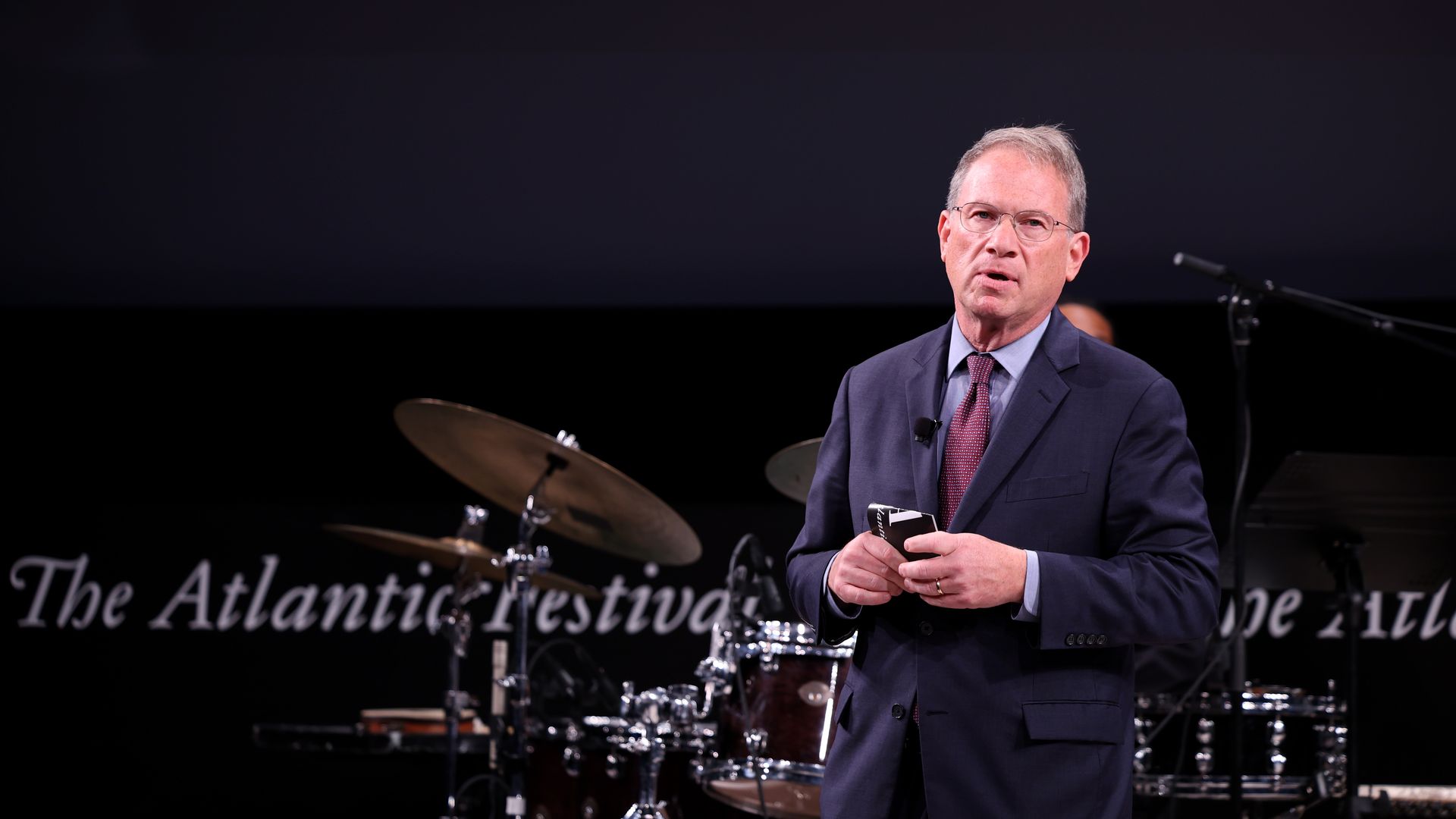
Jeffrey Goldberg introduces the "The Atlantic Presents: This Ghost of Slavery feat. Anna Deavere Smith" performance during The Atlantic Festival 2024 on Sept. 20 in Washington, D.C. Photo: Tasos Katopodis/Getty Images for The Atlantic
An inadvertent invitation to a group chat thrust The Atlantic's editor-in-chief Jeffrey Goldberg into the center of an explosive national security breach that's put the White House on the defensive.
Why it matters: Goldberg's decision to disclose the discussion of planned strikes against Houthi rebels in Yemen and publish the group chat's contents has embroiled top Trump officials in scandal and exposed them to potential legal jeopardy.
- The White House confirmed the authenticity of the chat, then responded by attacking Goldberg's credibility and denying that officials shared classified materials when discussing the war plans in the messaging app.
- Goldberg responded on Wednesday by publishing a second round of information from the chat.
Here's what to know about Goldberg.
Jeffrey Goldberg's background
Goldberg, 59, was born in Brooklyn and attended the University of Pennsylvania. He dropped out of college and moved to Israel to serve in the Israel Defense Forces, per the New York Times.
- He wrote a book about the Israel-Palestine conflict called "Prisoners: A Story of Friendship and Terror" after serving as a guard at the largest prison camp in Israel in 1990.
- "Leftists call him a neocon for his love of Israel and early support for the Iraq War," staff at the Forward, a Jewish news outlet that Goldberg previously worked for, wrote in 2016. "Right-wingers accuse him of Israel-bashing as he demonstrates impatience with Israeli settlement and peace policies."
- Goldberg previously worked at The New Yorker, serving as a Middle East and Washington correspondent. He also worked at the Washington Post.
- He served as the public-policy scholar at the Woodrow Wilson International Center for Scholars and as the distinguished visiting fellow at the Carnegie Endowment for International Peace.
Goldberg's tenure at The Atlantic
Goldberg joined the magazine in 2007 as a national correspondent.
- Then-owner of The Atlantic, David Bradley, spent two years trying to hire Goldberg, even sending ponies to his home to entertain his children, per the Washington Post in 2007.
- He became the magazine's 15th editor-in-chief in 2016. The publication won its first Pulitzer Prizes under his leadership, according to his biography.
White House attacks Goldberg for Signal reporting
Defense Secretary Pete Hegseth, National Security Adviser Mike Waltz and Karoline Leavitt, the White House's press secretary, categorically denied that classified material was shared in the chat.
- Leavitt accused Goldberg of "sensationalist spin" after the magazine published its initial story, which withheld certain details from the exchange.
Zoom in: On Wednesday, Goldberg and Atlantic staff writer Shane Harris wrote that The Atlantic generally would not publish information about military operations that could jeopardize U.S. personnel.
- However, they wrote that the administration's response to the leak "led us to believe that people should see the texts in order to reach their own conclusions. There is a clear public interest in disclosing the sort of information that Trump advisers included in nonsecure communications channels."
What they're saying: "The White House continues to attempt to mislead and confuse the public," the magazine said in a statement. "The fact is that there was a massive national-security breach."
- "Today's semantic debate is a complete distraction from what actually matters," they added.
Go deeper: Houthi group chat: What top Trump officials claimed vs. what the texts show
Editors' note: This story has been updated with a statement from The Atlantic.
