What is Signal, the app Trump officials used to discuss war plans

Add Axios as your preferred source to
see more of our stories on Google.
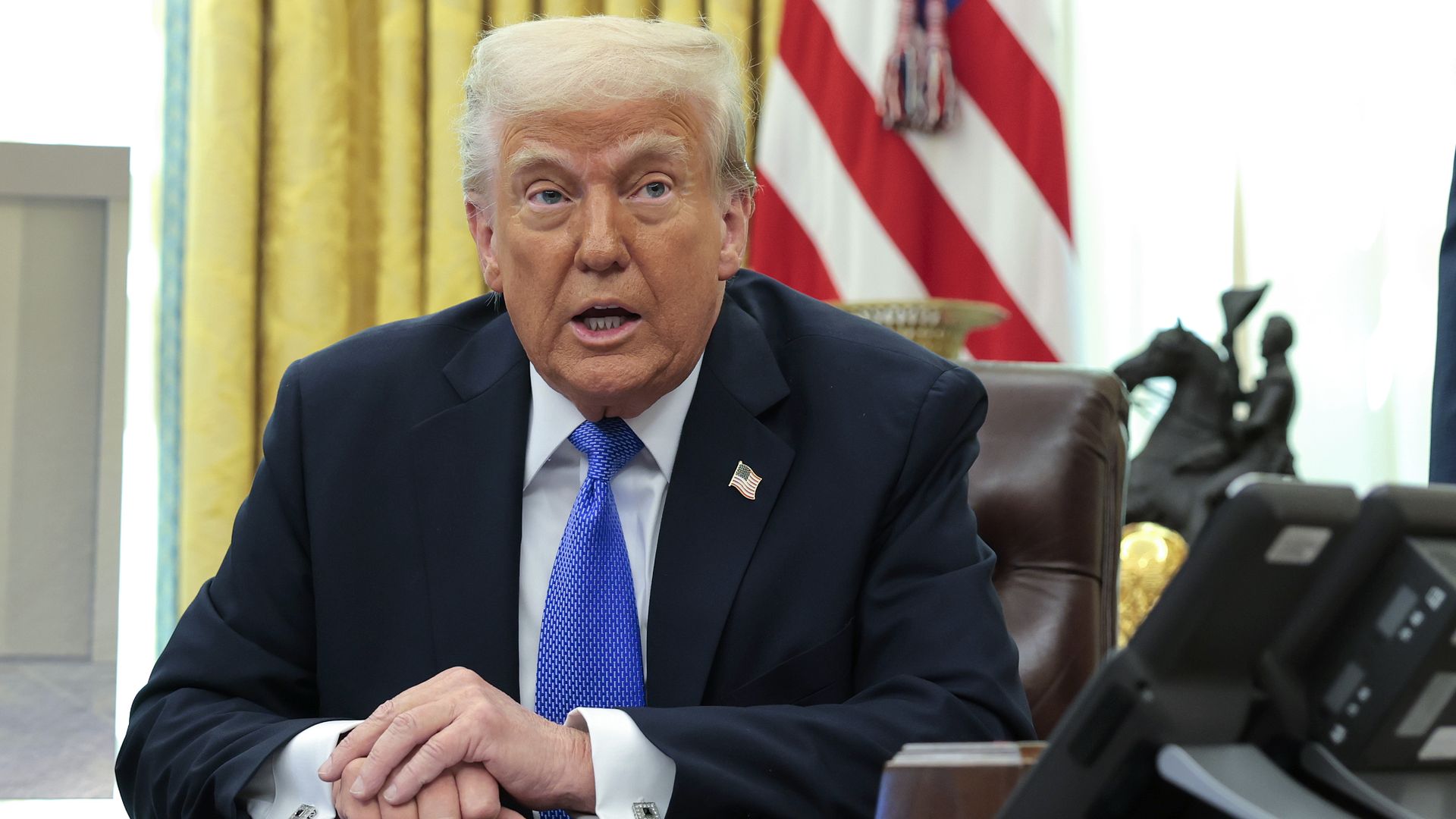
Photo: Anna Moneymaker/Getty Images
Top Trump administration officials used the messaging app Signal to debate highly sensitive plans for bombing Yemen and accidentally included the editor-in-chief of The Atlantic in a group text in the encrypted chat.
Why it matters: The incident has raised serious questions about whether the group chat violated laws including the Espionage Act and some Democratic lawmakers are calling for an investigation and potential repercussions against the officials involved.
The latest: A government watchdog group sued Defense Secretary Pete Hegseth and other Trump administration officials Tuesday, alleging they violated federal record retention laws.
- The officials' failure to properly preserve communications on the app, where messages were set to disappear after a certain timeframe, is a violation of the Federal Records Act, American Oversight alleged in a court filing.
- The "reported disclosure of sensitive military information in a Signal group chat that included a journalist is a five-alarm fire for government accountability and potentially a crime," the nonprofit's interim executive director Chioma Chukwu said in a statement.
What is Signal?
Zoom in: Signal is a secure messaging service that uses end-to-end encryption, which means only the sender and recipient can read messages. The service provider cannot access or read private conversations and calls from users on its app.
- A phone number is required to register and create an account.
- Signal does not track or store any sensitive information and message history is stored on users' own devices, according to its terms of service.
- Signal includes a function that automatically deletes all messages from a conversation within a set time frame, configurable from one second to four weeks after they've been read by the recipient. However, a recipient can always take a screenshot or screen record to retain messages.
How secure is Signal?
Between the lines: Signal does not use government encryption from the U.S. or any other government, and is not hosted on government servers, which often require auditing and logging.
- Some government agencies don't allow Signal to be downloaded on their federal devices.
- "The Department of Defense has a long-standing policy of not allowing non-public, classified information to be communicated explicitly on Signal," Jake Williams, vice president of research and development at Hunter Strategy told Axios.
- "Had that reporter from The Atlantic been forwarding these messages in real time to a sophisticated adversary with air defense capabilities, this could have cost U.S. lives," Williams added.
What they're saying: Former national security adviser John Bolton, who served in Trump's first administration, said on NewsNation that he was shocked "they were using Signal at all."
- "In fact, what's stunning is that this thing went on for days and not a single member of that group said, 'You know, maybe we ought to get off Signal,'" Bolton added.
- Bolton noted that there are "extraordinarily expensive" classified communication systems for top administration officials to use.
How widely used is Signal and for what reasons?
Signal has become the go-to app for communication for many activists, journalists and government officials because of its open-source end-to-end encryption.
- Signal had about 7.6 million monthly active users in the U.S. for iOS and Android combined in February — a peak level of activity, according to data provided by Similarweb.
- Disappearing messages combined with evading records management laws and regulations are some reasons people use Signal, according to Williams.
- "If you don't want something to become an official record, get Freedom of Information Act (FOIA) released, then you don't have that conversation in an official channel where it's ever subject to FOIA," Williams said.
- "In this case, the use of Signal here was intentional and intentionally done to avoid creating an official record," he added.
Go deeper: White House defiant after messaging fiasco with The Atlantic
