OpenAI's Chris Lehane: "We're in a real race"

Add Axios as your preferred source to
see more of our stories on Google.
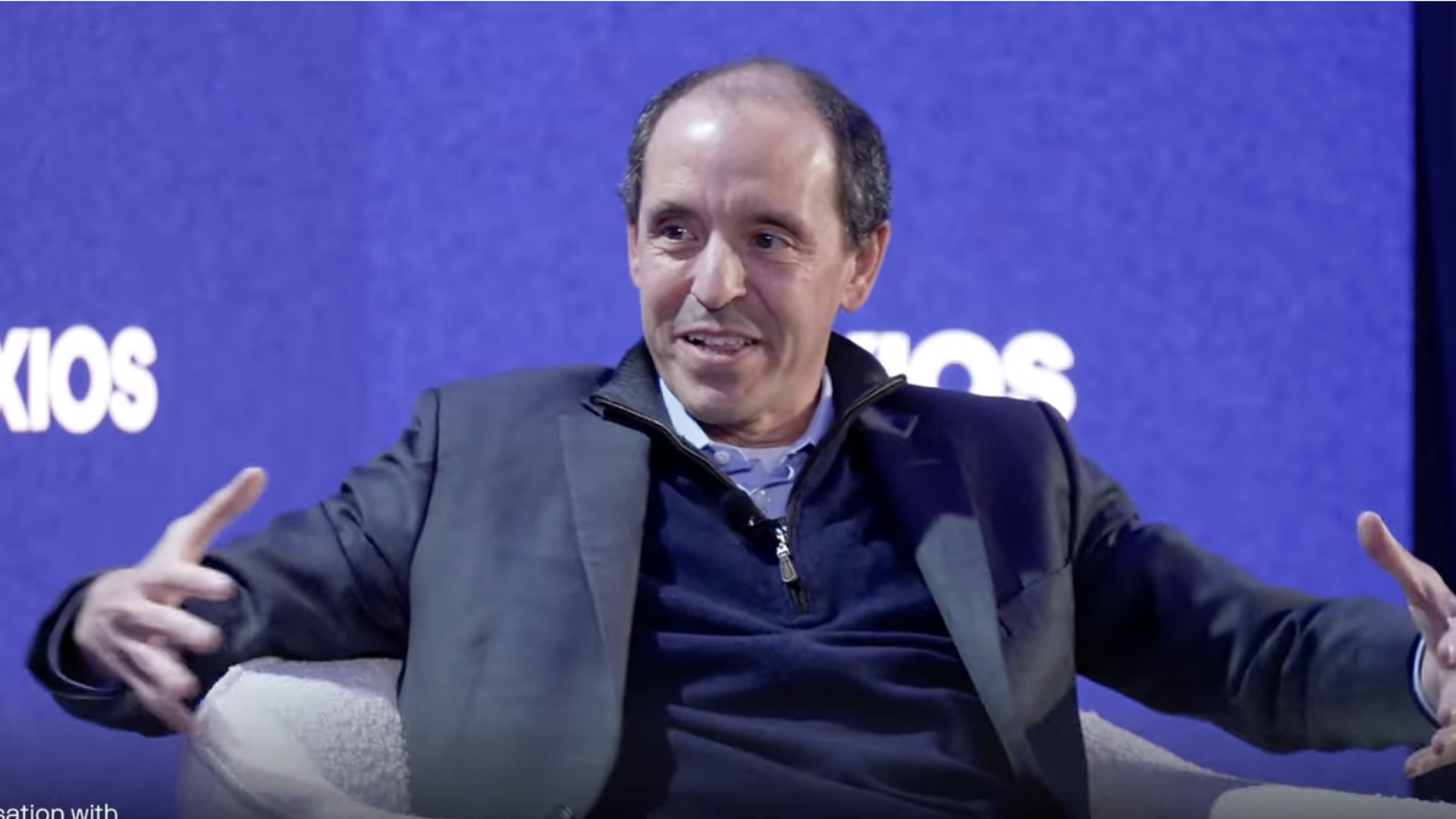
Screenshot: Axios
The winner of the AI race will make decisions that could set industry norms and influence global AI policy for years to come, OpenAI's chief global affairs officer, Chris Lehane, told Axios' Ina Fried on Tuesday at the Axios What's Next Summit in Washington, D.C.
Why it matters: Lehane says beating China in the AI race is so important that we should not tie the hands of AI makers by limiting their use of data under copyright laws that China won't observe.
- "Whoever ends up winning ends up building the AI rails for the world," Lehane said.
Between the lines: Lehane argued that OpenAI plays a critical role in ensuring that the U.S. is leading in AI.
- The requirement to remain competitive in this space, Lehane told Fried, infuses every AI regulation debate right now.
- "There's a growing recognition and understanding that we do need to make sure that we are leading as a country on innovation ... from a U.S. competitiveness perspective," Lehane said.
Zoom out: Lehane insisted that there are plenty of laws already on the books that govern what AI companies can and can't do.
- He said OpenAI and some of the other big tech companies are already doing everything they can to build models that align with the average person's top concerns about AI — protecting kids, limiting deepfakes, identifying AI-generated content.
- OpenAI has already struck licensing deals with publishers, including the Associated Press, Axel Springer and Axios, while pushing for a broader industry conversation around fair compensation and transparency.
Zoom in: In a recent White House memo, Lehane and OpenAI argued that AI companies should be able to train their models on copyrighted material as a matter of national security and that the government should codify this right under the "fair use" principle.
- Asked about what material OpenAI trains its models on, Lehane said the company uses "data that is appropriately accessible and available," a common phrase used by AI companies to describe their broad use of internet data that might or might not be protected by copyright.
- When Fried pushed Lehane on whether OpenAI was training on copyrighted material, Lehane again stressed the importance of the race with China.
- "That is a bit of a zero-sum game. And do you want the world built on autocratic, authoritarian AI, where there's not going to be any copyright, there's not going to be any fair use ... you're not going to have any freedoms?"
Disclosure: Axios and OpenAI have a licensing and technology agreement that allows OpenAI to access part of Axios' story archives while helping fund the launch of Axios into four local cities and providing some AI tools. Axios has editorial independence.
