Supreme Court declines to hear challenge to landmark press freedom case

Add Axios as your preferred source to
see more of our stories on Google.
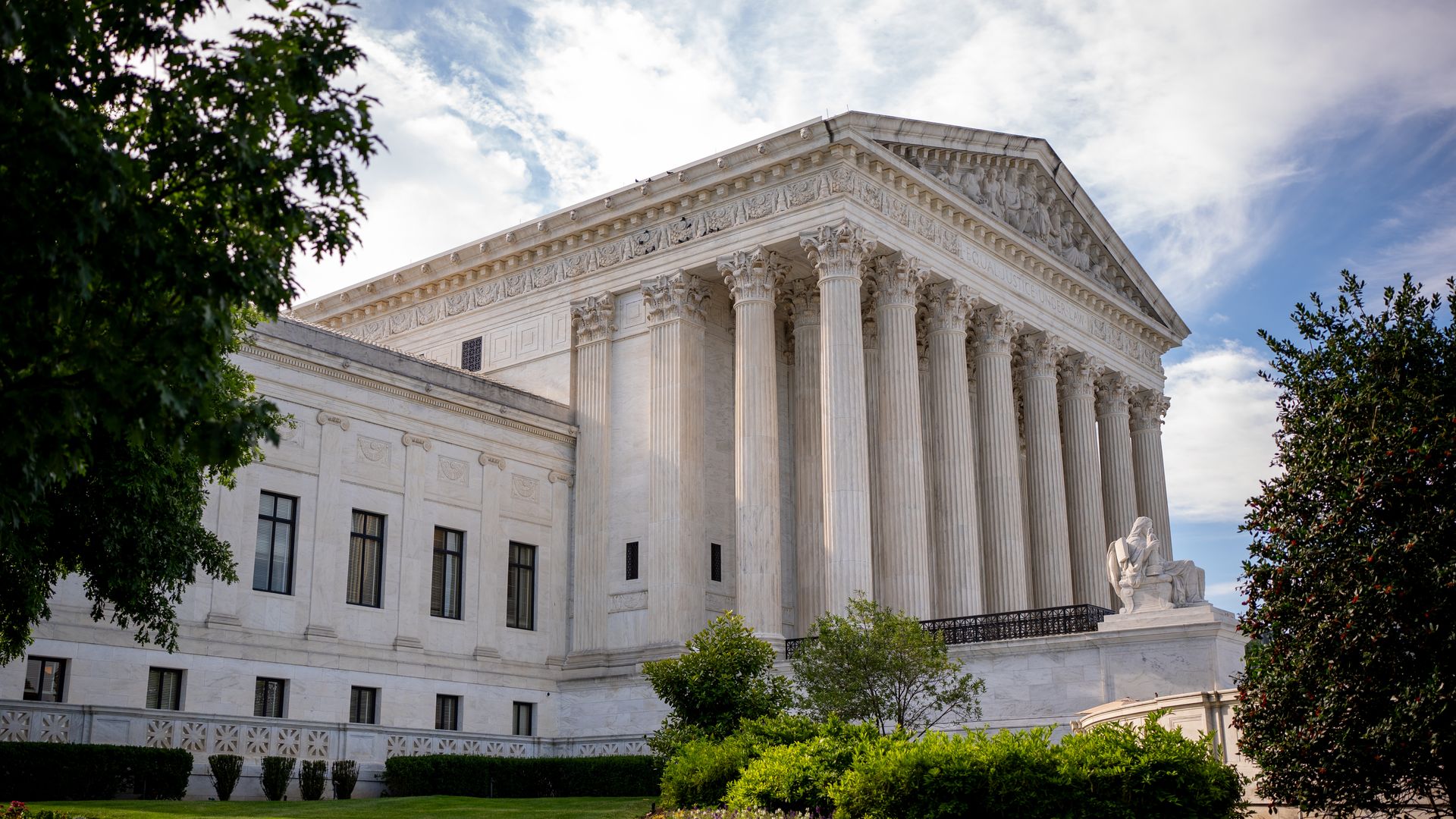
An exterior view of the Supreme Court on June 20 in Washington, DC. Photo: Andrew Harnik/Getty Images
The Supreme Court on Monday declined to hear a case seeking to challenge the 1964 precedent that protects news outlets from litigation for publishing critical information about public figures.
Why it matters: Conservative justices have called for the Supreme Court to revisit New York Times v. Sullivan, which determined that a plaintiff must demonstrate "actual malice" in defamation lawsuits against the press.
- In Sullivan, the court determined that the First Amendment protects news outlets from liability, even when they publish false statements, as long as the outlet did not do so knowingly and recklessly — without seeking to determine its accuracy.
Catch up quick: Casino mogul and President Trump donor Steve Wynn, in a libel lawsuit against the Associated Press, sought to challenge the bedrock case law that has protected journalists from libel lawsuits for decades.
- Wynn, also a former finance chair of the Republican National Committee, had sued the AP in 2018 after it published a story on sexual misconduct allegations against him from the 1970s.
- He appealed the case to the Supreme Court after Nevada's top court dismissed the lawsuit.
Zoom out: "The actual malice standard ... exists to give even more breath when you're talking about famous people, people with power in government, or people just with more power in society," First Amendment expert Kevin Goldberg previously told Axios' Kerry Flynn.
- "The bar is intentionally high to dissuade people from ever filing these lawsuits," he added.
Our thought bubble, from Axios' Sam Baker: There's still energy on the court's right wing to overturn Sullivan, but SCOTUS has turned away multiple cases over the past several years that would have given it the chance to do so.
- There doesn't seem to be enough votes on the court to wade back into the issue — at least not now, or not through the specific cases they've been presented with so far.
What we're watching: Trump has threatened to "open up" libel laws to be able to further target the press.
- Several media companies will face defamation lawsuits in courts this year.
Go deeper: Trump's historic war on traditional media
