What to know about the April 2 tariff day

Add Axios as your preferred source to
see more of our stories on Google.
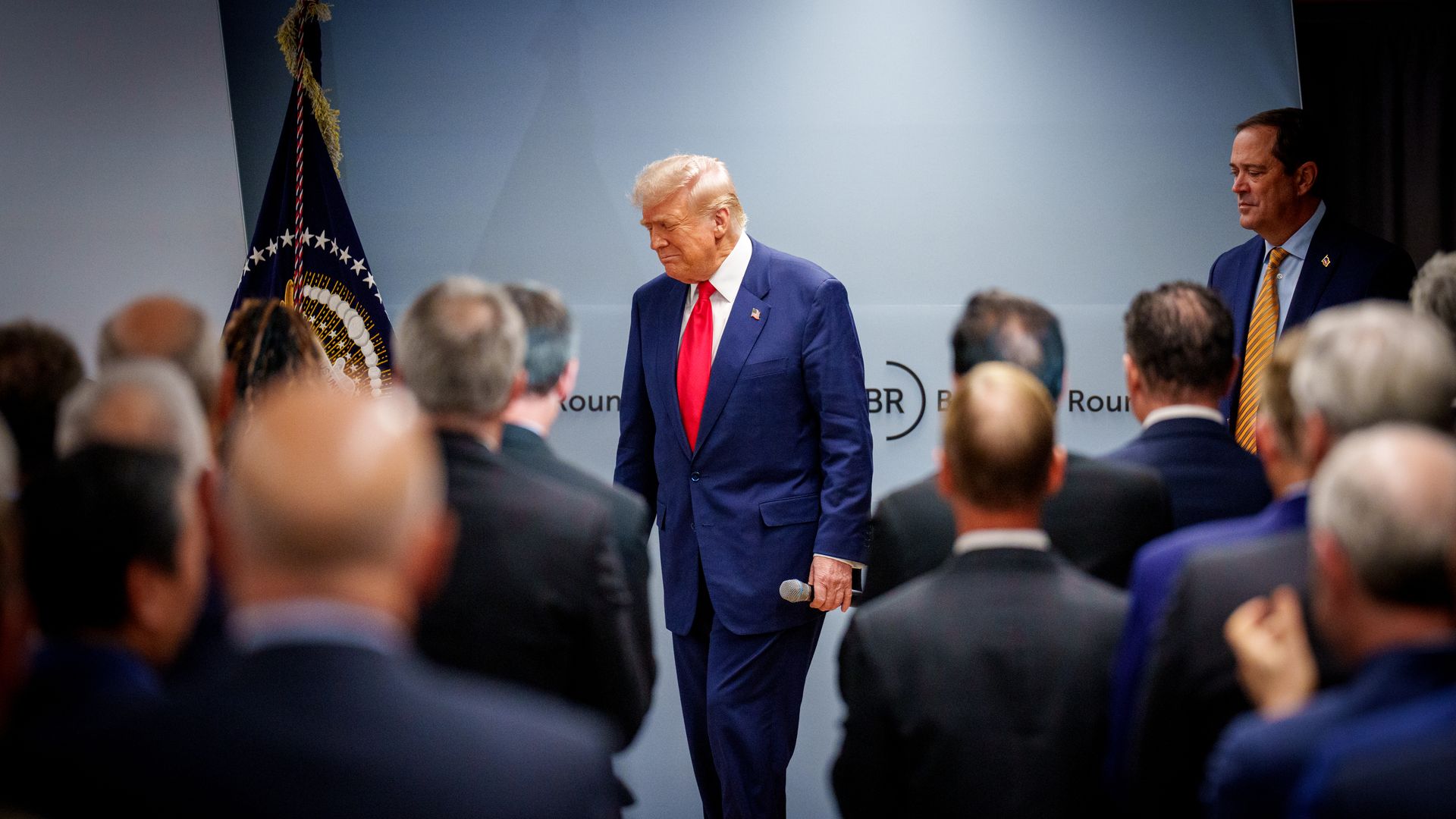
Trump arrives alongside Cisco Systems' CEO at the Business Roundtable headquarters earlier this month. Photo: Andrew Harnik/Getty Images
The White House says President Trump's trade policy will come to a head on April 2, when the administration unveils a plan for reciprocal tariffs.
Why it matters: The new tariff regime will take aim at trading partners that officials believe treat domestic exporters unfairly.
- The result will be Trump's most aggressive tariff actions to date, which could hike costs for consumers, damage longstanding trade relationships and spark global trade wars.
- The new tariffs will also impact foreign-made vehicles.
The big picture: The end game — that is, how the U.S. might roll back these potential tariffs — is unclear, part of the trade-related uncertainty that has roiled financial markets and frozen some business activity.
- Administration officials say the tariffs would help revive domestic manufacturing and fill government coffers — though it may be hard to do both, if a revival of domestic industry leads to fewer imports and, in turn, less tariff revenue.
- On the other hand, officials say the April 2 tariffs could lead to negotiations that could stave off levies for some nations.
- "Unless the tariff and non-tariff barriers are equalized, or the U.S. has higher tariffs, the tariffs will go into effect," an administration official told Reuters.
What they're saying: Trump calls the tariff regime to be revealed on April 2 "the big one," to help differentiate from the ad hoc taxes imposed thus far, including those slapped on Chinese imports and global steel and aluminum.
- Trump has given April 2 — which he picked over April 1 to avoid April Fools Day — a new nickname in recent weeks: "Liberation Day."
- "For DECADES we have been ripped off and abused by every nation in the World, both friend and foe. Now it is finally time for the Good Ol' USA to get some of that MONEY, and RESPECT, BACK," Trump wrote on his social media site Truth Social.
- That is also the same day that imports from Canada and Mexico will face 25% tariffs after a roughly month-long pause.
What to watch: The tariffs unveiled on April 2 might take effect the same day, giving little time for U.S. importers to digest what could be a list of sprawling new levies.
- Trump says there won't be any exceptions for industries or products, though he says there will be "flexibility" — but he did not specify what that might look like.
The bottom line: Trump warns that there will be an "adjustment" period for the economy when the tariffs take effect.
- The Federal Reserve's latest economic projections showed higher inflation and slower growth in 2025, largely a result of expected trade policy.
How will tariffs impact car prices?
Where it stands: Trump April 2 tariffs include a 25% hit to autos and auto parts that are not produced in the U.S.
By the numbers: A 25% tariff on all U.S. auto imports would reduce them by about 74% and increase average auto prices by 5%, one paper found.
- About 45% of light vehicles sold in the United States are imported, per S&P Global Mobility.
Between the lines: Volvo (13%), Mazda (19%) and Volkswagen (21%) make the lowest share of their U.S.-sold vehicles in this country, according to Wards Automotive and Barclays research.
- Hyundai-Kia (33%), Mercedes (43%), BMW (48%) and Toyota (48%) also make less than half of their U.S.-sold vehicles here.
Zoom in: There's been a wide range of estimates from a variety of sources on how much car prices could actually rise as carmakers look to offload the extra costs.
- The Yale Budget Lab forecasts vehicle prices will rise 13.5% on average, or about $6,400 on the average new car.
Editor's Note: This story has been updated with comments by President Trump.
