How Trump is putting the world's economic policy on hold

Add Axios as your preferred source to
see more of our stories on Google.
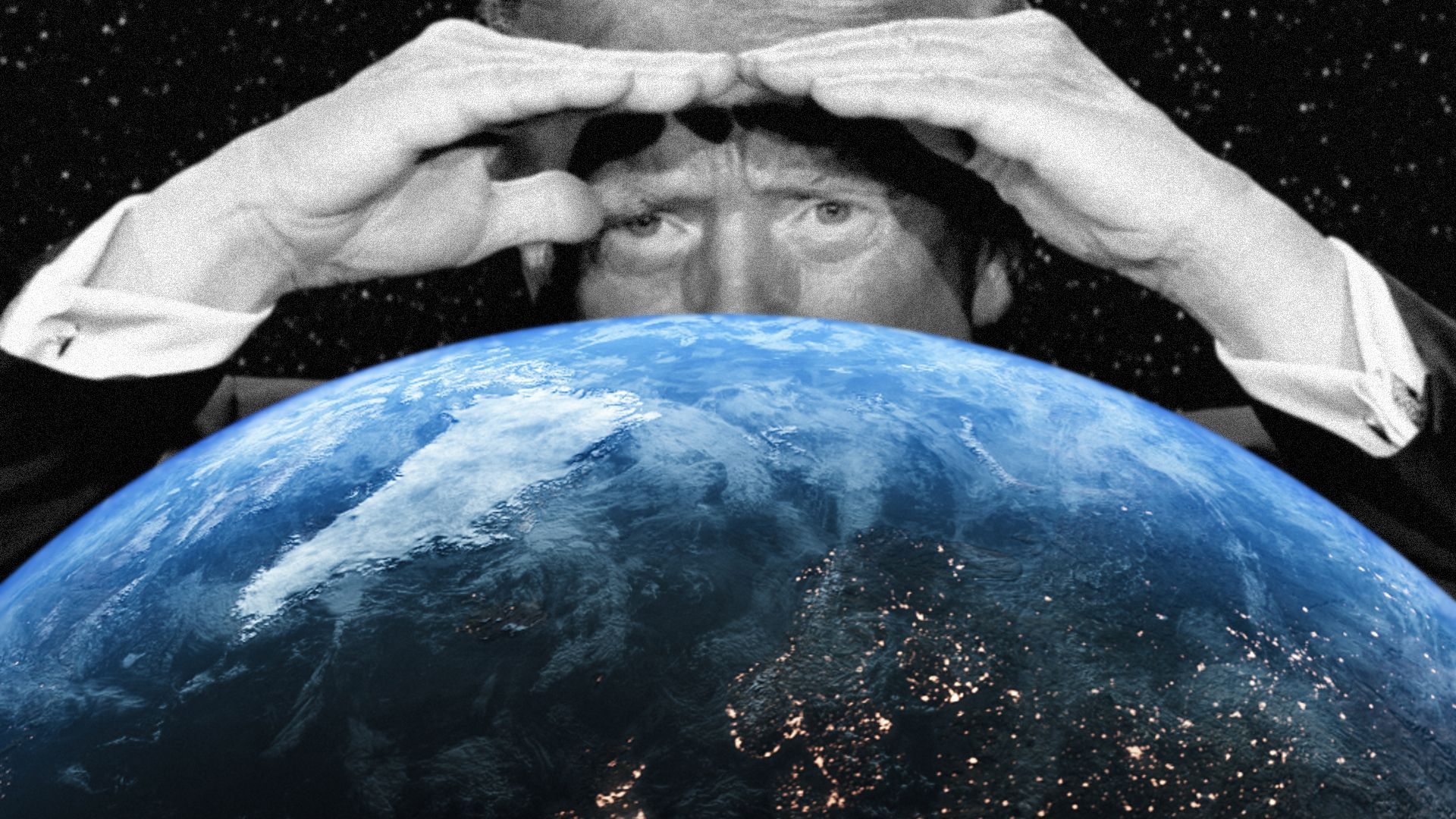
President Trump. Photo illustration: Brendan Lynch/Axios. Photo: Kamil Krzaczynski/AFP via Getty Images
Around the world, economic policymakers are adapting to the reality that President Trump could upend their plans at a moment's notice.
Why it matters: Some global central bankers all but admit they are at the whim of Trump, with hesitancy to adjust their policy dials until they know the degree to which they will be a tariff target.
- The data officials in the U.S., Europe and Japan rely on to assess their respective economies is backward-looking and can't possibly reflect fallout from opaque trade policy.
The intrigue: Central banks are no longer able "to be either the frontmen or rhythm-keepers of macro policy," Thierry Wizman, a currency and rates strategist at Macquarie, wrote in a note Wednesday.
- "They're now 'followers,' who are ceding their dynamism to events in federal legislatures, executive mansions, and diplomatic halls," Wizman added, noting that the Federal Reserve is among the central banks that will "defer to future events outside its scope of power."
Driving the news: The Bank of Japan kept interest rates on hold overnight, buying more time for clarity on Trump's plan for reciprocal tariffs that might target Japanese imports.
- The White House says it will release details about the reciprocal tariffs — including country-specific and sector-specific rates — in early April, with the tariffs taking effect soon thereafter.
What they're saying: "In the past month or so, there have been rapid changes in the scope and speed of U.S. tariffs," Bank of Japan governor Kazuo Ueda said at a press conference Wednesday morning, according to a translation by Reuters.
- "However, there are aspects we may not know even beyond April, so uncertainty remains high," Ueda said, adding that Trump trade threats make it hard to make a judgment about its inflation goals.
The big picture: Japan, unlike the other major central banks, has raised rates three times over the past year as the economy's deflationary era looked firmly in the past.
- On the one hand, Ueda said that wage and price growth could be stronger than expected — conditions that would support further rate hikes.
- But that outlook could shift if forthcoming tariffs result in lower demand for Japanese products — particularly autos.
- Japan's top trade official left Washington, D.C., earlier this month without assurance that the nation would be exempt from future tariffs.
What's next: The Bank of England, too, is likely to keep interest rates on hold Thursday, despite recent evidence that the U.K. economy is on weaker footing.
- "[P]olicymakers also expected to sit on their hands and wait for more data amid turmoil for the global economy before cutting interest rates," Susannah Streeter, head of money and markets at Hargreaves Lansdown, wrote in a note.
- "There are concerns about the growth weakening further given the tariffs upending global trade."
