Charted: Scammy domains

Add Axios as your preferred source to
see more of our stories on Google.
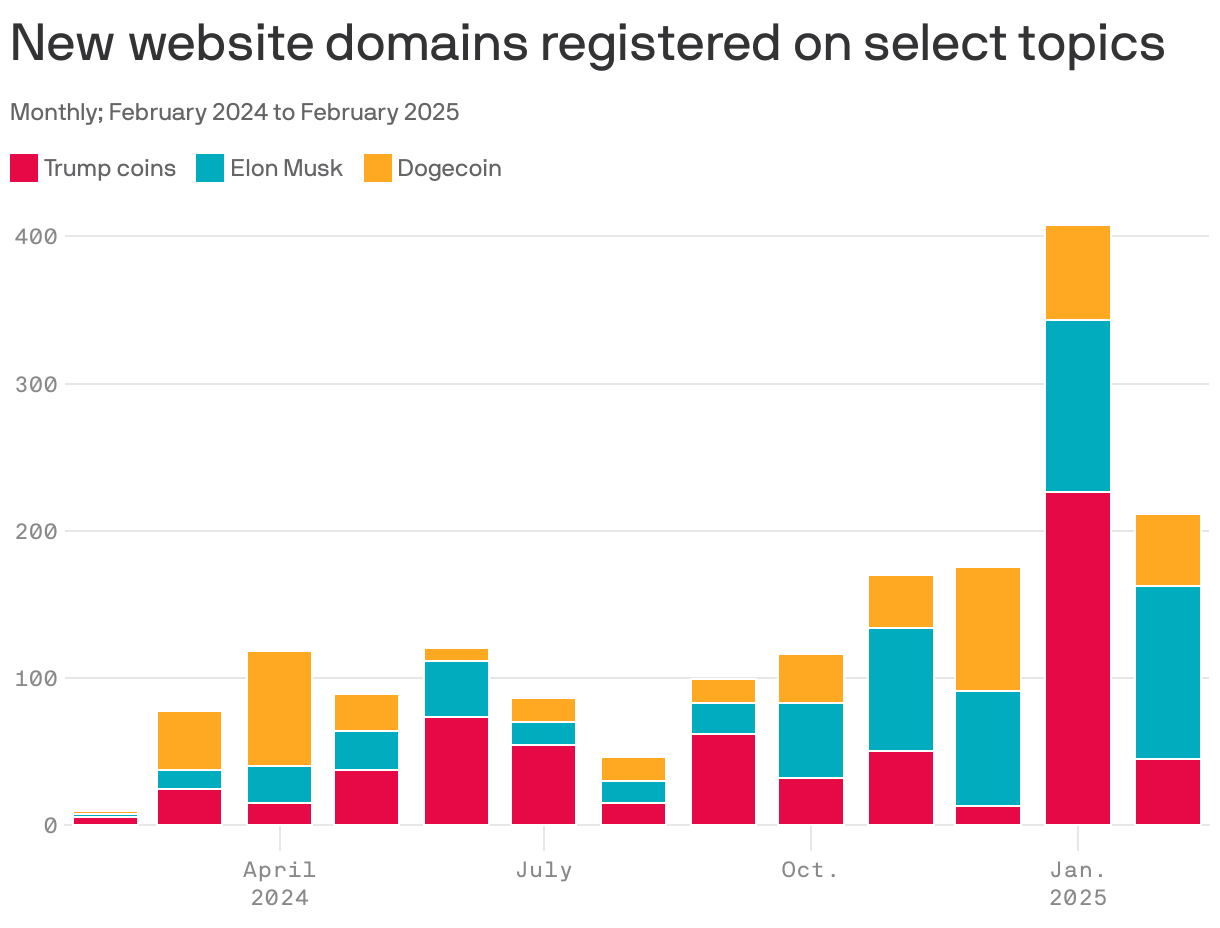
A new report, shared in advance exclusively with Axios by BrandShield, reveals a little of how scammy operators work.
How it works: Miscreants seem to identify a person or brand that people are talking about, come up with something that you think people might buy associated with that brand, and throw up a quick website offering that thing.
- Then, give anyone who bites a way to pay for it and probably don't send it. Don't even make it.
What they found: Folks come up with all kinds of ridiculous websites that touch on key brands. In the chart above, BrandShield found sites associated with the brand Dogecoin (which was first a jokey cryptocurrency but now the brand is running the federal government), Elon Musk and "Trump Coin."
- The latter is probably more limited as the Trump brand is just too big, but also Trump coins were a pretty big thing before he offered a coin.
- Swindlers seem to have taken to Musk.
Zoom in (way, way in): Some seem so bad it's hard to believe anyone would fall for them (we are not linking to any of this stuff).
- A Dogecoin faucet site offering free DOGE. (Bitcoin oldheads will tell you there was once a Bitcoin faucet, but that was long ago.)
- Trump Coin Shop, which for some reason doesn't have a picture of President Trump. It has images of aliens and flying saucers.
- The Ultimate Meme, that is $MUSK, which features Elon Musk as a cartoon dog walking Muppets.
💭 Brady's thought bubble: It's a little hard to feel bad for anyone who fell for any of these.
- But all we know from the report is that these sites went up, not that anyone did.
