American farmers fretting about Trump tariffs


Add Axios as your preferred source to
see more of our stories on Google.
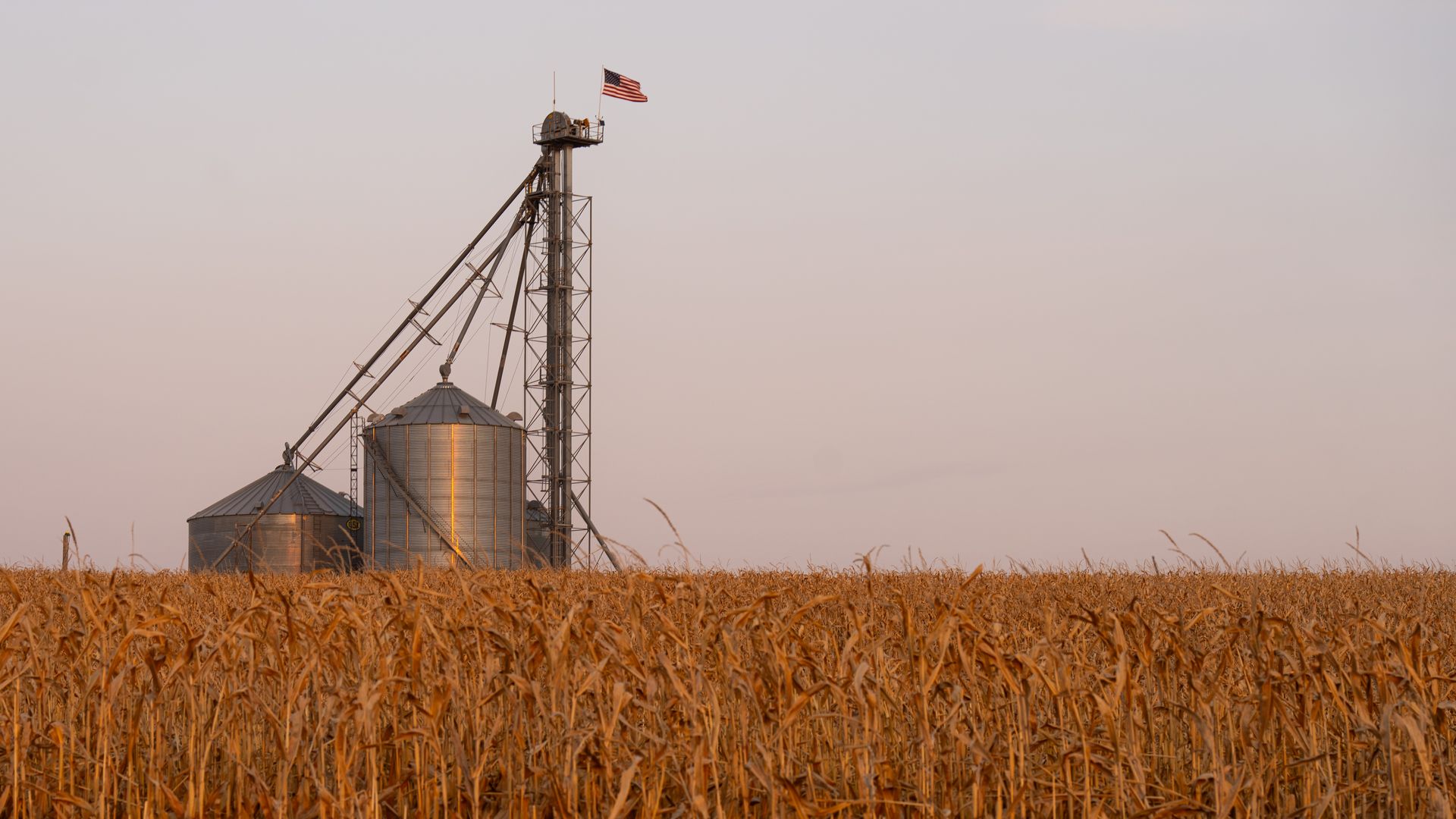
A grain bin in a corn field in Marne, Iowa. Photo: Bill Clark/CQ-Roll Call, Inc via Getty Images
American farmers are bracing for impact as President Trump's trade war threatens foreign markets for U.S. agricultural products.
Why it matters: Ag, food and related industries made up about 5.5% of the U.S. economy in 2023, contributing more than $1.5 trillion to GDP, according to the U.S. Bureau of Economic Analysis.
Catch up quick: The Trump administration imposed 25% tariffs on goods from Mexico and Canada and an additional 10% on goods from China, triggering retaliatory action from all three countries.
- China, Mexico and Canada — in that order — were the three largest foreign buyers of U.S. agricultural goods in 2023, totaling $33.7 billion, $28.2 billion and $27.9 billion, respectively.
- Trump's newly appointed secretary of agriculture, Brooke Rollins said, according to a Reuters reporter, that the president's message to farmers is "trust me."
Agricultural industry advocates struck a cautionary tone Tuesday.
- "Farmers support the goals of ensuring security and fair trade with other nations, but additional tariffs, along with expected retaliatory tariffs, will take a toll on rural America," American Farm Bureau Federation President Zippy Duvall said today in a statement.
The broad farm economy was already in a tough spot with low to negative margins, Collin Watters, director of exports and logistics at the Illinois Corn Growers Association, tells Axios. "Uncertainty around US tariffs and retaliation has had a negative impact on ag markets – pushing commodity prices lower," he said.
- Farmers fear that retaliatory tariffs "can result in restricted markets and lower prices for farmers," Ohio Farm Bureau spokesperson tells Ty Higgins tells Axios.
Meanwhile, there are also concerns around rising prices for imported goods that farmers need to run their operations.
- Case in point: About 85% of the U.S. ag sector's supply of potash, a major ingredient in fertilizer, comes from Canada.
What they're saying: "Tariffs will disrupt highly integrated supply chains, leading to price increases for consumers and reducing the competitiveness of North American agriculture," said Ana Modesto, who conducts risk assessments in the agricultural sector for Allianz Trade Americas, in an email.
- Modesto tells Axios that the disruption could usher in "inefficiencies and delays, particularly for perishable goods," while businesses "may face operational challenges, potentially leading to shortages or higher costs."
Friction point: The ensnarement of farmers in the trade war is proving unsettling for even some of Trump's political allies.
- "I'm taking exception to the President. I'm speaking publicly about being a free trader and how important free trade is," Iowa Sen. Chuck Grassley told an Iowa Farmers Union virtual town hall Monday night.
- "Uneasy, I think, is a word," Sen. Jerry Moran (R-Kan.) told Politico.
Trump suggested Monday on Truth Social that "the Great Farmers of the United States" should "get ready to start making a lot of agricultural product to be sold INSIDE of the United States."
- But producing more agricultural goods won't happen immediately and may not be possible for products that aren't a good fit for American soil.
What we're watching: Whether other countries snatch market share away from American farmers while the U.S. is engaged in this trade war.
- "Anything that makes it tough to deal with the US as a customer is going to be to the advantage of South America," Garrett Riekhof, who is a Missouri Soybean Association board member and farmer, said on a podcast last month.
Contributing: Jason Clayworth in Des Moines, Chrissy Suttles in Pittsburgh and Alissa Widman Neese in Columbus
