CoreCivic signs deal with ICE to expand immigrant detention capacity

Add Axios as your preferred source to
see more of our stories on Google.
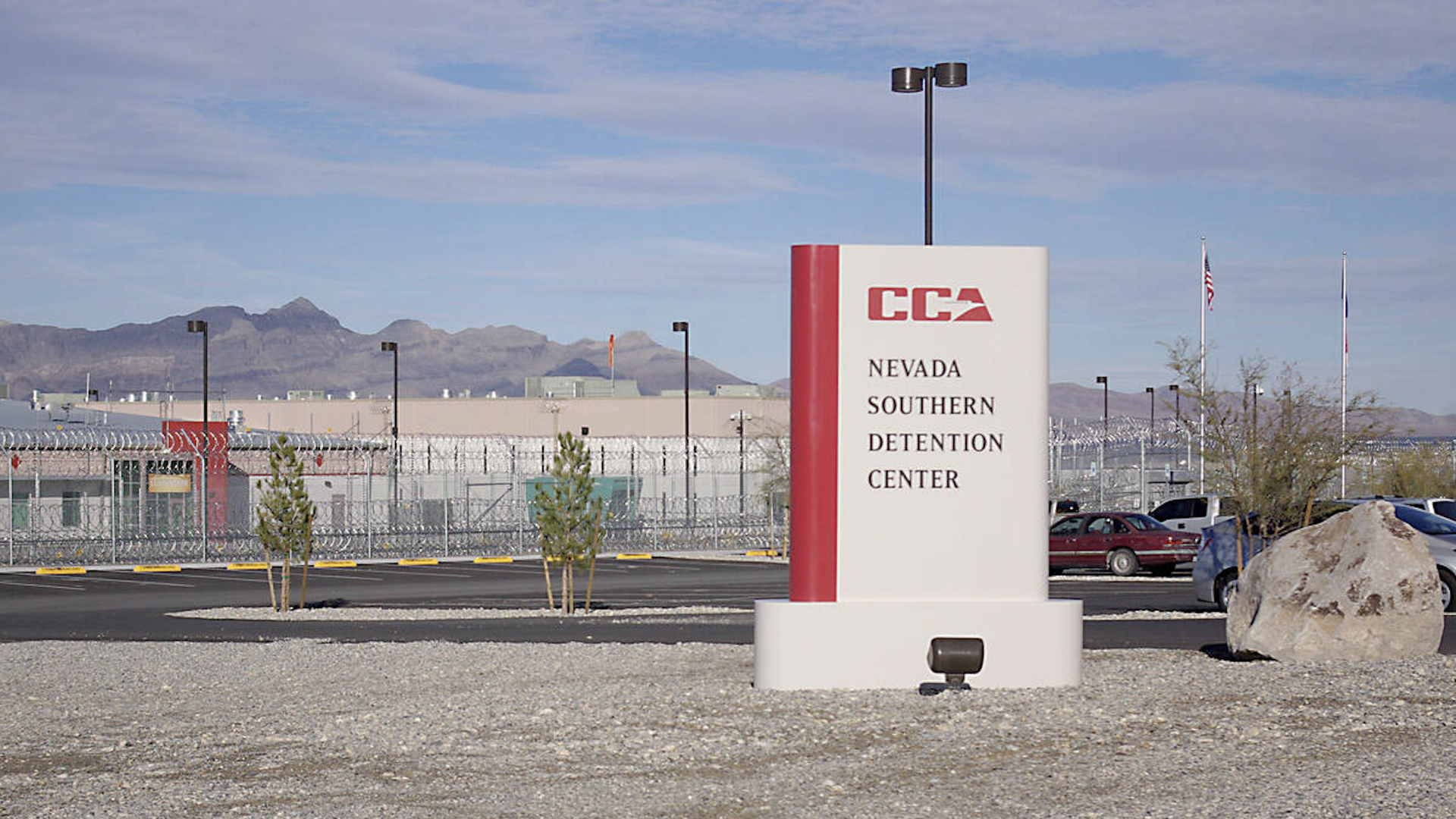
Nevada Southern Detention Center is operated by CoreCivic, a private company formerly known as Corrections Corp. of America. Photo: Las Vegas Review-Journal/File via Getty Images
Private prison company CoreCivic has inked a deal with U.S. Immigration and Customs Enforcement (ICE) to expand detention capacity for immigrants at four of its prisons.
Why it matters: ICE is holding more than 40,000 immigrants in detention at over 100 locations across the country and will need vastly more bed space under President Trump's mass deportation plan.
Zoom in: CoreCivic said Thursday that it has expanded its contracts with ICE to accommodate up to 784 detainees at facilities in Mississippi, Nevada, Ohio and Oklahoma.
- That means CoreCivic will be able to expand immigrant detention at the 2,016-bed Northeast Ohio Correctional Center, its 1,072-bed Nevada Southern Detention Center, and its 1,600-bed Cimarron Correctional Facility in Oklahoma.
- In addition, CoreCivic has obtained a contract modification to allow ICE use 252 beds at its 2,672-bed Tallahatchie County Correctional Facility in Mississippi.
- An Axios review of ICE detention data analyzed that was collected by the Transactional Records Access Clearinghouse (TRAC) found that none of the facilities were holding any immigrants as of Feb. 9, 2025.
- CoreCivic did not disclose terms of the contract.
What they're saying: "We are pleased to provide U.S. Immigration and Customs Enforcement with this additional capacity," CoreCivic CEO Damon T. Hininger said in a statement.
- "We have an extensive supply of available beds that provides our government partners the flexibility to satisfy their immediate and long-term needs in a cost-effective manner."
- Hininger said CoreCivic expects to enter more contracts with ICE as it seeks more detention space for detained immigrants.
The intrigue: CoreCivic shares spiked after Trump's victory in November, as investors bet the administration would need more detention capacity.
- But they've fallen around 16% this year, as that demand mostly didn't materialize (and as the administration has looked at alternate options, like Guantánamo Bay, Cuba.).
Zoom out: Facilities in Mississippi, Louisiana and Texas are holding the most detainees among the tens of thousands who've been rounded up across the nation during the ongoing crackdown on illegal immigration, according to federal data.
- Detention facilities can be run by the U.S. Federal Bureau of Prisons, state or local governments, private contractors like CoreCivi, the U.S. Marshals Service or facilities ICE has for families.
Between the lines: Holding immigrants in detention is by far the largest cost of the deportation process.
- A backlog of 3.7 million cases in immigration courts, where immigrants are entitled to make their case to stay in the U.S., means detained immigrants can wait months, even years, for a hearing.
- Undocumented immigrants facing criminal charges can't be deported immediately, as Trump has suggested. Instead, they typically have to go through the criminal justice system, serve sentences if found guilty, then face deportation.
- To hold more people from a raid surge would require a mass building project of "soft detention" centers, or temporary facilities, to house immigrants beyond the system's current capacity of about 42,000 people.
