The economic peril of pivoting to Russia


Add Axios as your preferred source to
see more of our stories on Google.
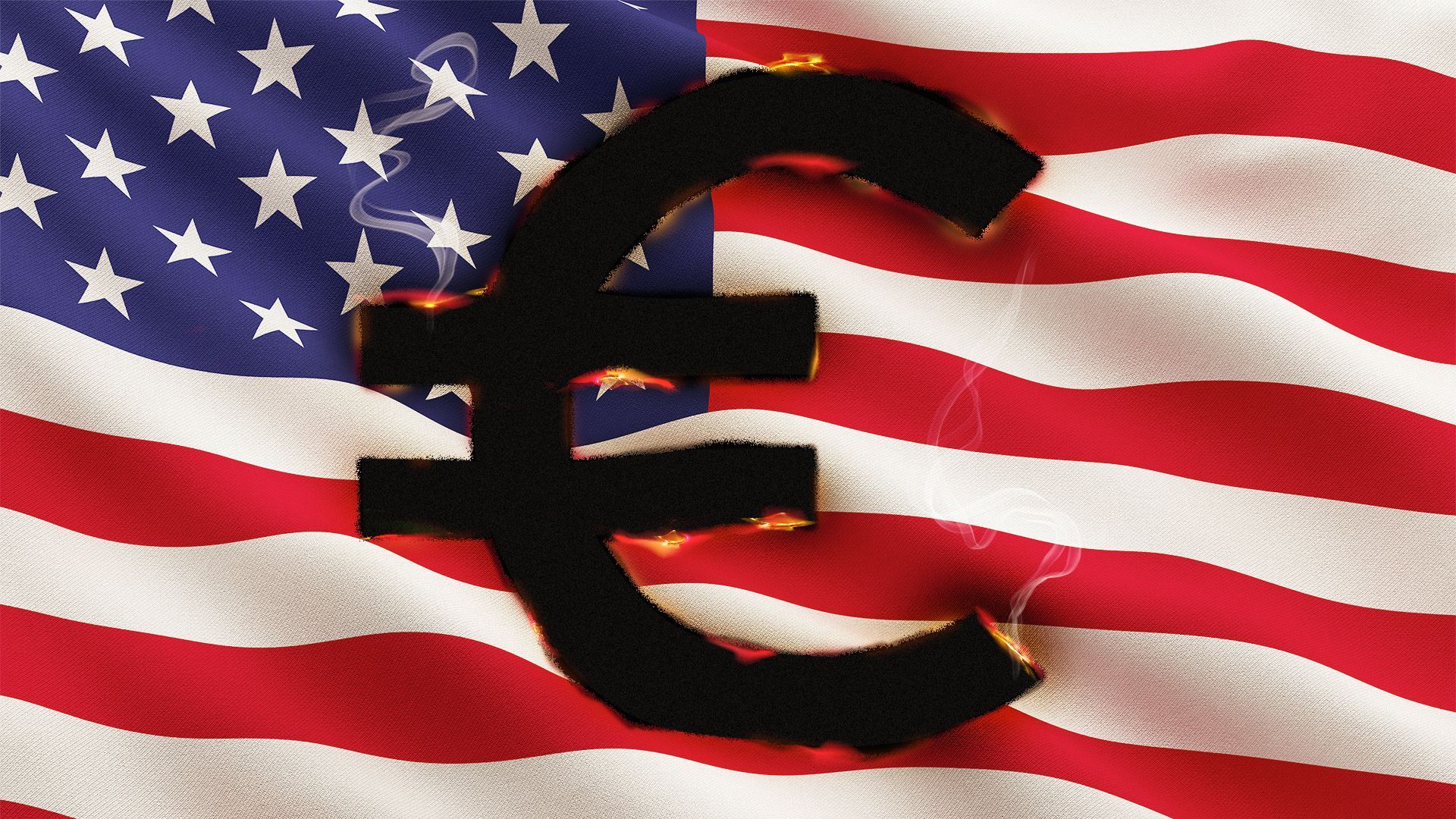
Illustration: Aïda Amer/Axios
As Donald Trump pivots away from Europe and toward Russia, he's putting at risk the deepest and most important economic relationship in the world: that between the U.S. and Europe.
Why it matters: The U.S. economy has reaped enormous dividends from the way in which the U.S. government has provided a security guarantee to Europe. If that guarantee goes away, the dividends might, too.
The big picture: "No two other regions in the world are as deeply integrated as the U.S. and Europe," per AmCham EU, which collates such figures.
- More than 60% of foreign investment into the U.S. comes from Europe, and in the other direction, more than 60% of foreign investment by the U.S. goes into Europe.
- Similarly, U.S. companies employ about 5 million Europeans, while European companies employ some 5 million Americans.
- European companies are major employers in several Trump-supporting states, including BMW in South Carolina, Volkswagen in Tennessee, Airbus in Alabama, and Siemens in Texas and the Carolinas.
Zoom out: "Security goes hand in hand with interdependence," Abraham Newman, a Georgetown University political scientist, tells Axios.
- "From the Marshall Plan to the creation of the EU, the U.S. made the bet that if you solved security issues it would generate huge new wealth for U.S. companies. And it did," he says.
- Former U.S. Treasury secretary Hank Paulson tells a story of a Chinese official saying to him that "you have all the good allies." Effectively, China has always been stymied, in terms of competition with the U.S., by the fact that America is strongly allied with Europe.
Between the lines: The depth of the U.S.-EU relationship dwarfs anything that Russia can offer. Even before Russia first invaded Ukraine in 2014, for instance, U.S. goods exports to Russia were a mere $11 billion, roughly one-third of U.S. exports to Belgium alone.
- Russia, per the New York Times, claims American losses due to pulling out of Russia have totaled more than $300 billion. But that doesn't mean there's anything close to $300 billion of opportunity in reopening Russia to U.S. business.
- Edward Fishman, a former Russia sanctions lead at the State Department, tells Axios: "The U.S. is much better at turning off economic activity than we are at turning it on."
- Even if all U.S. sanctions on Russia were lifted tomorrow, most American companies would still be extremely wary of reentering a country led by Vladimir Putin, and would likely stay away.
What's next: If Europe no longer benefits from U.S. geostrategic protection, that in turn will affect the way American companies are viewed on the continent, per Georgetown's Newman.
- As U.S. companies become increasingly viewed as a mask for U.S. power, he says, the rhetoric surrounding them will move from complaints about fair competition to worries that they represent a security threat.
The bottom line: If Europe starts seeing the U.S. as an enemy superpower, the negative consequences for the U.S. domestic economy would likely be enormous.
