Feb 14, 2025 - Technology
Romance scammers cash in on loneliness

Add Axios as your preferred source to
see more of our stories on Google.
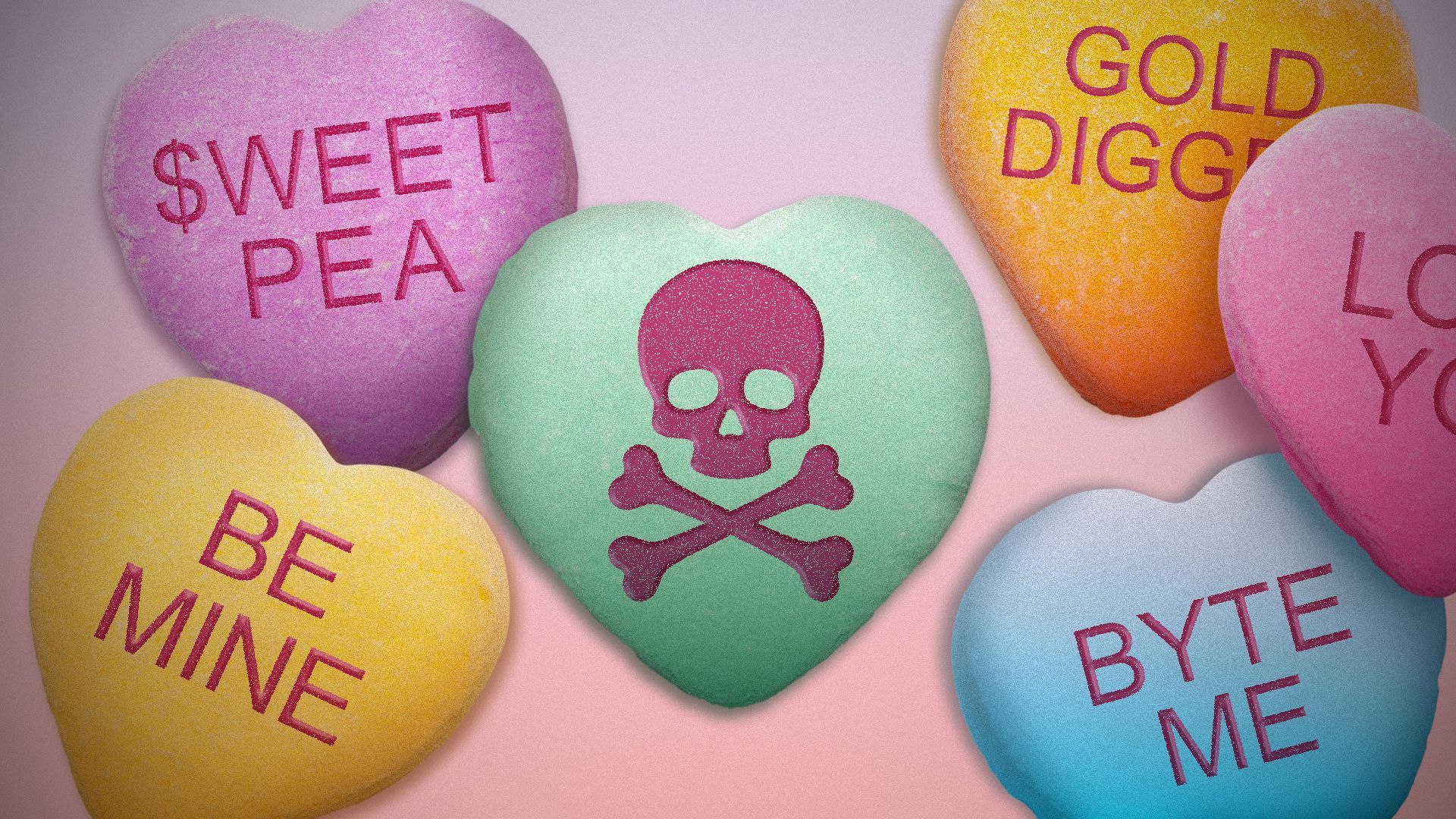
Love is in the air today — and that's true even for scammers and cybercriminals.
The big picture: Scammers have long exploited people seeking companionship, pressuring them into sending gift cards, cryptocurrency and traditional currency.
- Romance scams typically involve a fraudster cultivating a lengthy online relationship to build trust and then coaxing the victim into sending money, gift cards or other valuables.
- These scammers are increasingly using AI tools, including chatbots and deepfake video calls, making it harder than ever for potential victims to spot warning signs.
Threat level: In 2023, people in the U.S. lost more than $652 million to romance scams, according to the FBI's latest data.
Zoom in: Three cybersecurity firms released separate reports this week, each detailing how romance scams have surged over the past year.
- A Chainalysis report found that romance scams made up roughly one-third of crypto scam revenues in 2024, marking a nearly 40% year-over-year increase.
- A McAfee survey showed that 52% of respondents have either been pressured or successfully convinced to send money or valuables to someone they met online.
- A Norton survey published Monday found that 24% of consumers worldwide say loneliness drives them to make riskier choices when online dating.
The bottom line: McAfee advises staying vigilant if a potential romantic partner asks for financial help or resists phone and video calls.
- The company also recommends browsing a match's social media profiles and using reverse image searches — especially if the match seems "too good to be true."
