Texas measles outbreak fans fears of wider rebound

Add Axios as your preferred source to
see more of our stories on Google.
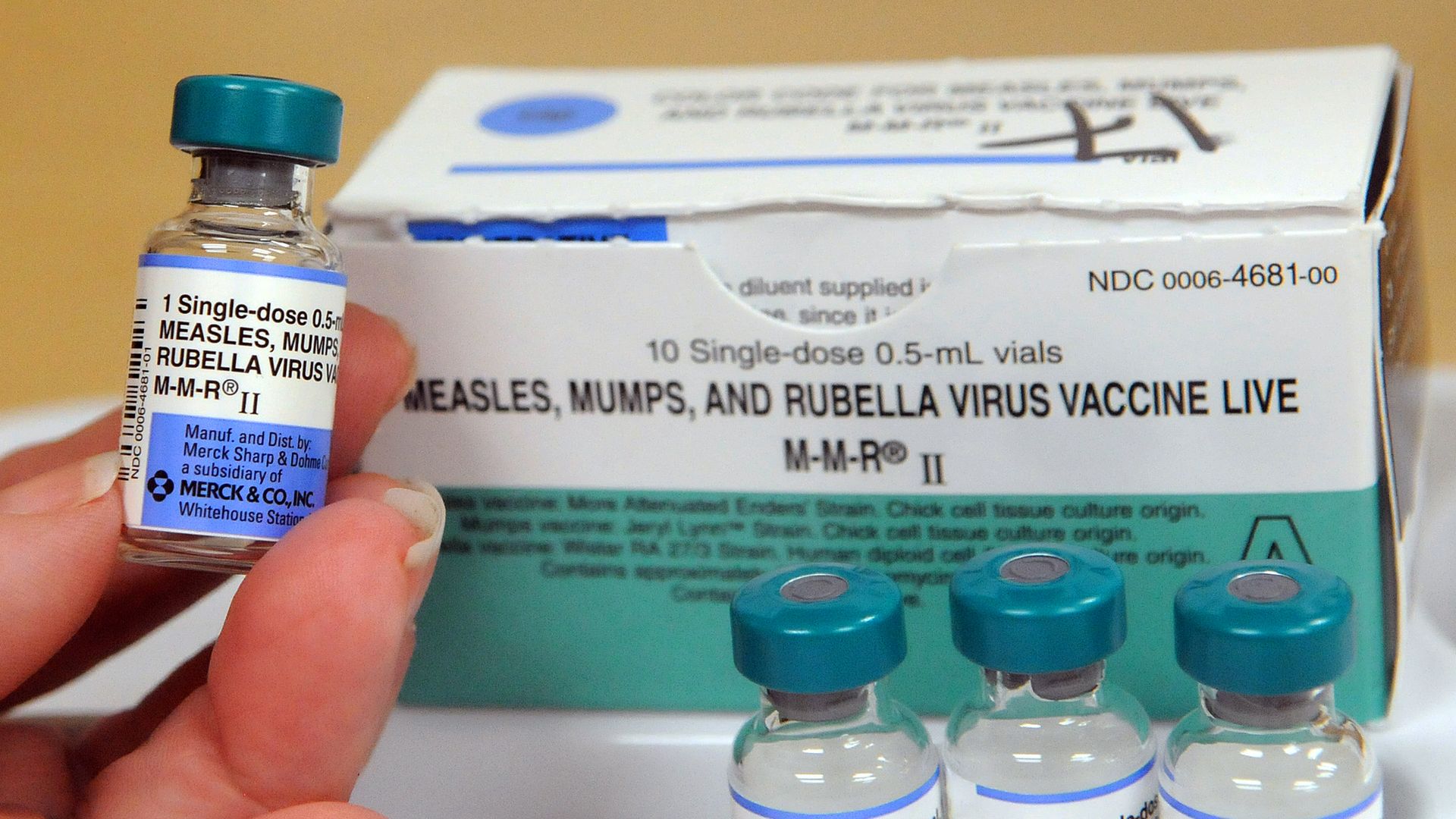
Photo: Paul Hennessy/NurPhoto via Getty Images
At least two dozen cases of measles have been reported in a single county in Texas over the past two weeks, in the latest sign the disease is rebounding amid falling vaccination rates.
Why it matters: Public health experts say the spread of the highly contagious and potentially life-threatening disease is preventable, noting cases have surged in areas with high vaccination exemption rates.
- Those concerns have taken on a new urgency with Robert F. Kennedy Jr. — who has embraced the debunked theory linking the measles, mumps and rubella (MMR) vaccine and autism — poised to become the nation's top health official.
Driving the news: The part of Texas affected by measles outbreak has a low vaccination rate and among the highest school vaccine exemption rates in the state, per CBS News.
- "This was completely preventable," Dr. Amesh Adalja, an infectious disease physician and senior scholar at Johns Hopkins told CBS.
- Four other states — Alaska, Georgia, New York and Rhode Island — also have reported cases this year, according to the latest Centers for Disease Control and Prevention data that was updated Feb. 7.
- The majority of those cases are believed to have been among the unvaccinated, or the individuals' vaccine statuses were unknown.
The big picture: Measles was declared eliminated in the U.S. in 2000, but health advocates worry the decline in vaccination rates is allowing the disease to make a comeback.
- To prevent measles outbreaks, the CDC recommends at least 95% of people get two doses of the MMR vaccine.
- Vaccination coverage among U.S. kindergartners dropped from 95.2% in 2019-2020 to 92.7% in 2023-2024, and many states have lower than 90% coverage.
By the numbers: In 2024, there were 16 outbreaks and 285 measles cases reported across 33 states. Among those cases, 40% were hospitalized.
- In comparison, there were four outbreaks in 2023 and 59 total cases.
Yes, but: The U.S. hit a high water mark in 2019, with 1,274 cases before seeing a precipitous drop during the COVID pandemic.
