Where unemployment is rising and falling

Add Axios as your preferred source to
see more of our stories on Google.
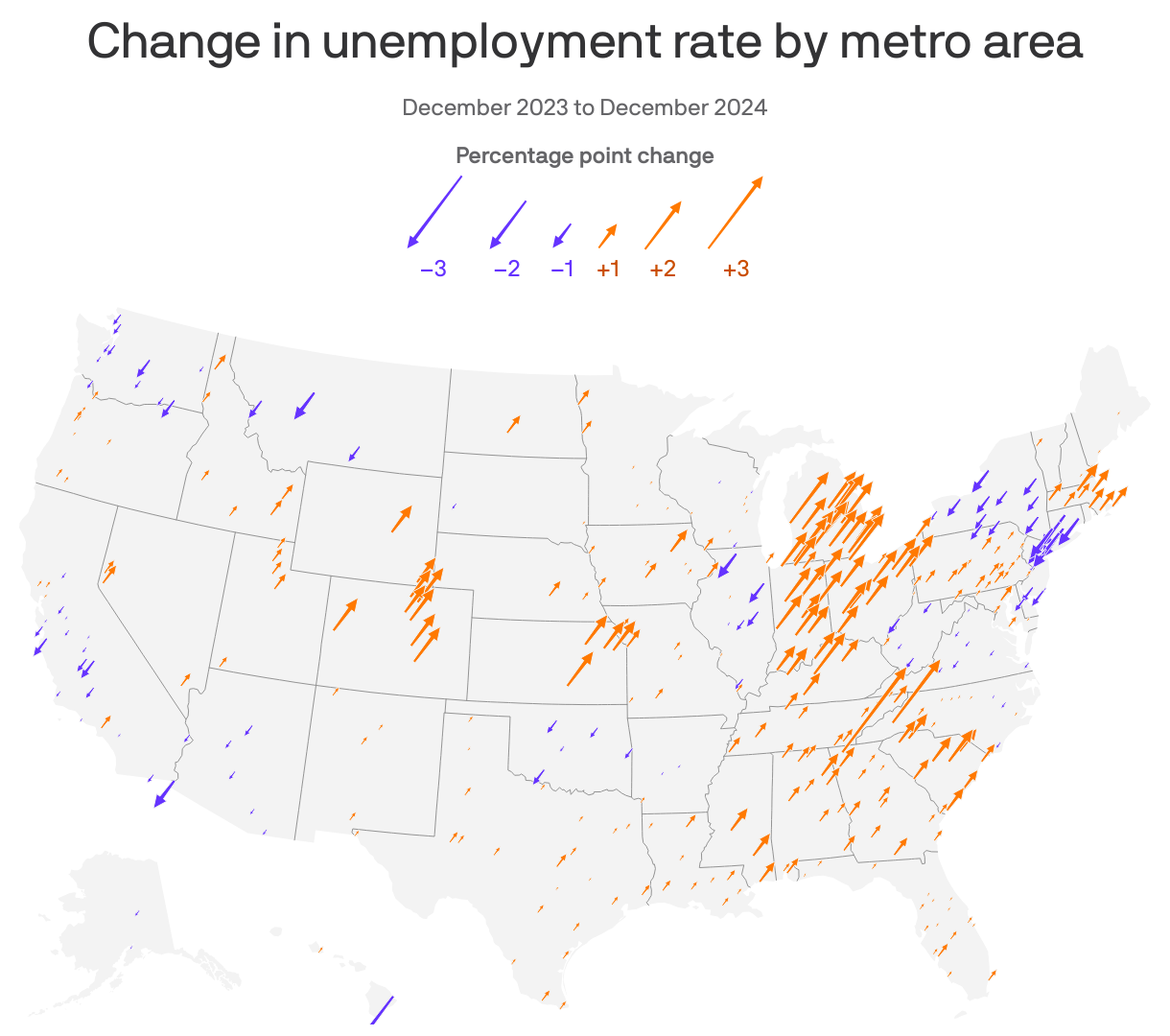
Over two-thirds of U.S. metros ended 2024 with higher unemployment compared to a year prior, per recent Labor Department data.
Why it matters: The big national unemployment picture is one thing. The hiring climate in specific cities is sometimes another.
Driving the news: The unemployment rate was higher in December 2024 compared to December 2023 in 266 of 389 metro areas, according to the latest U.S. Bureau of Labor Statistics data.
- Put another way, nearly 70% of metros ended 2024 with higher unemployment compared to how they began the year.
- Unemployment dropped in 95 metros and held steady in 28 others.
Zoom in: Dalton, Georgia (+3.5 percentage points); Asheville, North Carolina (+2.6); and Muskegon, Michigan (+2.1), had the biggest increases in metro-level unemployment.
- Kahului, Hawai'i (-2.2); Waterbury, Connecticut (-1.7); and Bridgeport, Connecticut (-1.4), had the biggest decreases.
Caveat: These figures are not seasonally adjusted.
The intrigue: Many of the worst-performing metros are in Michigan, perhaps due at least in part to a nearly 2% decrease in statewide manufacturing jobs in December 2024 compared to a year prior.
The big picture: The latest national-level jobs data showed "solid hiring" in January, as Axios' Courtenay Brown reports: The economy added 143,000 jobs, while the unemployment rate dropped to 4%.
What's next: Metro-level unemployment data for January is due out early next month.
