Fed official: Ignoring supply chain risks from tariffs could fuel inflation

Add Axios as your preferred source to
see more of our stories on Google.
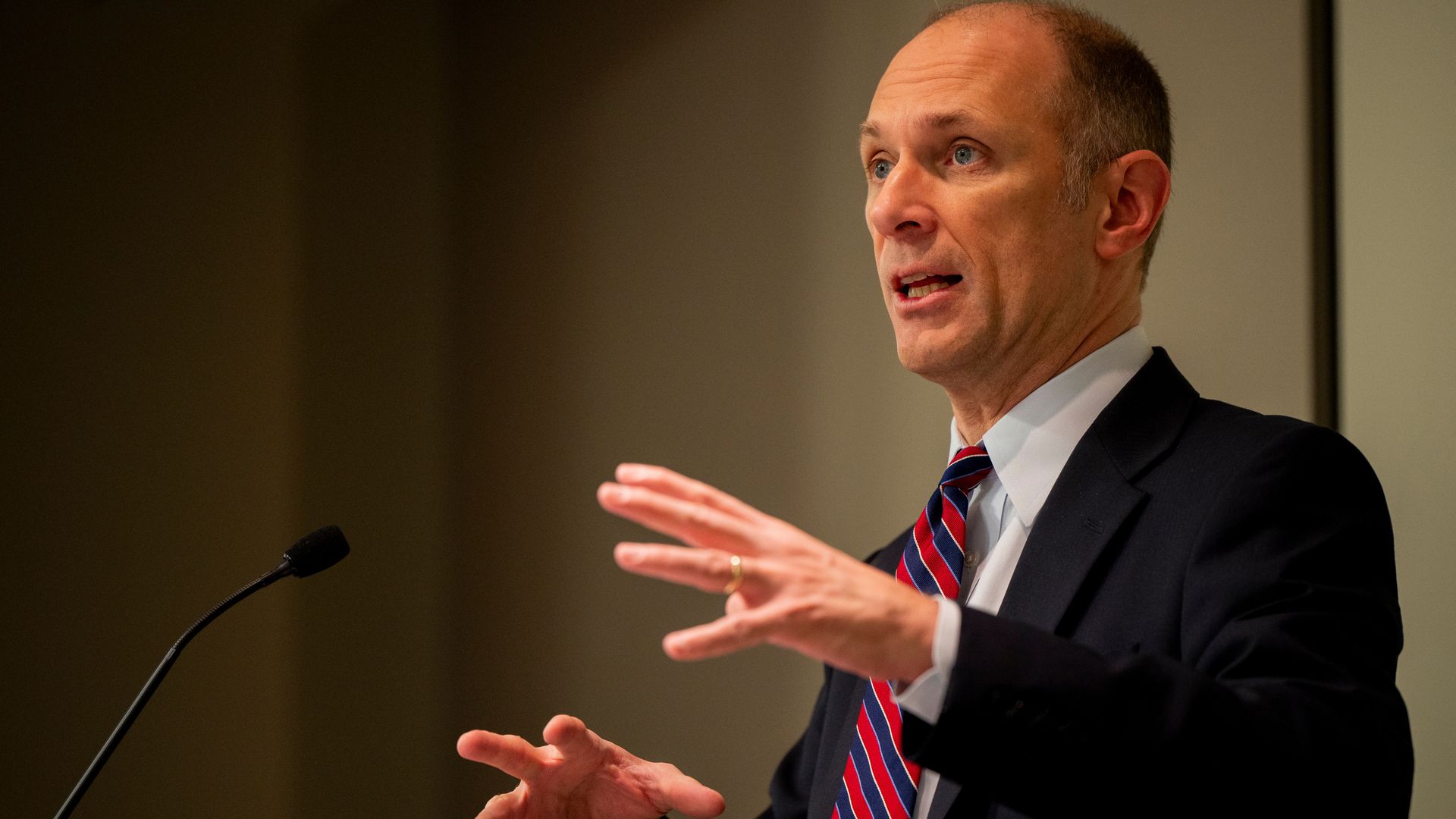
Chicago Fed President Austan Goolsbee at a conference in November. Photo: Vincent Alban/Bloomberg via Getty Images
The potential for an escalating trade war and other supply chain disruptions threaten to drive up inflation as happened during the COVID-19 pandemic, the president of the Federal Reserve Bank of Chicago said Wednesday.
Why it matters: Supply chain problems were the biggest drivers of inflation over the past five years, according to Chicago Fed President Austan Goolsbee, who warned that it's "dangerous" for policy makers to ignore those risks in 2025.
Driving the news: Goolsbee spoke at the Chicago Fed's annual Automotive Insights Symposium in Detroit, where tariffs and trade policy were hot topics among auto industry stakeholders.
- "Until recently, economists paid little attention to supply chains," he said.
- "Then, in 2020, we all found out the hard way how much they can matter for the economy and for inflation."
- "As we seem to be entering a new period of risks to the global supply chain, some of the lessons we learned during the COVID-19 pandemic may have a direct bearing on monetary policy decision-making in the coming months."
Flashback: Goolsbee pointed to the toilet paper and beef shortages during the early COVID lockdowns to illustrate the specialized, fragile nature of supply chains.
- It turned out that homes and businesses rely on different supply chains for toilet paper, for example, which is why stores sold out when people started working from home.
- But the auto supply chain is far more complex, Goolsbee said. A shortage of semiconductors, for example, had huge spillover effects that eventually hit rental car counters.
The big picture: Five years later, supply chains seem "mostly healed" and have returned to "close to normal," he said. But three big lessons emerged from the pandemic that shouldn't be ignored in the current discussions over trade and monetary policy.
- "The supply chain is more specialized — with fewer substitutes — and therefore more fragile than you might think," Goolsbee said.
- "The complexity and interdependence of supply chains means that problems can spill over into other markets and may take longer to resolve than you would have thought."
- "Supply side disruptions can have a material impact on aggregate inflation. They aren't always just minor disturbances that average out at the macro level. It is dangerous to just ignore them."
What we're watching: "If we see inflation rising or progress stalling in 2025, the Fed will be in the difficult position of trying to figure out if the inflation is coming from overheating or if it's coming from tariffs. That distinction will be critical for deciding when or even if the Fed should act," he said.
The bottom line, according to Goolsbee: The supply side of the economy can't be an afterthought for macroeconomics.
