Unanswered questions from RFK Jr.'s first confirmation hearing


Add Axios as your preferred source to
see more of our stories on Google.
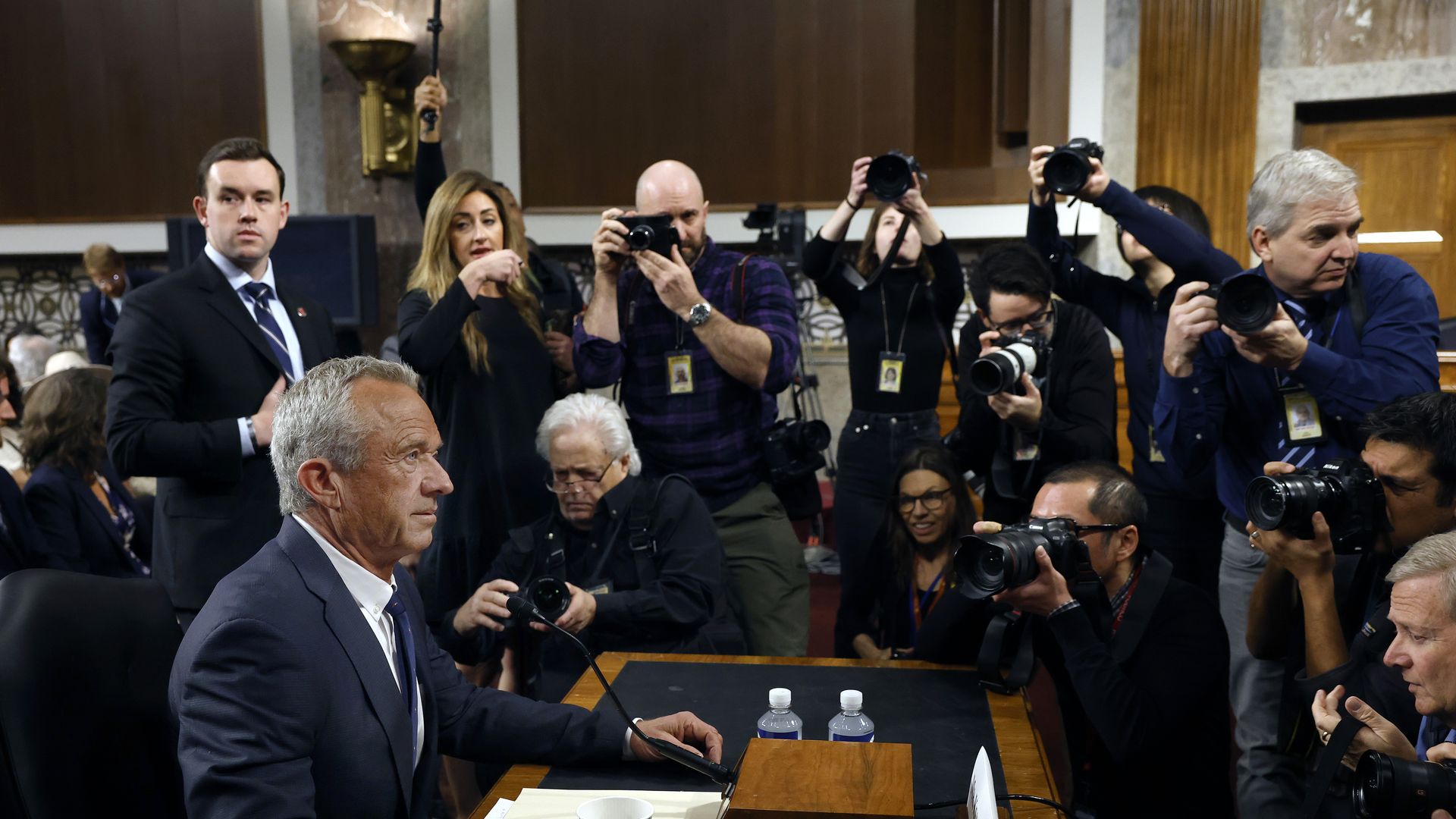
Robert F. Kennedy Jr. arrives for his Senate Finance Committee confirmation hearing on Wednesday. Photo: Anna Moneymaker/Getty Images
Health and Human Services Secretary-designate Robert F. Kennedy Jr.'s first confirmation hearing threw off the expected sparks on Wednesday, but his exchanges with lawmakers didn't resolve key questions about how he'd perform as the nation's top health official.
Why it matters: Beyond flubbing basics on Medicare and Medicaid and making factual errors about the biggest programs he would oversee, the controversial nominee backtracked on past stands regarding vaccines and abortion and was vague on how closely he'd hew to President Trump's policies.
- He'll face a second day of questioning Thursday before the Senate health committee.
While the expectation is Kennedy will survive a close confirmation vote, he left some unanswered questions for senators to pick over, including:
Is he qualified to lead?: While Kennedy expressed lofty ideas for how he wants to reform U.S. health care, he demonstrated a lack of understanding of the nuts and bolts of the job over parts of three hours before the Senate Finance Committee.
- Kennedy struggled to answer questions from Sen. Bill Cassidy (R-La.) about Medicaid and Medicare, which "exposed that RFK Jr. has put very little thought into how to deal with our largest entitlement programs," one conservative health policy analyst told Axios.
- Specifically, it was RFK's claims that premiums and deductibles for Medicaid were too high — despite being low relative to other programs and nonexistent in some states — that should've spurred more questions about health care financing, Georges Benjamin, executive director of the American Public Health Association, said on a call with reporters.
- "I think the challenge we have is that he was not asked any detail about anything. ... If I was asking those questions, I would have asked him a lot more detail about stuff to try to get a sense of whether or not he actually can manage that department," Benjamin said.
- Some analysts speculate Kennedy, if confirmed, would largely focus on public health and his Make America Healthy Again agenda while lower-down officials would have considerable latitude managing federal health programs.
Would he stand up to President Trump?: Kennedy, at times, put some distance between his personal views and the president's.
- He said he believes climate change is "existential" and that he and Trump "agreed to disagree on that issue." He also expressed support for the global HIV/AIDS program PEPFAR, which has seen its funding frozen in recent days by Trump.
- But the nominee appeared to be willing to toe the party line, particularly on abortion. The lifelong Democrat and abortion rights supporter said he believed every abortion was a tragedy.
- He also said he'd support Trump's policies on the federal Title X family planning program and showed an openness to tightening dispensing or safety reporting requirements for the widely used abortion pill mifepristone, Axios Pro's Victoria Knight wrote.
What does he really think about vaccines?: Democrats hammered Kennedy on previous statements about vaccines, including lawsuits against manufacturers and his work with Children's Health Defense, an anti-vaccine organization he founded.
- Kennedy said that he is "not anti-vaccine" but "pro safety."
- He pledged not to make it difficult for people to obtain vaccines. But he did not renounce a petition he filed with the Food and Drug Administration in 2021 seeking to stop the COVID-19 vaccine. "COVID vaccines are inappropriate for 6-year-old children. … That's why I brought that lawsuit," Kennedy said.
- "It gives me pause to look at the inconsistencies" between what he said today on vaccines and what he's said in the past, said Susan Kressly, American Academy of Pediatrics president.
- Kennedy could wield enormous power over matters like federal immunization schedules and vaccine advisory committees, which, in turn, could affect whether insurers cover the shots.
What to watch: Thursday's hearing will bring more questions, including from key undecided Republican senators Lisa Murkowski of Alaska and Susan Collins of Maine, as well as more lines of inquiry from Cassidy, who is also chairman of the Senate health committee.
- It may also be interesting to see if Kennedy gets more speaking time to give concrete details about what he would do in the role, said Cybil Roehrenbeck, partner at global law firm Hogan Lovells — including on issues that have recently received a lot of attention.
- "Why have the rates of chronic disease gone up so much? Why do we have sicker children than in other parts of the world? A lot of that was left untouched."
