Scoop: Hopp is the newest D.C. scooter operator


Add Axios as your preferred source to
see more of our stories on Google.
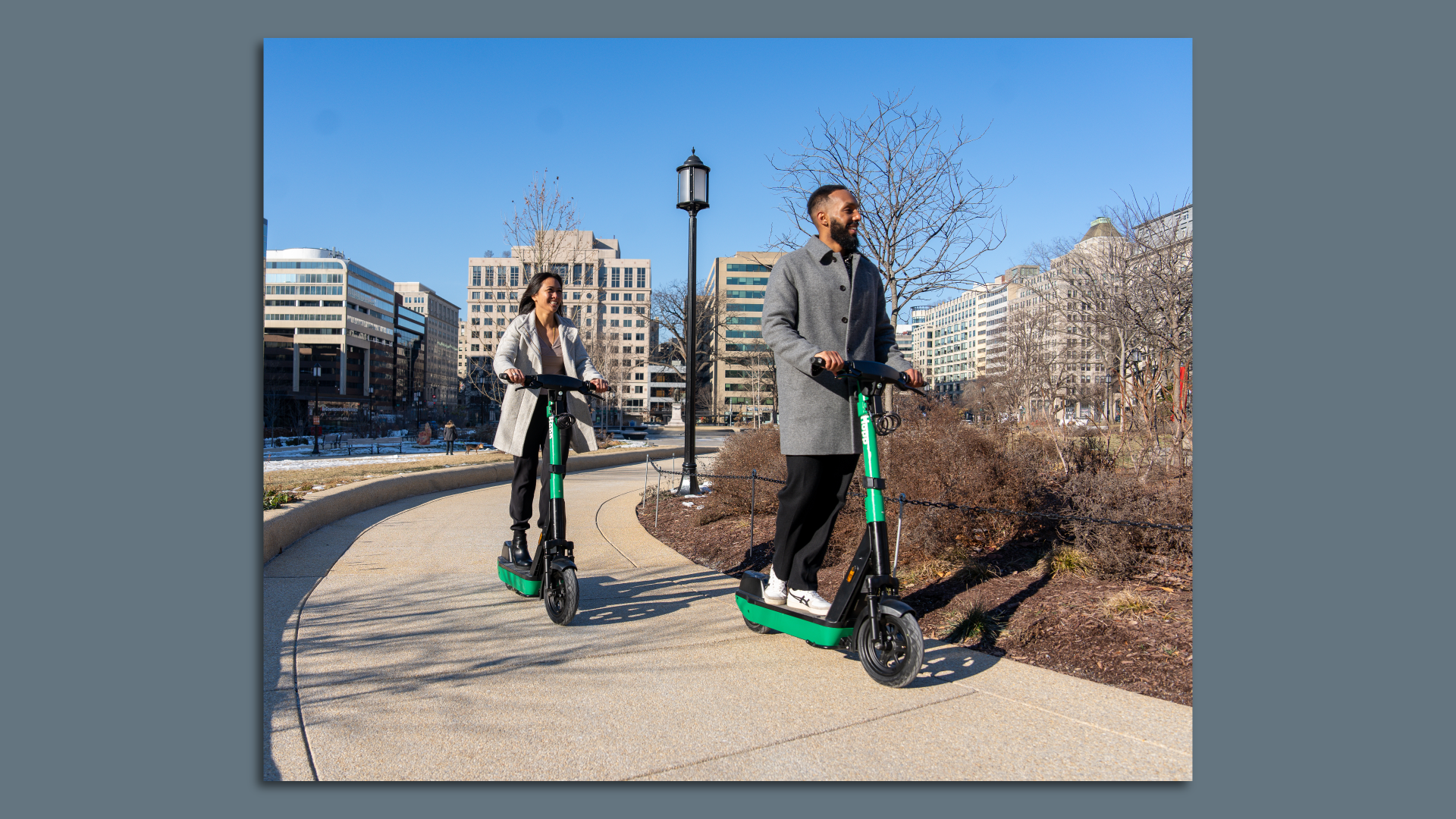
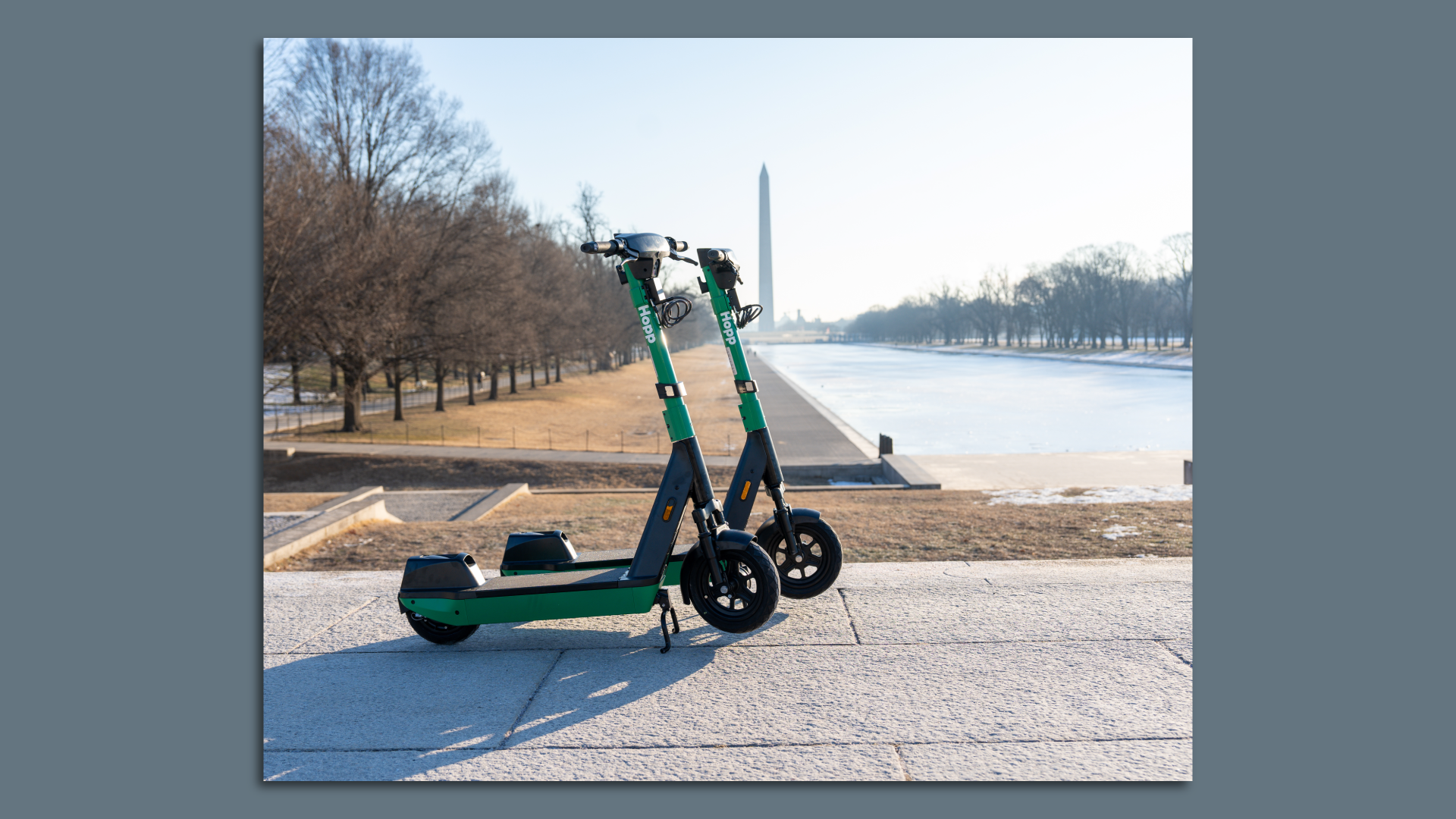
Hopp by Bolt aims to make transportation more accessible to low-income riders in D.C. Photo courtesy of Hopp by Bolt
A new shared scooter company is launching its first U.S. branch in D.C. today, releasing over 700 high-tech standing scooters on city streets.
Why it matters: D.C. was a pioneer in micromobility, launching America's first bike-share program in 2008, and this new company aims to expand transportation access in historically underserved communities.
Driving the news: The District Department of Transportation (DDOT) recently awarded a two-year scooter permit to Hopp by Bolt, which joins existing operators Lime, Veo, and Spin, Axios has learned.
- D.C. is the first U.S. market for Bolt, an Uber competitor based in Estonia that offers ride-hailing, delivery, car-sharing and micromobility services across Europe, Asia and Africa.
- It's called "Hopp" in the U.S. to avoid confusion with Bolt Mobility, a scooter startup co-founded by Olympic gold medalist Usain Bolt that shut down in 2022.
- The company will start with 720 scooters in D.C. and expects to double its fleet size in the coming months.
Zoom out: The launch comes as federal workers are being ordered back into offices full-time under the new Trump administration, and D.C. commuters worry about congested roadways.
The intrigue: Through its Hopp for All program, qualified low-income residents can for now access free rides for up to 30 minutes.
- The program is designed to ensure affordable and sustainable transportation is accessible to all District residents, the company said.
Between the lines: DDOT requires companies to deploy a minimum of 3% of their vehicles per ward for equitable coverage — and cap it at 35% so, say, the National Mall isn't clogged with scooters.
Another Hopp innovation is distance-based pricing, which — instead of time-based rentals — is intended to discourage speeding and other reckless behavior by customers worried about finishing their trip within a certain time limit.
How it works: Hopp's latest scooter model, the Bolt 6, was designed in-house with innovative tech features to enhance safety and the overall riding experience.
- No drunk riding: To cut down on intoxicated riding, users must pass a cognitive test — requiring them to tap on images appearing on their smartphone screen quickly enough — before they can unlock the scooter.
- Fewer scooters littering the sidewalk: A new tech feature uses AI parking technology and geo-location to determine if a scooter is parked upright, in the proper location.
- Warnings about doubling up: If a customer rides with an additional passenger, they'll get a scolding in the app after the ride is finished advising against tandem riding.
- Pedestrian lookout: Camera-based tech alerts the scooter to slow down when it detects sidewalks and pedestrians.
What they're saying: "Washington D.C. represents the perfect intersection of innovation and impact for Hopp's U.S. debut," said Dmitri Pivovarov, Bolt's vice president of micromobility.
- "By prioritizing accessibility in underserved communities while serving the entire city, we're demonstrating how smart mobility can create positive change for all residents."
The big picture: The city's partnership with Hopp is the latest step forward for transportation equity. DDOT launched an e-bike voucher program last year to make it easier for residents — particularly low-income individuals — to buy and maintain electric bikes.
- A second application round for the program starts Saturday and runs through Feb. 21. All applicants, selected at random, can apply for vouchers up to $1,500 for e-bikes, plus helmets and locks.