White House "looking into" national security implications of DeepSeek's AI

Add Axios as your preferred source to
see more of our stories on Google.
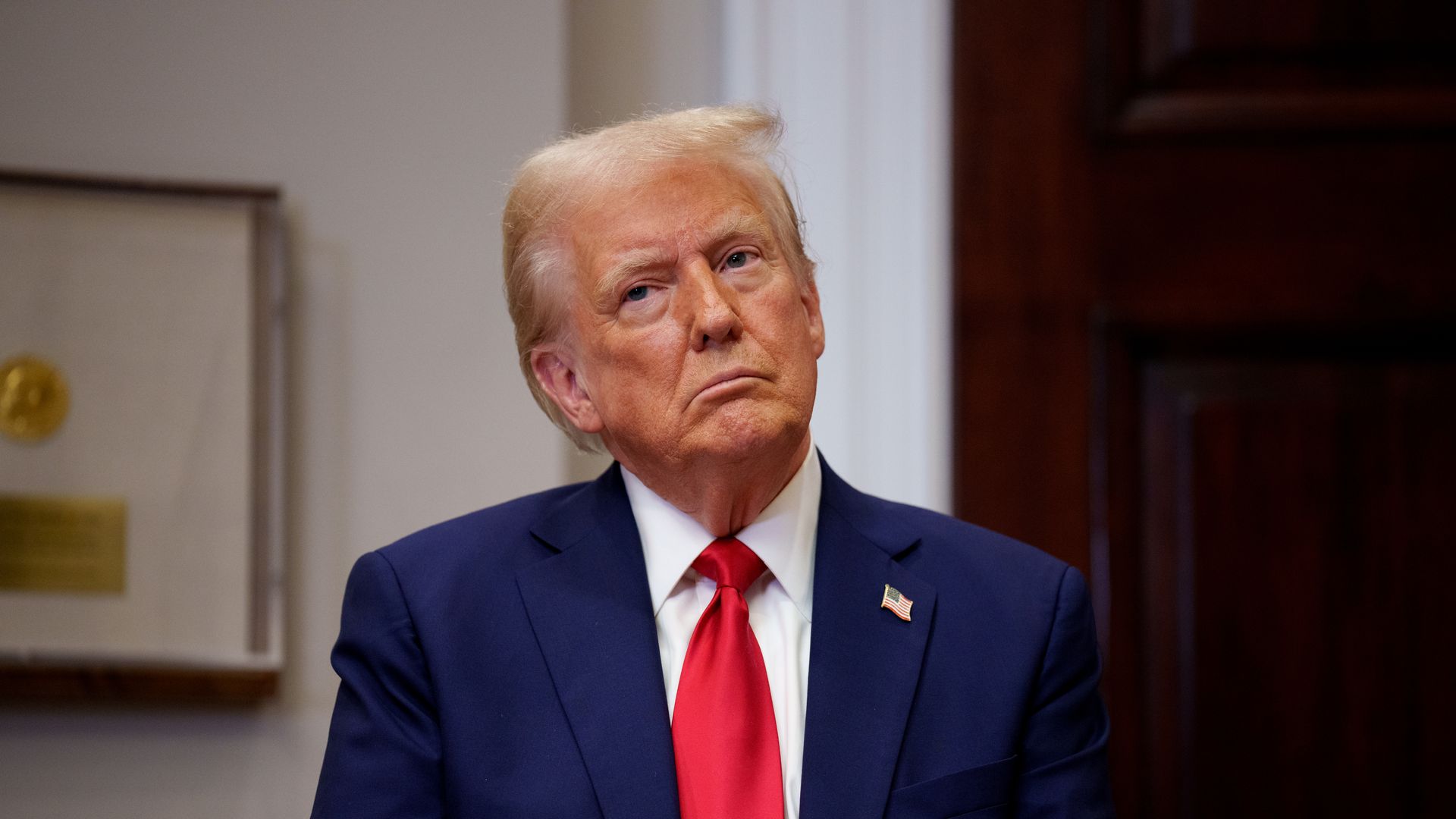
Trump announcing a ne AI initiative at the White House on Jan. 21. Photo: Andrew Harnik/Getty Images
White House Press Secretary Karoline Leavitt said at her first press briefing that the National Security Council was "looking into" the potential security implications of AI breakthroughs from China's DeepSeek, which have rocked Silicon Valley and Wall Street this week.
Why it matters: DeepSeek's low-cost but highly advanced models have shaken the consensus that the U.S. had a strong lead in the AI race with China. Responding to a question from Axios' Mike Allen, Leavitt said President Trump saw this as a "wake-up call" for the U.S. AI industry, but remained confident "we'll restore American dominance."
- Leavitt said she had personally discussed the matter with the NSC earlier on Tuesday.
Driving the news: DeepSeek's app rocketed to #1 in Apple's app store on Sunday night, surpassing U.S. rival ChatGPT in daily downloads.
- Its emergence also tanked the stock of AI chipmaker Nvidia because the Chinese startup's success suggests fewer highly advanced chips may be needed to develop cutting-edge AI than previously thought.
Between the lines: Beyond the economic effects on America's most valuable tech companies, all of which have invested heavily in AI, it's unclear what precisely the national security ramifications might be.
- Some users have reported that its chatbots are unwilling to discuss human rights abuses in China or events like Tiananmen Square.
What they're saying: In the combative tone that characterized much of her first briefing, Leavitt claimed the Biden administration "sat on its hands and allowed China to rapidly develop this AI program," while Trump had moved quickly to appoint an AI czar and loosen regulations on the AI industry.
Reality check: President Biden imposed a string of executive orders to restrict the access of Chinese firms to top-of-the-line chips and the tools needed to make them, precisely to preserve the U.S. advantages in both semiconductors and AI development.
- DeepSeek had already obtained some of Nvidia's more advanced chips before those restrictions came into force but still says it managed to develop its model with far less money and computing power than its American rivals.
- DeepSeek's breakthroughs suggest America's strategy of withholding technology from China might just be speeding up the evolution of its rival's AI knowhow, Axios' Scott Rosenberg reports.
