What the air quality index misses

Add Axios as your preferred source to
see more of our stories on Google.
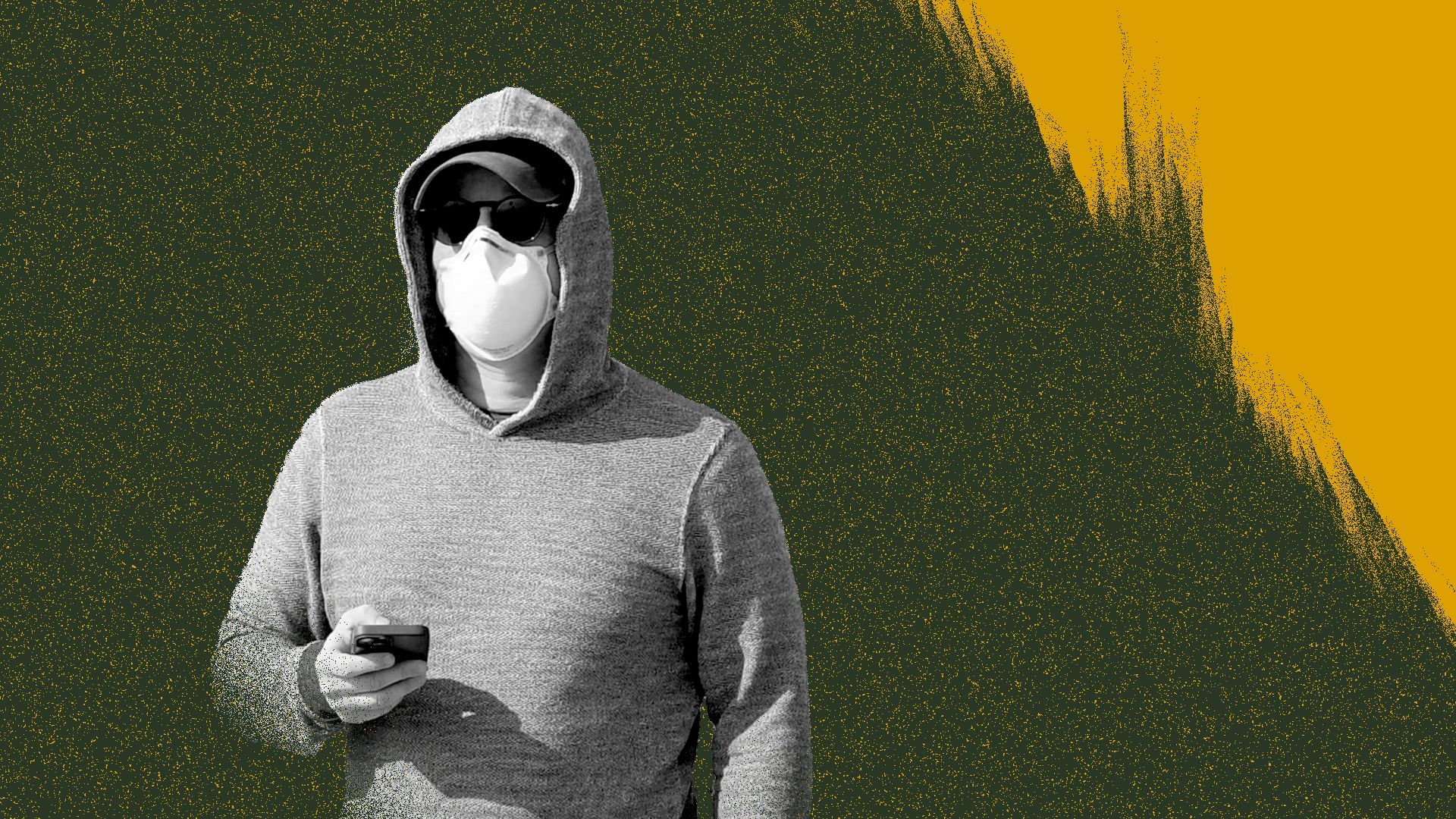
Photo illustration: Brendan Lynch/Axios. Photo: Chris Delmas/AFP via Getty Images
The air quality index (AQI) in many LA regions looks good, but that doesn't mean the air is safe.
Why it matters: The AQI in your weather app doesn't account for all pollutants caused by wildfires.
Between the lines: AQI wasn't set up to monitor ash falling from the sky.
- Even if you see a low AQI score, "it could be downwind from a burn area and experience a lot of ash, and that won't show up in the AQI but it can pose a health issue," Niloufar Nazmi, U.S. air and radiation division manager at the Environmental Protection Agency, tells Axios.
- That's because AQI doesn't always take into account particles as big as those from ash, and vapors that could be off-gassing from burned materials.
- "Anything that has burned is going to release something," but we don't have a way to measure that currently, she says.
Toxins in the air because of wildfires can include "airborne arsenic, lead from old pipes, PCBs [polychlorinated biphenyls] from old electrical equipment, VOCs [volatile organic compounds], burning synthetic materials, so much," Nazmi says.
- Long-term exposure to some of those materials — which aren't considered in the AQI — is linked to cancer.
- Flashback: An analysis of the massive 2018 Camp Fire in California found hazardous compounds from flame retardants in the air.
Zoom out: Scientists are working to understand how toxic the post-wildfire environment is, given the fact that old buildings burned in a major urban area.
Ongoing research questions — according to Michael Kleeman, a professor of civil and environmental engineering at UC Davis who's studied air quality in California for more than 30 years — include:
- How toxic is the LA fire smoke compared to smoke that comes from natural vegetation? (Signs suggest it's way more toxic.)
- How do the chemical compounds from wildfire evolve in an atmosphere like LA (different from the mountains) where there's already some air pollution?
Beyond monitoring AQI, experts recommend other ways to mitigate exposure to post-wildfire pollutants.
Trust your nose and eyes. "Even if the AQI says it's green, your nose is a pretty good common-sense detector," Kleeman tells Axios.
- So if the air smells smoky, "you know you probably shouldn't have prolonged exposure there," he says. That said, if you are outside a burned region, the AQI is good and you don't smell smoke, your exposure risk is low.
- And you should look out for — and stay away from — smoke and ash, which can range in color from white to gray to black, says Nichole Quick, chief medical adviser at the Los Angeles Public Department of Health.
"Respect the ash," Kleeman advises.
- Of course, don't touch it and try not to inhale it. N95 and P100 respirators are recommended, as are HEPA filters inside and safety goggles, gloves and long sleeves if you have to be near the stuff.
- Destroyed buildings should be cleaned by professionals. But if you're dealing with some ash in your home or yard, clean it properly, while keeping in mind that toxic burnt material is made worse when sent airborne. In other words: Don't use a leaf blower.
What we're watching: The South Coast Air Quality Management District takes routine toxic air measurements in places like central LA (in monitoring systems that weren't specifically set up for the recent fires), but the "resource-intensive" data from when fires burned has not been analyzed and shared with the public yet, says Scott Epstein, South Coast AQMD's director of quality and research.
Go deeper: How to safely clean wildfire ash
