Medicare will negotiate lower price for Ozempic

Add Axios as your preferred source to
see more of our stories on Google.
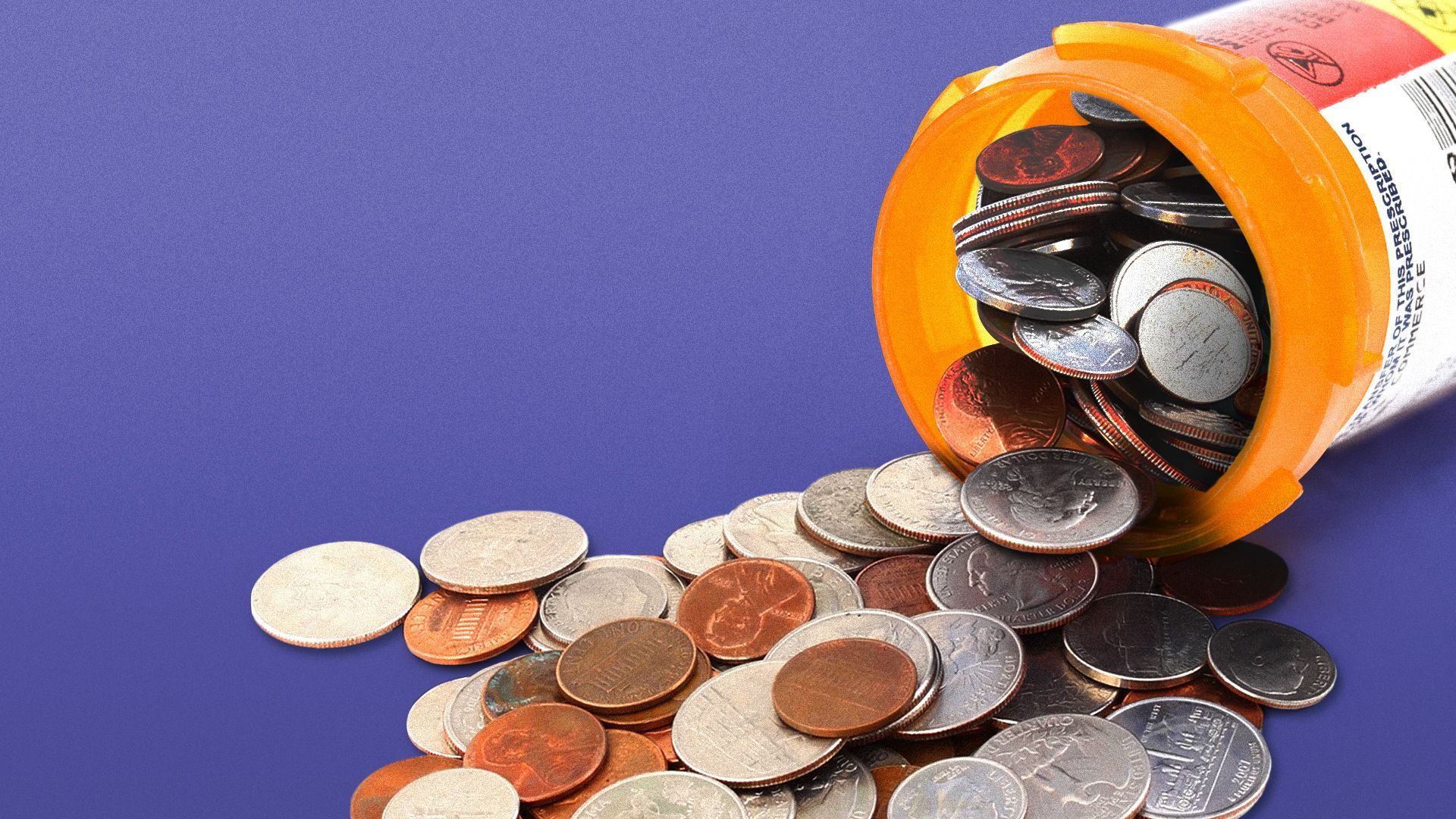
Illustration: Gabriella Turrisi/Axios
Medicare will seek to negotiate lower prices for Novo Nordisk's popular but pricey GLP-1 drugs Ozempic, Wegovy and Rybelsus, along with 14 other drugs, the Biden administration announced Friday morning.
Why it matters: The announcement kicks off the second round of price negotiations between Medicare and drugmakers. The talks, which stem from the Inflation Reduction Act and have already survived multiple court challenges, are projected to save taxpayers billions of dollars.
- The prices negotiated in the latest round will would take effect starting in 2027.
- The selected drugs made up about $41 billion of total gross covered prescription costs under Medicare's Part D program, program administrators said.
Zoom in: Medicare only covers Ozempic and Rybelsus for diabetes and Wegovy for heart disease. But the products, which are different versions of the medication semaglutide, still cost the program about $7.5 billion in 2023.
- The Biden administration had separately proposed having Medicare cover the drugs for obesity treatment, leaving a final decision to the Trump administration.
The other drugs on the new negotiation list include:
- Xtandi, a drug used to treat prostate cancer from Astellas and Pfizer.
- Trelegy Ellipta, a prescription inhaler made by GlaxoSmithKline.
- Pomalyst, used to treat cancer and AIDS-related sarcoma and made by Bristol Myers Squibb.
- Ibrance, a Pfizer drug for breast cancer.
- Ofev, a lung disease drug from Boehringer Ingelheim.
- Linzess, a treatment for irritable bowel syndrome from AbbVie and Ironwood.
- Calquence, an AstraZeneca drug for blood cancer.
- Austedo; Austedo XR, Teva's drug to treat symptoms of Huntington's disease.
- Breo Ellipta, another inhaler from GSK.
- Tradjenta, a drug for type 2 diabetes made by Boehringer Ingelheim.
- Xifaxan, also used for IBS treatment, from Salix and Bausch.
- Vraylar, an antipsychotic from AbbVie.
- Janumet; Janumet XR, a Merck drug for type 2 diabetes.
- Otezla, a psoriasis drug from Amgen.
The negotiations focus on costly drugs with no competition that have been on the market for a number of years.
What they're saying: A Novo Nordisk spokesperson said the company remains opposed to "government price setting through the IRA" and has "significant concerns" with how the law is being implemented by the Biden administration.
- "As part of our steadfast commitment to ensure patients have access to our medications, we will work with the incoming administration to deliver meaningful solutions for patients" the spokesperson said.
- Stephen Ubl, CEO of the drug industry trade group PhRMA, called the IRA process "dangerous for millions of Americans who rely on innovative treatments and created unnecessary, costly bureaucracy."
- "Even worse, Medicare patients are facing higher costs, fewer plan options and more access barriers because the IRA failed to rein in abusive practices from PBMs and insurers, which are the real drivers of high out of pocket costs for seniors," Ubl said in a statement.
President Biden, in a statement, hailed the way the IRA "put the country on a path to lower drug prices."
- "I'm proud of my administration's implementation of this law to deliver lower prices for America's seniors," he said.
- CMS Administrator Chiquita Brooks-LaSure told Axios that she's proud to have implemented the negotiation process "in a way that really changed people's lives."
- "I believe that this program will live on beyond my tenure," she said.
How it works: Manufacturers of each chosen drug must decide whether they want to negotiate with the Centers for Medicare and Medicaid Services by Feb. 28. Drugmakers who opt out face a significant financial penalty.
- All drugmakers with products selected for negotiation last year participated in the process.
The drugs on this year's list, combined with the 10 drugs for which CMS negotiated prices last year, make up about one-third of Medicare prescription drug spending, Biden administration officials said.
- About 5.3 million Medicare beneficiaries used the selected drugs between November 2023 and October 2024.
What we're watching: The incoming Trump administration will take over the negotiation process. President-elect Trump has been vocal about wanting to lower drug prices for Americans, but largely silent on how he'd handle the price talks.
- Pharmaceutical companies and their allies continue to challenge the negotiation process in court.
