Lung cancer diagnoses in American women outpace men for first time

Add Axios as your preferred source to
see more of our stories on Google.
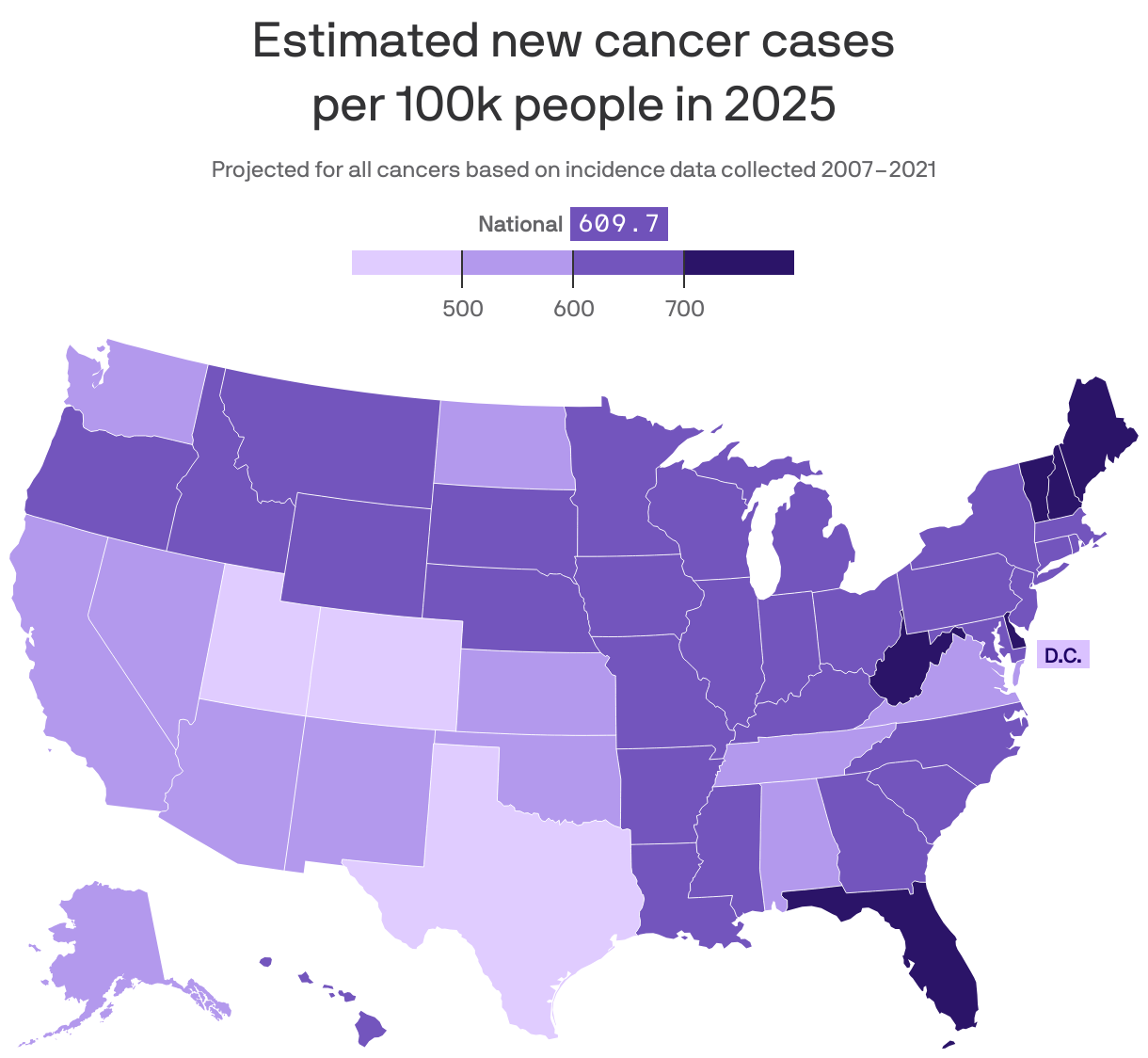
Cancer incidence young and middle-aged women is rising, driven in part by a growing number of new lung cancer cases that are striking women more than men for the first time, per updated American Cancer Society statistics.
Why it matters: While the data reflects long term gains in reducing cancer deaths, it also shows worrisome ongoing shifts in the burden of disease to women and people under age 65.
By the numbers: More than 2 million new cancer diagnosis and 618,120 deaths are projected in the U.S. this year, according to the report published in CA: A Cancer Journal for Clinicians,
- Cancer mortality overall has declined 34% between 1990 and 2022, however, death rates are still rising for certain cancers including those of the oral cavity, pancreas, uterus and liver in females.
- Incidence is rising for breast cancer in women, and for prostate, pancreatic, uterine and liver cancer in women, along with melanoma. Oral cancers associated with the human papillomavirus also are rising.
Between the lines: Age remains the number one greatest risk factor for cancer overall, but officials flagged ongoing concerns about increases in cancer incidence in individuals younger than 65.
- There was an increase in the rate of new diagnoses of colorectal cancer in men and women under 65 and cervical cancer in women between 30 and 44.
- Cancer incidence in women younger than 65 is higher than men. Women younger than 50 have an 82% higher cancer incidence rate than their male counterparts, up from 51% in 2002.
- In the case of lung cancer, which is predominantly driven by tobacco use, the shift in cancer incidence may be due to changes in peak tobacco use among women, who were more likely to start smoking later in life and were slower to quit, ACS chief scientific officer William Dahut said.
Zoom in: Racial disparities in cancer death rates also persisted, according to the data. Native Americans death rates are two to three times higher than white people when it comes to kidney, liver, stomach and cervical cancer.
- Black people are twice as likely to die of prostate, stomach and uterine cancers compared to white people and 50% more likely to die from cervical cancers.
What they're saying: "The nation should be encouraged that cancer mortality continues to decline," said Lisa Lacasse, president of the American Cancer Society Cancer Action Network.
- "However, the increased incidence in certain populations, including women, adolescents, Native American people and Black people, is an important reminder of how critical it is to ensure ongoing investment in cancer research and to prioritize policies that not only preserve but increase access to care for everyone."
