Right-wing pundits place sign language interpreters in the crosshairs

Add Axios as your preferred source to
see more of our stories on Google.
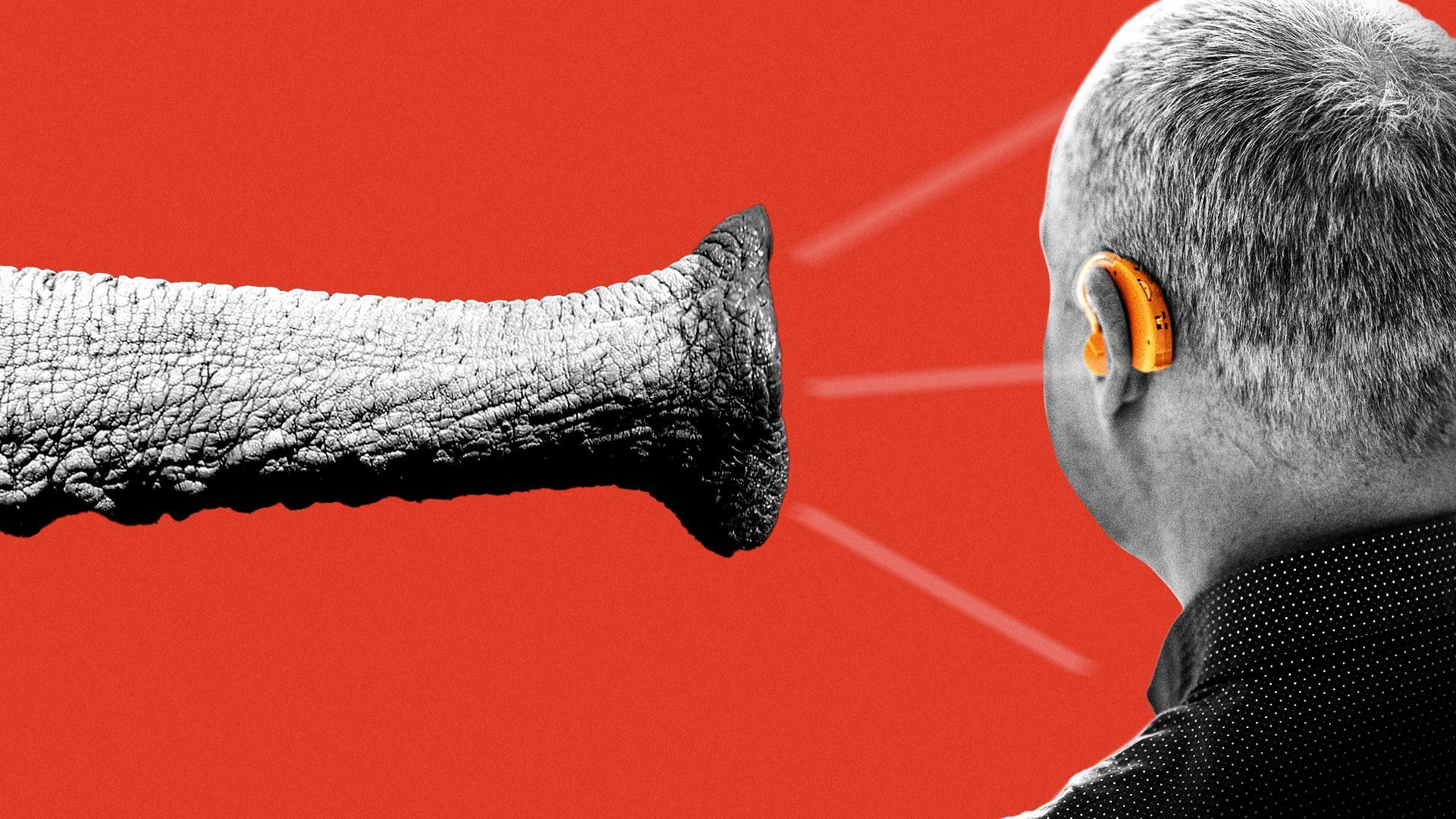
Illustration: Lindsey Bailey/Axios
Conservative commentators, amid the deadly Los Angeles wildfires, have narrowed in on a target they've deemed unnecessary and distracting at emergency briefings: American Sign Language interpreters.
The big picture: To members of the Deaf and hard-of-hearing community, ASL interpreters provide a critical service to millions of Americans — and in emergencies, their role can be life-saving.
- "This is a human right to information," said John Maucere, a Certified Deaf Interpreter who has been working press conferences in Los Angeles amid the fires through Pro Bono ASL.
- As a third-generation Deaf family member, Maucere is used to ignorant comments, but the online attacks directed at interpreters amid the devastation in his home state "felt more harmful," he told Axios through an interpreter.
- Some of the public figures who chose to weigh in, like Turning Point USA's Charlie Kirk, often influence the tides of right-wing opinion — and have the ear of members of the incoming Trump administration.
What they're saying: Maucere said having live interpreters allows members of the Deaf and hard-of-hearing community to finally feel equal: "They're not behind the hearing audience."
- He added, "We're used to growing up with everyone looking at us as second class ... but finally, for once, we're equal."
Yes, but: Kirk lashed out in a Wednesday post to X, asking, "can we stop giving half the screen during these crisis briefings to sign language interpreters?"
- And on the Wednesday episode of "The Charlie Kirk Show," he characterized interpreters as "a distraction."
An avalanche of ableist attacks ensued.
- Christopher Rufo, a right-wing activist who helped pioneer the conservative outrage against critical race theory, echoed Kirk, criticizing "ridiculous" interpreters who "turn serious press conferences into a farce."
- "There are closed captions on all broadcast channels and streaming services," he wrote in a Friday X post. "No wild human gesticulators necessary."
- Conservative commentator Richard Hanania shared Rufo's post and argued that "CC works fine."
Reality check: Closed captioning is not sufficient in emergencies, Maucere said.
- "Hearing people can hear the differences in tone, the emphasis ... if you just have that in captions without any sound, it's read in monotone," Maucere told Axios. Having an interpreter on stage, he says, sustains the semantics of the message.
- ASL and English are distinctively different languages — that means for many Deaf people, including Maucere, English is not their primary language.
- "As Deaf people reading captions, we feel like we're figuring out Morse Code," he said. "It's our second language we're trying to decipher."
- Beyond that, Maucere noted, captions tend to lag far behind during the question and answer session at the end of briefings.
And while Rufo attacked interpreters as "wild human gesticulators," Maucere said facial expressions and body language lend crucial nuance and allow for fuller comprehension.
Between the lines: Modern systems powered by artificial intelligence have made improvements to automated speech recognition technology.
- But technology can't replace sign language.
Zoom out: While the fires razed entire neighborhoods, some X users targeted LA officials, including LAFD chief Kristin Crowley, with anti-DEI attacks.
- Crowley, whose LAFD tenure spans over two decades, is the first woman and LGBTQ+ person to hold the position.
- The DEI-driven attacks and the targeting of ASL interpreters underline a growing tendency amid the country's hyper-partisan era to tie catastrophe to culture wars.
The bottom line: Maucere told Axios he's not sure why the attacks started now. But he says he hopes that those who want to do away with ASL interpreters take the time to educate themselves on why the services he and others provide are so vital.
- "Life is better with this, and it's safer with this, and we need it," he said.
Go deeper: Sign language's struggle for support
