Mark Zuckerberg has turned on the elites, even his own

Add Axios as your preferred source to
see more of our stories on Google.
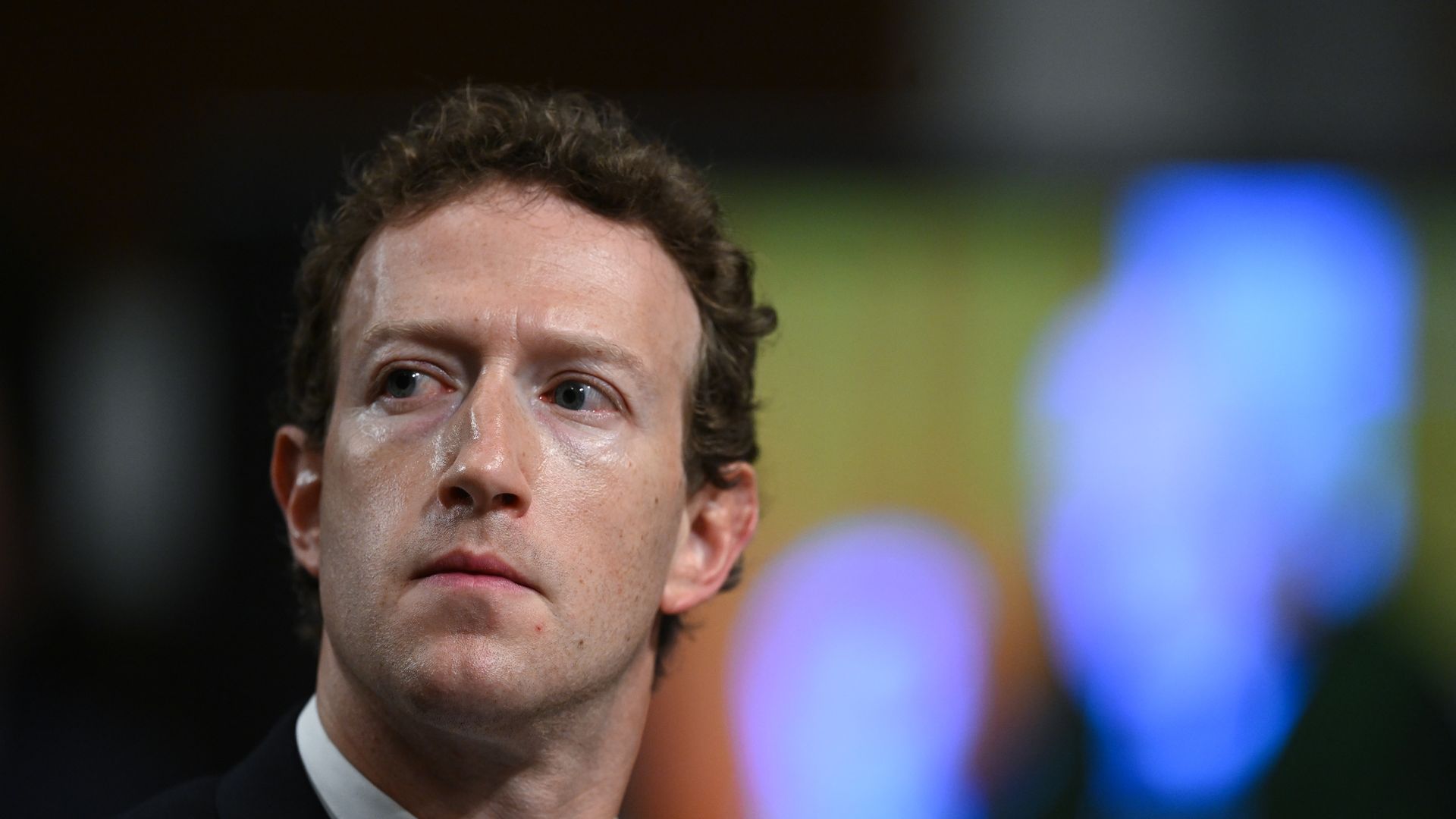
Photo: Matt McClain/The Washington Post via Getty Images
Mark Zuckerberg's appearance on the "Joe Rogan Experience" podcast has made it clear that in the increasingly manichean face-off between government and tech, the Facebook founder is firmly on the side of tech.
Why it matters: In doing so, Zuckerberg is implicitly disowning a core part of the history of his own company.
The big picture: Facebook has long had deep-seated connections to the world of government.
- Between 2008 and 2022, Facebook's chief operating officer was Sheryl Sandberg, a Democrat and former Treasury Department official who previously worked at the World Bank and who at Harvard co-founded an organization called Women in Economics and Government.
- Sandberg, who joined Facebook when she was 38 and Zuckerberg was 23, was broadly viewed as "the adult in the room."
- In 2018, Sandberg and Zuckerberg hired Nick Clegg, the former UK deputy prime minister and leader of that country's left-leaning Liberal Democrats, to run the company's global policy operations.
The other side: While Sandberg and Clegg arrived at Facebook with a background in public service, Zuckerberg's board was dominated by technology entrepreneurs, most importantly Peter Thiel and Marc Andreessen.
- Both Thiel and Andreessen have become very vocal Trump supporters, with a deep mistrust of government and the "deep state".
Where it stands: In his 3-hour appearance on Rogan's podcast, Zuckerberg echoes a lot of the talking points regularly made by Thiel and Andreessen — and implicitly throws Sandberg and Clegg under the bus.
- When he talks about who he chooses to serve on his board, Zuckerberg tells Rogan he wants "the best entrepreneurs and people who've created different things."
- Out of Meta's 13 current board members, only two have any experience in government, and both of those were at the U.S. Treasury.
What they're saying: Zuckerberg now tells Rogan he "gave too much deference" to people who blamed Facebook-based misinformation for Trump's victory.
- He diagnoses a "very broad decrease in trust" in governments, at the same time as he sees a "whole new class of creators who basically become the new kind of cultural elites that people look at and are like, okay, these are the people who give it to me straight."
- Of course, Zuckerberg owns many of the platforms on which those creators disseminate their opinions.
💭 Our thought bubble: While Zuckerberg is careful to blame "the media" rather than his own top aides for the decisions he made around public trust and safety, he does seem to regret listening to the likes of Sandberg and Clegg rather than Thiel and Andreessen.
The bottom line: The adult in the room at Meta is now, unambiguously, Mark Zuckerberg. And he has made it abundantly clear that his sympathies lie with Trump.
- "One of the things that I'm optimistic about with President Trump," he tells Rogan, "is I think he just wants America to win."
