Mega Millions price jump makes lottery dreaming less affordable

Add Axios as your preferred source to
see more of our stories on Google.
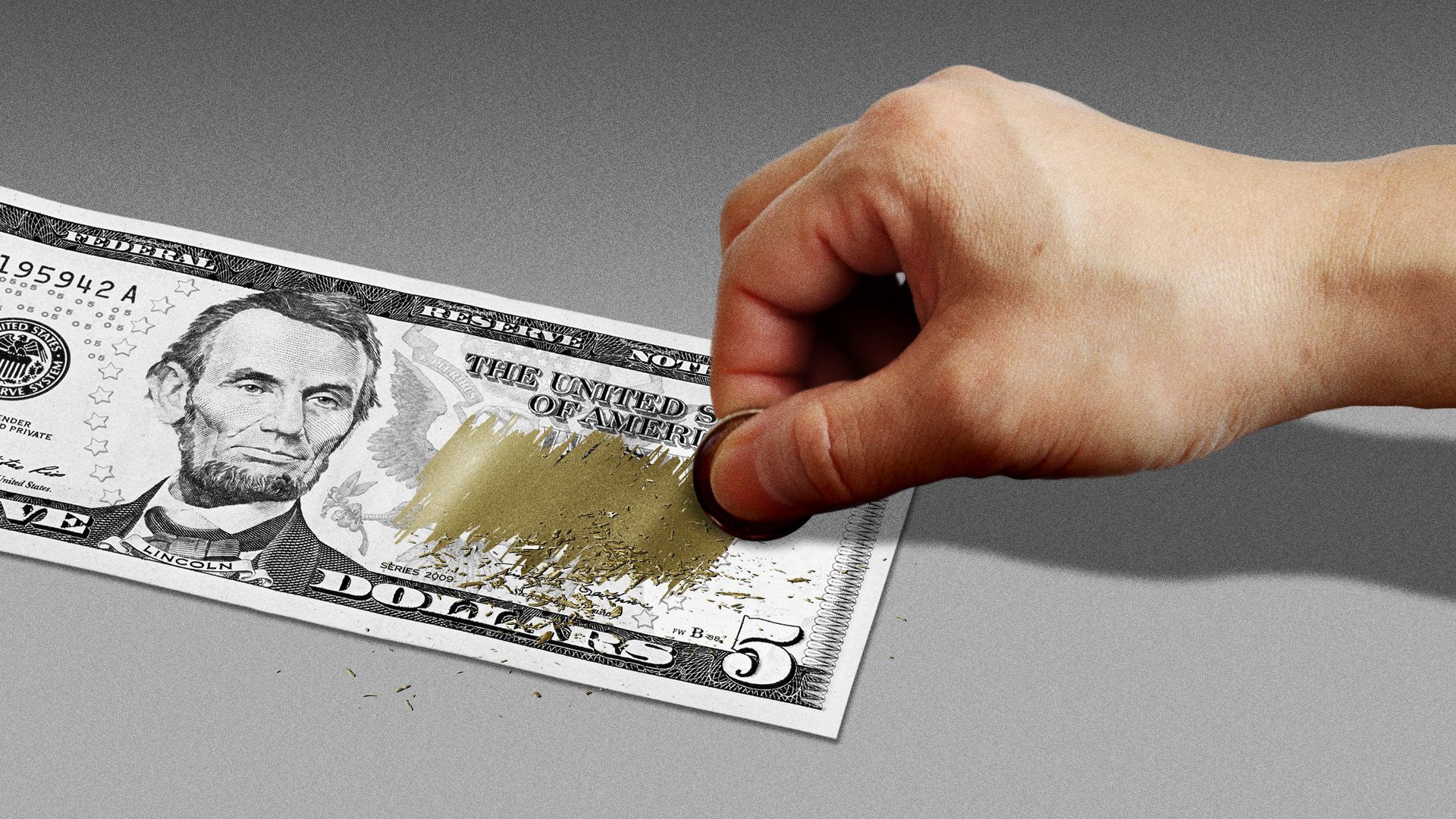
Illustration: Maura Losch/Axios
Inflation has driven the cost of goods and services upwards — but the highest inflation of all can be found in the rising price of a dream.
Why it matters: When the Mega Millions lottery was launched in May 2002, a ticket was one of America's real bargains. A mere $1 could buy days' worth of hopes and dreams of what you might do were you to become stupendously wealthy.
- As of April, however, the cost of such escapist contemplation will rise to a gulp-inducing $5.
- The next drawing, on Friday, is expected to be $1.22 billion, one of the 10 richest jackpots in U.S. lottery history.
By the numbers: Consumer prices have risen 75% since 2002 — which is to say, the $1 that a lottery ticket cost back then is worth the equivalent of $1.75 today.
- A $5 ticket therefore represents a 285% price hike in real, inflation-adjusted terms — for an item that has almost nothing in the way of supply-chain costs.
How it works: The Mega Millions revamp fiddles around a little bit with the odds of winning the jackpot, which will change from 1 in 302.6 million to either 1 in 290 million or 1 in 278.4 million, depending on which state lottery official you believe.
- Which is to say, the odds are basically staying the same, with bettors having less than a 0.000001% chance of winning.
- The idea is to make the jackpot probability so remote that even when there are millions of bettors per week, the chances are that no one will win, the jackpot will roll over, and the prize will continue to soar.
- The current configuration has had seven jackpots over $1 billion, six of them post-pandemic.
Between the lines: A $5 sticker price will put off many folks who feel like it's just too much to throw away. After all, the overwhelming likelihood is that you lose everything you bet.
- Even so, Mega Millions anticipates that jackpots will be larger and grow more quickly — which means that more money will be bet in total, often from people who can't afford it.
- One commenter on Reddit said that the move "seems like a scummy way to suck more money out of the addicted instead of pooling loose change from casuals."
The bottom line: Buying lottery tickets can be a rational thing to do — but only when the price is negligible. For most people, the Mega Millions game has now graduated out of that zone.
Editor's note: This story has been updated with the latest details about the Mega Millions drawing.
