Mexico aims to tackle water crisis with 5-year plan

Add Axios as your preferred source to
see more of our stories on Google.
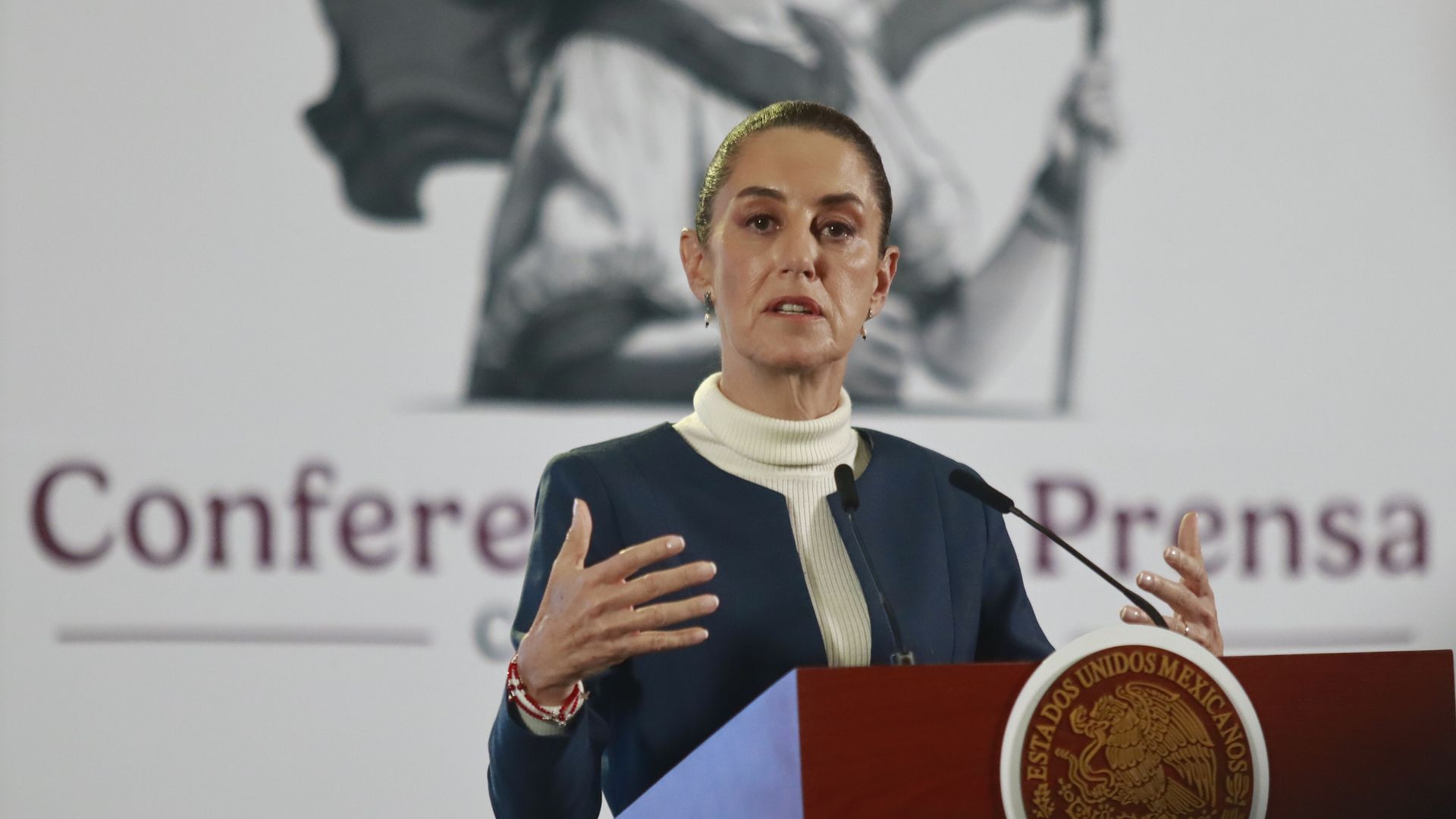
Mexican President Claudia Sheinbaum at a news conference on Nov. 20. Photo: Carlos Santiago/Eyepix Group/LightRocket via Getty Images
The government of Mexican President Claudia Sheinbaum is making water availability one of its priorities with a newly announced national plan that considers water access a human right.
Why it matters: Mexico, one of the 20 biggest economies in the world, has been dealing with increasing water scarcity as droughts become more frequent and severe because of climate change.
- Mexico City, for example, nearly ran out of water this year.
- 52% of Mexicans say they lack regular access to a water supply, and only 20% of homes report the water they get is safe to drink, according to the national statistics office.
Driving the news: The national five-year plan, which includes a $1 billion (20 billion pesos) allocation for its first year, was first outlined last Thursday by the heads of the National Water Commission (Conagua) and the ministries of the environment and natural resources and of agriculture and rural development.
- On Monday, Sheinbaum, a former climate scientist, gave some further details as she met with federal, local and state officials and representatives from companies and universities to sign a "national agreement for the human right to water and sustainability."
- The agreement is meant to foster technical research and collaboration to mitigate the effects of climate change and establish a single shared database related to water use (currently there are four different platforms, Conagua says).
Zoom in: Key to the plan is to review thousands of water concessions, or the permits to extract groundwater for industries like agriculture, breweries, or manufacturing.
- About 85% of water distribution is currently for these uses, and only 15% for human consumption, according to the head of Conagua, Efraín Morales López.
- He said some companies have extracted more water than they needed and that some of the excess water goes unused or is resold to other buyers.
- Another major part of the plan is improving technical and technological practices for irrigation and purification, which Morales says would make water use more efficient in up to 500,000 acres (200,000 hectares) of land.
Part of the first-year funding will cover the costs of cleaning up three major rivers, building floodwalls in the southeast and installing a desalination plant in Baja (which could eventually be of use to the U.S. as well.)
What they're saying: "A lot of these things can be done, but it remains to be seen how well they're done because the how matters a lot," says Adriana Carolina Flores-Díaz, an expert on sustainability and water management at the Iberoamerican University in Mexico City.
- She says the plan seems a bit too focused on infrastructure without including biodiversity conservation, reforestation or wetland recovery, which she says could help enormously improve water access in the country.
- "By themselves, structures, pipelines, all this cement could lead to white elephant projects… I hope they start incorporating more experiences from successful local initiatives that use ecotechnologies" like rainwater collection, she adds.
- Flores Díaz points out that there's also a need to change up laws and regulations and that transparency in how the plan is carried out and the money is used will be super important as "there tends to be opacity."
The bottom line: "I think citizens will need to be vigilant of every step taken and decision made for this plan to be as successful as it should so we're all guaranteed our human right to water access," says Flores-Díaz.
Subscribe to Axios Latino to get vital news about U.S. Latinos and Latin America.
