Ex-Sen. Fred Harris, last surviving member of Kerner Commission, dies

Add Axios as your preferred source to
see more of our stories on Google.
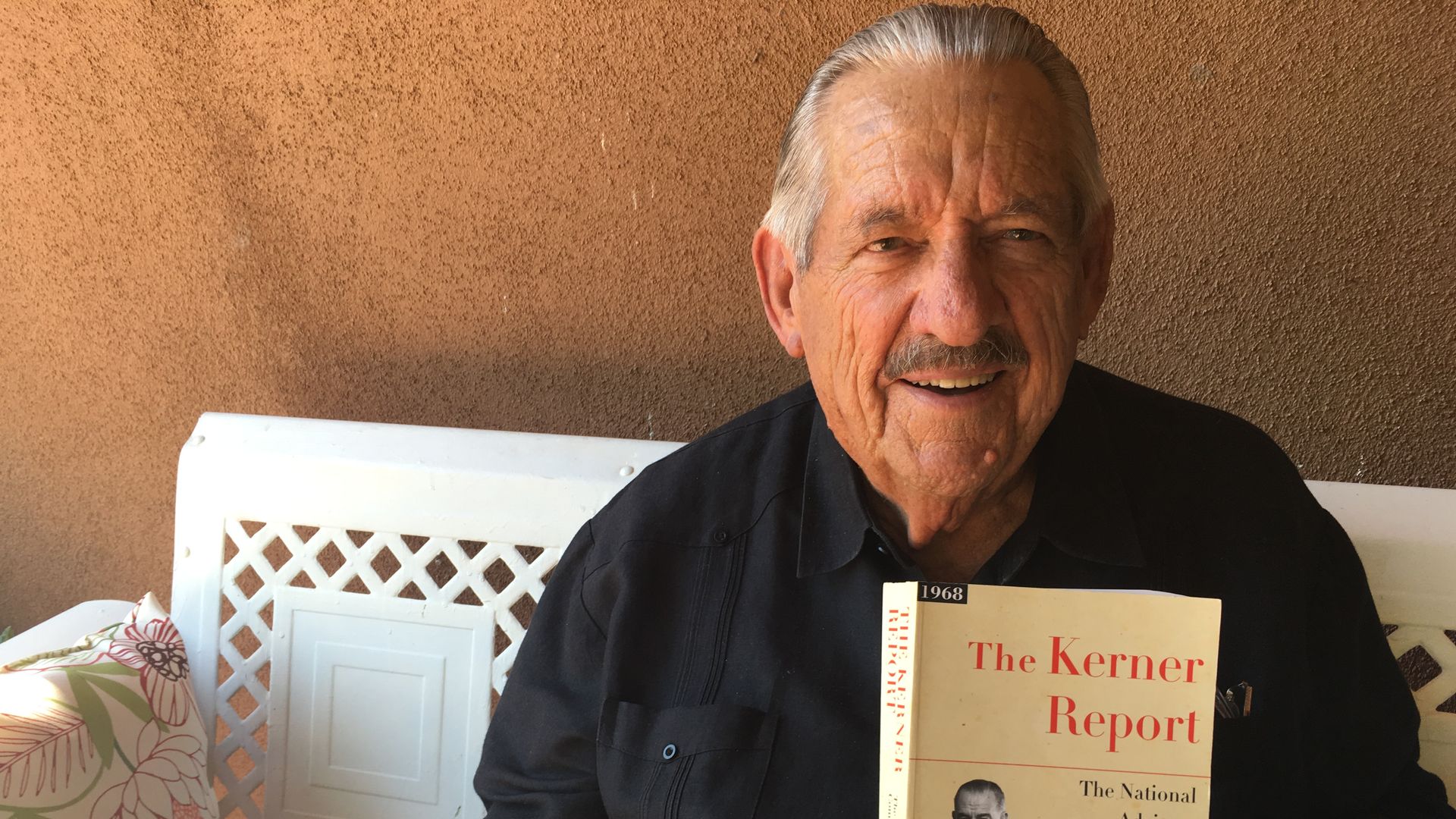
Former U.S. Sen. Fred Harris (D-OK), the last surviving member of the Kerner Commission, hold a copy of the Kerner Report of the 1960s urban riots, in his Corrales, New Mexico, home on Aug. 31, 2017. Photo: Russell Contreras/Axios
Former U.S. Sen. Fred Harris (D-Okla.), the last surviving member of the Kerner Commission, a panel appointed by President Lyndon Johnson in 1967 to examine the causes of the 1960s riots, died on Saturday. He was 94.
The big picture: Harris was elevated into the national spotlight in 1967 when President Johnson appointed him to the Kerner Commission following a series of urban riots from Los Angeles to Milwaukee, Wisconsin.
- He sought the Democratic nomination for president twice (in 1972 and 1976) and served as the Democratic National Committee chair from 1969 to 1970.
Zoom in: Johnson created the 11-member commission as Detroit was engulfed in a raging riot. Five days of violence would leave 33 Black people and 10 white people dead, and more than 1,400 buildings burned.
- During the summer, more than 150 cases of civil unrest erupted across the United States.
- Kerner Commission's members included former Illinois Gov. Otto Kerner, New York Mayor John Lindsay and U.S. Sen. Edward W. Brooke of Massachusetts.
The backdrop: Born in Walters, Okla., in 1930, Harris was elected to the U.S. Senate in 1964 to finish the term of Sen. Robert Kerr, who died.
- In the Senate, he became an outspoken advocate for civil rights and Native American rights (his first wife, LaDonna Harris, is Comanche) as part of the classic liberal wing of the Democratic Party.
- Harris sat next to Sen. Robert Kennedy and they shared views on fighting poverty.
The intrigue: Harris told me in 2018 that Johnson called him before giving a speech about the commission's formation and informed Harris he'd be on the commission.
- "I want you to remember that you're a Johnson man," Harris recalled the president telling him. "If you forget it, I'll take my pocket knife and cut your (expletive) off."
- It turned out that Johnson wouldn't like what Harris and the commission would find and recommend.
Zoom out: Harris and other commission members toured cities and found that many Black residents complained about the lack of jobs and poor relations with local police.
- Black residents also told the commission that they had moved North to escape the poverty and racism of the South and found few jobs and old racism.
- The country, the report famously warned, was "moving toward two societies, one black, one white — separate and unequal."
- The panel concluded that the nation should spend billions revitalizing struggling cities, improving police relations and ending housing and job discrimination.
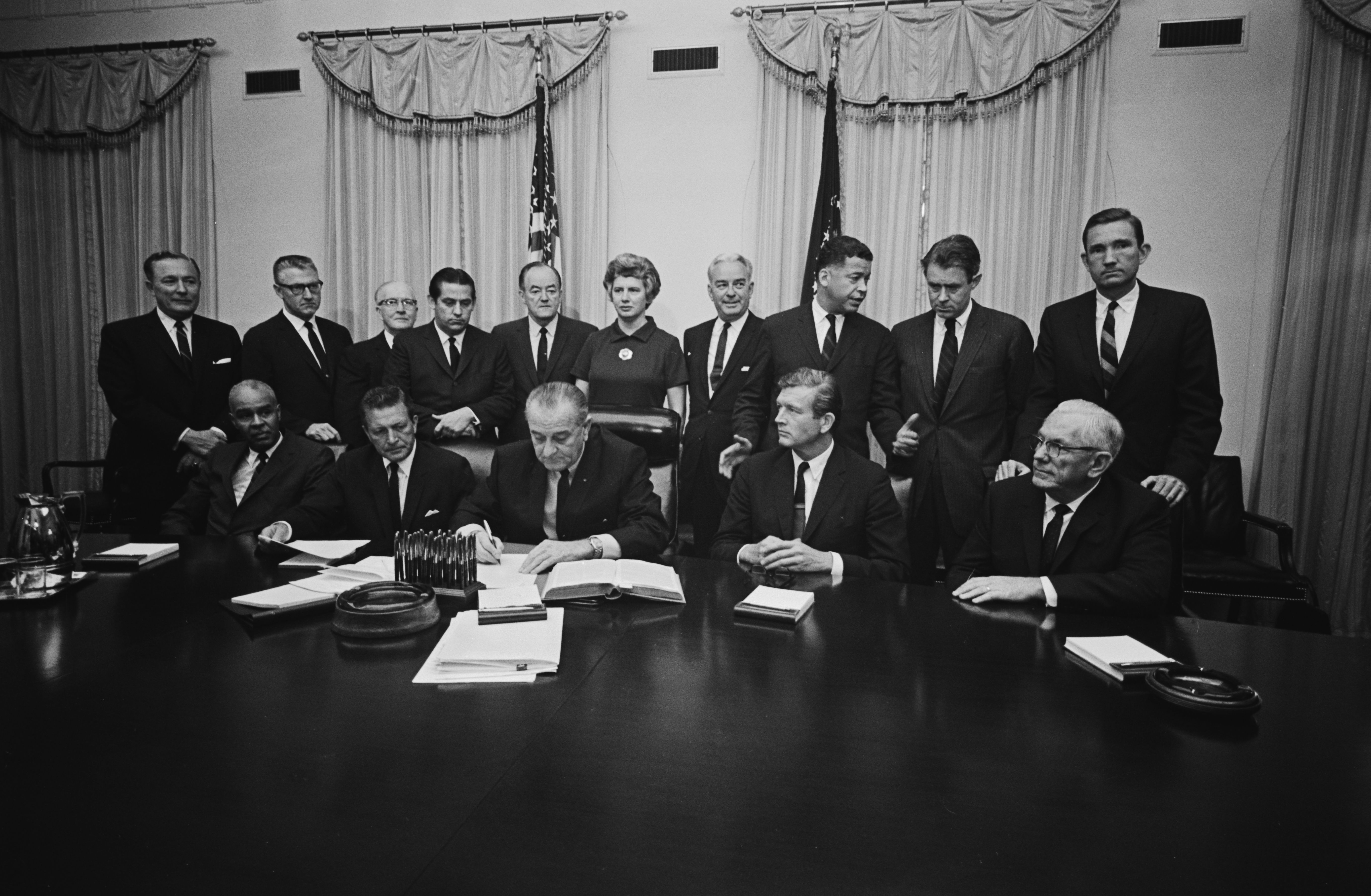
Yes, but: The commission's report was leaked to the Washington Post before members could announce its findings, and it was then quickly given to other media.
- The coverage reduced the report to accusations that white Americans needed to pay more taxes to help Black Americans fight racism — a charge that killed any recommendations.
- However, the report laid the groundwork for future sociological studies of urban poverty.
The Democratic titan left politics in 1976 and relocated to New Mexico, where he taught political science at the University of New Mexico and mentored hundreds of Democratic and anti-poverty advocates.
Harris would spend the rest of his life telling reporters and future leaders that the work of fighting racism and poverty was not over.
- He co-edited a new report in 2018, on the 50th anniversary of the original one, arguing that barriers to equality were posing threats to democracy as the country remained segregated and child poverty worsened.
- "Immediately after the Civil Rights Movement, we made progress on every aspect of poverty and racism in the U.S. But today, we are moving backward," Harris told Axios in 2021.
