Preparing for government surveillance in Trump 2.0

Add Axios as your preferred source to
see more of our stories on Google.
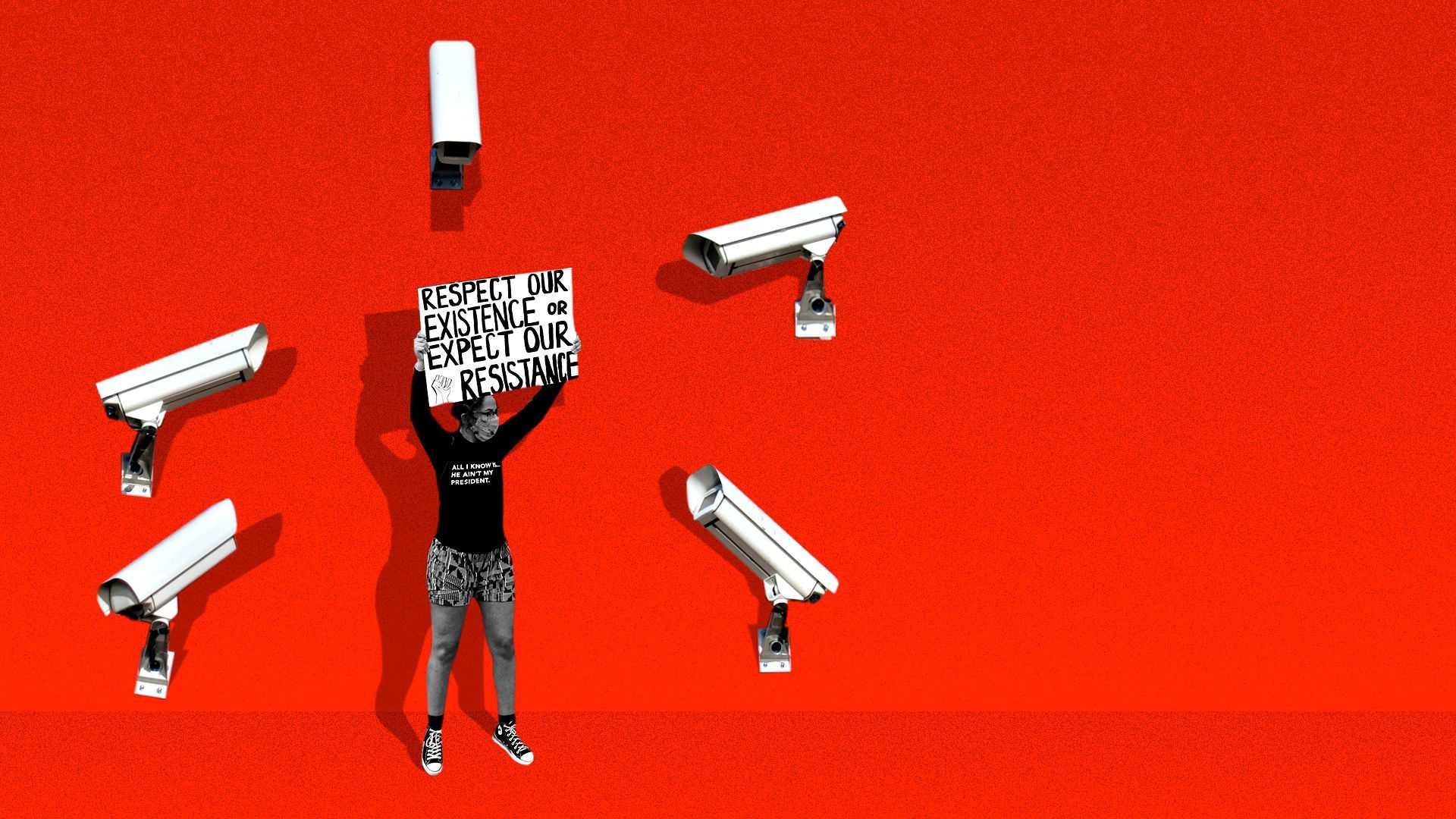
Illustration: Aïda Amer/Axios
Now is the time to evaluate and get serious about your digital security practices, experts say.
Why it matters: President-elect Trump made several promises on the campaign trail to target people in marginalized communities, undermine the press, and seek retribution against his enemies.
- His administration could use several government surveillance and law enforcement tools to carry out those promises, including subpoenaing user data from major technology companies, purchasing data from third-party brokers, and tapping the intelligence community's own internal programs.
Driving the news: Trump's victory last week has renewed conversations among community organizers, activists, journalists and people in marginalized communities about how to minimize their digital footprints in case they become targets.
- Eva Galperin, director of cybersecurity at the Electronic Frontier Foundation, told Axios she's seen an uptick in requests from organizations looking for privacy and security training since Election Day.
- Albert Fox Cahn, executive director of the Surveillance Technology Oversight Project, said he's heard from major civil society organizations, civil rights groups and others who believe they'll be targeted by the new administration.
- They're looking for advice on overseas data storage, encryption and other ways to avoid surveillance.
- Several former officials also told the Washington Post this week they've started packing "go bags" and applying for foreign citizenship in case they need to flee.
What they're saying: "We've never seen in the history of the United States a stronger surveillance capacity paired with weaker rule-of-law protections," Cahn told Axios.
- "It is a really dangerous combination."
The big picture: Virtually everything we do leaves some sort of digital footprint.
- That includes the obvious, like using Google Maps to get directions, making an online purchase, and posting personal updates on social media.
But there are also less obvious ways people are tracked.
- A retail app might ask someone to turn on location services to find their closest physical store.
- A message sent on an unencrypted messaging service leaves a trail of its contents and the accompanying metadata.
- Even voter registration rolls in most states are sold to data brokers, including people's home addresses, and are sometimes published online.
Threat level: Digital privacy experts tell Axios they're worried about a wide range of people as they prepare for the second Trump administration.
- Many people seeking abortions in states that have implemented near-total bans have been prosecuted using their digital data trail.
- Immigrants, including both undocumented and those with protected statuses, are very likely targets for surveillance amid promises of mass deportations.
- Trans adults and youth — and their medical professionals — could be outed in communities where care is outlawed, and companies may be emboldened not to hire them amid rising hate speech.
- Activists could be tracked and stalked in an effort to create hurdles for their movement, and journalists' activities could be tracked to identify whistleblowers and other anonymous sources.
Experts say digital privacy is key as the president-elect's rhetoric could further encourage people to harass and attack people in marginalized communities.
- In his first administration, Trump routinely made comments and implemented policies that would inspire others to take racist and harmful actions.
- Galperin noted that she's actively working on new guides for what people can do after they're doxxed — or have their home address listed publicly online to enable harassment and potentially violent attacks.
Reality check: If you interact with the internet, there's no way to completely disappear.
- But there are steps people can take to minimize their footprint and protect their most sensitive information.
- Even if someone isn't worried about government surveillance, reevaluating their digital footprint can help keep cybercriminals and other nefarious actors from stealing sensitive information.
