Get ready for the "perception" election hacks

Add Axios as your preferred source to
see more of our stories on Google.
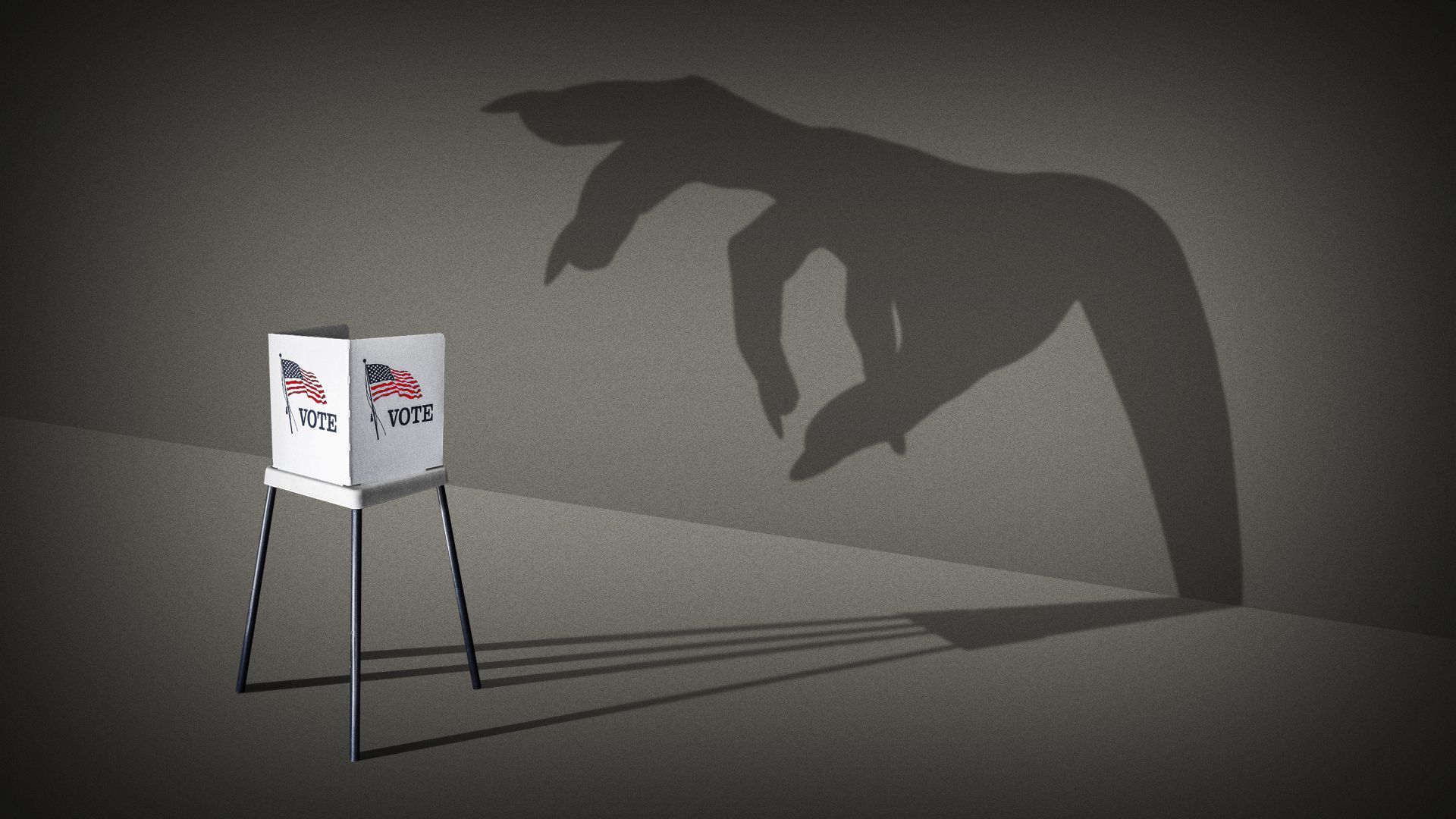
Illustration: Maura Losch/Axios
With polls closing Tuesday evening, officials are warning that foreign adversaries will likely spread false stories about election hacks to undermine trust in the voting process.
Why it matters: Sharing lies that an election was hacked is a lot easier than hacking a voting machine.
- But the perception of machine hacks and voter fraud alone is enough to spur violence and lead voters to question the outcome of an election.
The big picture: Former President Trump's allies, including Elon Musk, have recently resurfaced debunked 2020 conspiracy theories about Dominion Voting Systems machines.
- Trump has also made unfounded claims that Pennsylvania is "cheating," sowing doubt about the ballot-counting process in the key battleground state.
Reality check: Votes have multiple levels of safeguards to both prevent tampering and detect potential meddling, making it nearly impossible for hackers to change how votes are cast.
- Voting machines have physical access controls and cybersecurity protections to keep bad actors away, and they're regularly tested for accuracy.
- Post-election audits can also ensure that votes are counted as cast.
Yes, but: Operational issues were bound to happen Tuesday, state officials said.
- Voting locations could open late. There could be long lines to cast your vote. An area could lose power.
- But the National Association of Secretaries of State and the National Association of State Election Directors said Monday that officials have contingency plans in place to weather these obstacles.
- "In the days and weeks to come, election officials will count every eligible ballot, including ballots cast in-person on or before Election Day, mail ballots, provisional ballots, and ballots cast by military and overseas voters," the NASS and the NASED said in their statement.
Zoom in: The FBI and Cybersecurity and Infrastructure Security Agency (CISA) have warned that adversaries are likely to use obtained voter registration information as evidence that they've infiltrated election infrastructure.
- "The reality is that having access to voter registration data is not by itself an indicator of a voter registration database compromise," the agencies warned in September.
- In reality, third-party data brokers can legally sell voter information. Adversaries can also steal this information from website leaks.
