What's behind Spain's historic flooding that's killed over 200 people


Add Axios as your preferred source to
see more of our stories on Google.
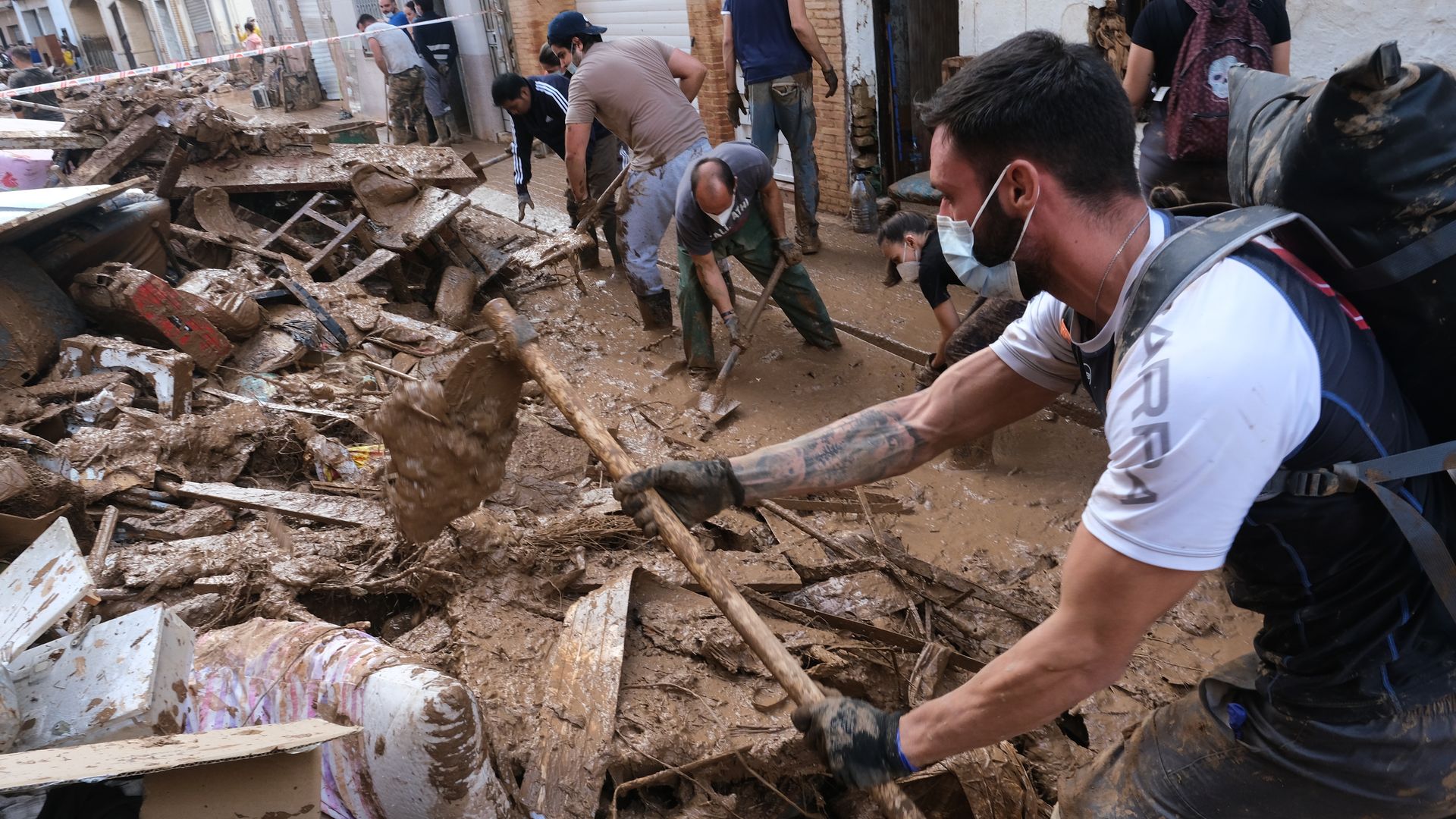
Spanish Army members assist in recovery efforts on Sunday, Nov. 3, following deadly flooding in the Valencian town of Paiporta, Spain. Photo: Pablo Miranzo/Anadolu via Getty Images
Crews in Spain searched for flood survivors as teams stepped up efforts to pump water from flooded carparks into Monday, per Spanish outlet El País.
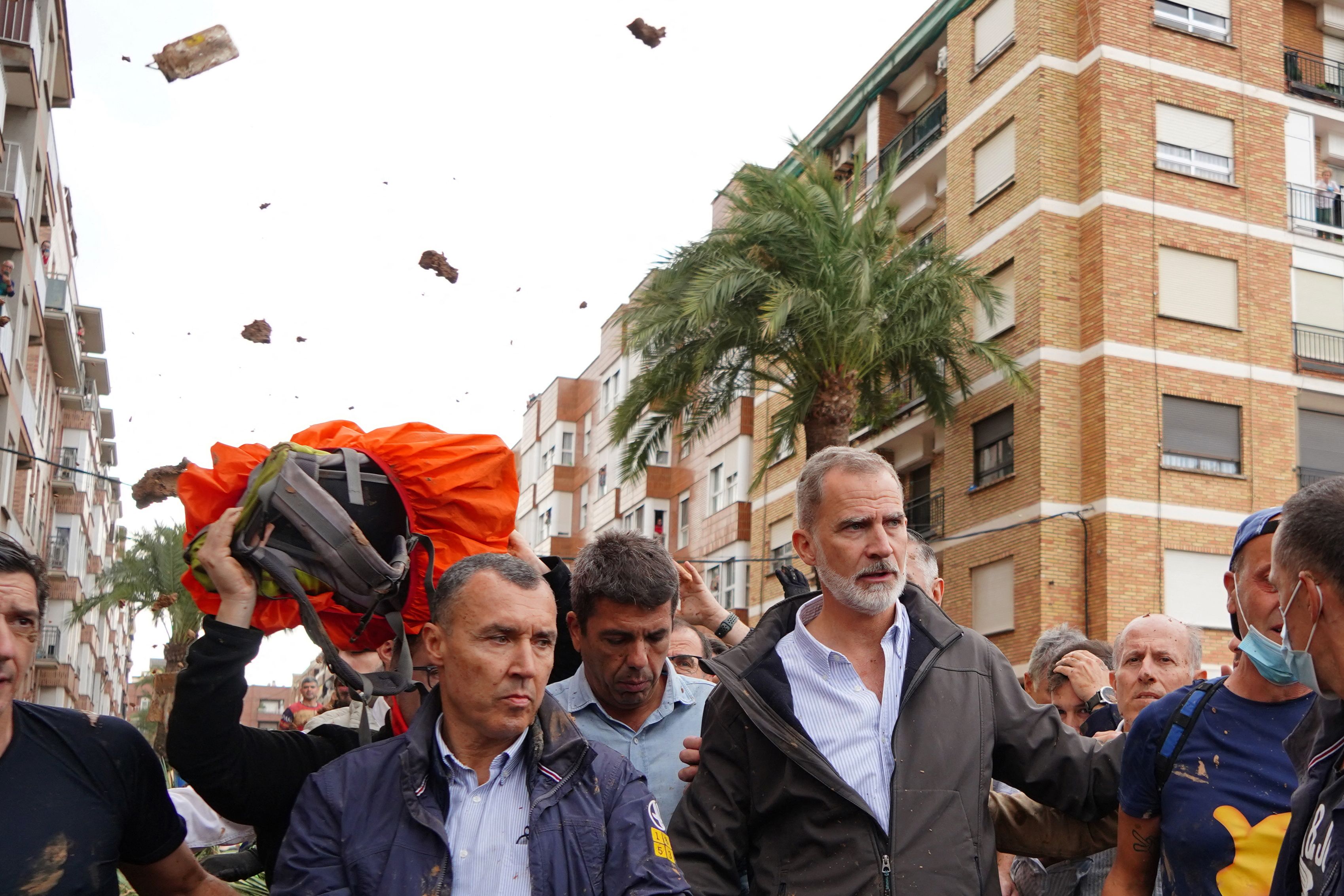
Why it matters: The climate-change-worsened flooding has killed 214 people as of Monday morning. Anger in affected communities over the government's response culminated in Valencia residents throwing mud and other objects at Spain's visiting King Felipe, Queen Letizia and Prime Minister Pedro Sánchez on Sunday.
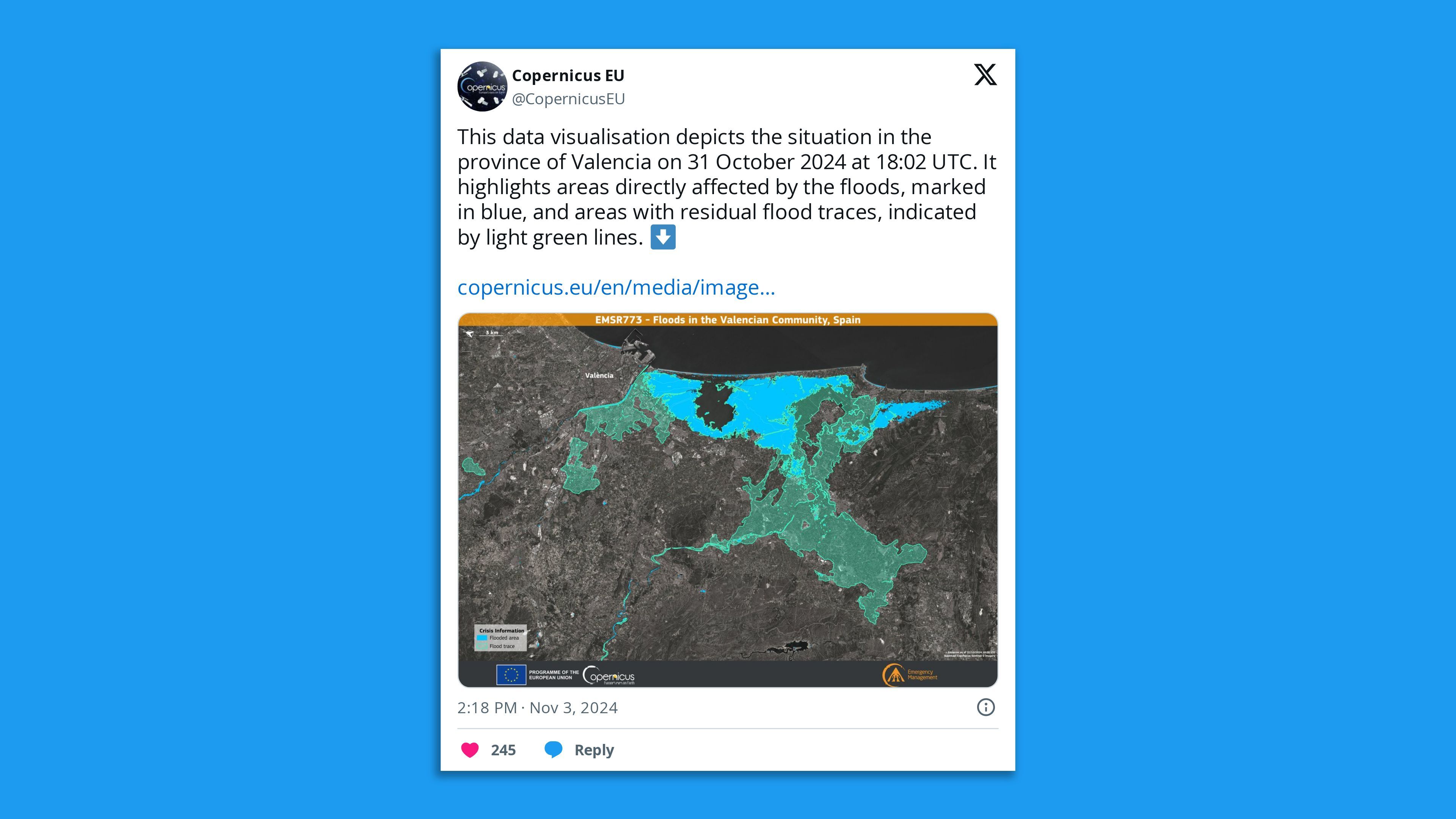
The big picture: Spain's Valencia region was the hardest hit by last week's torrential rains and flash flooding, which the European Union's Copernicus Climate Change Service said on X saw more than 190,000 people and 130,000 acres affected, including 1,900 miles of road.
- All but four of those confirmed to have died in the disaster lost their lives in Valencia, officials said.
- Sánchez's government deployed 5,000 additional troops and 5,000 more police officers to the eastern Valencia region on Saturday in response to Spain's "worst natural disaster" on record, but residents said officials had been slow to respond.
Between the lines: Studies show human-caused climate change is increasing the frequency and magnitude of precipitation extremes.
- Spain was affected by what's known as Isolated Depression at High Levels (DANA in Spanish), which the World Meteorological Organization notes in a blog post often occurs during the fall as the remaining warm surface heat from summer meets cold air from the polar regions.
- "The presence of warm air near the surface being fueled by excessive moisture from the still-warm Mediterranean Sea and the instability generated by the conflict with cold air in the upper atmosphere leads to large convective clouds with heavy downpours and sudden flash floods," WMO climate monitoring chief Omar Baddour said in a statement.
- "Climate change is expected to make these systems more intense because of warmer sea waters and increasing moisture in the atmosphere."
Zoom in: A rapid climate attribution analysis released Monday morning found that storm systems such as the one that struck Spain now deliver up to 15% more rainfall over the Mediterranean coast of Spain compared to the preindustrial era.
- The analysis, from a group of European climate scientists known as ClimaMeter, also found temperatures are now about 4°C (7.2°F) warmer in the region hit by this storm, which provides a boost to thunderstorms over the Mediterranean during these storm events.
What they're saying: "We mostly ascribe the strengthened precipitation of this DANA to human driven climate change," the analysis, which used peer-reviewed methods, concluded. The group stated: "Natural climate variability alone cannot explain the precipitation amount recorded."
- "The devastating floods in Spain show just how severe climate change has become and how unprepared we are," said Davide Faranda of CNRS in France, in a statement.
Editor's note: This story was updated with info from a new analysis released Monday morning.
