Holocaust survivor recounts Kristallnacht in mixed-reality project

Add Axios as your preferred source to
see more of our stories on Google.
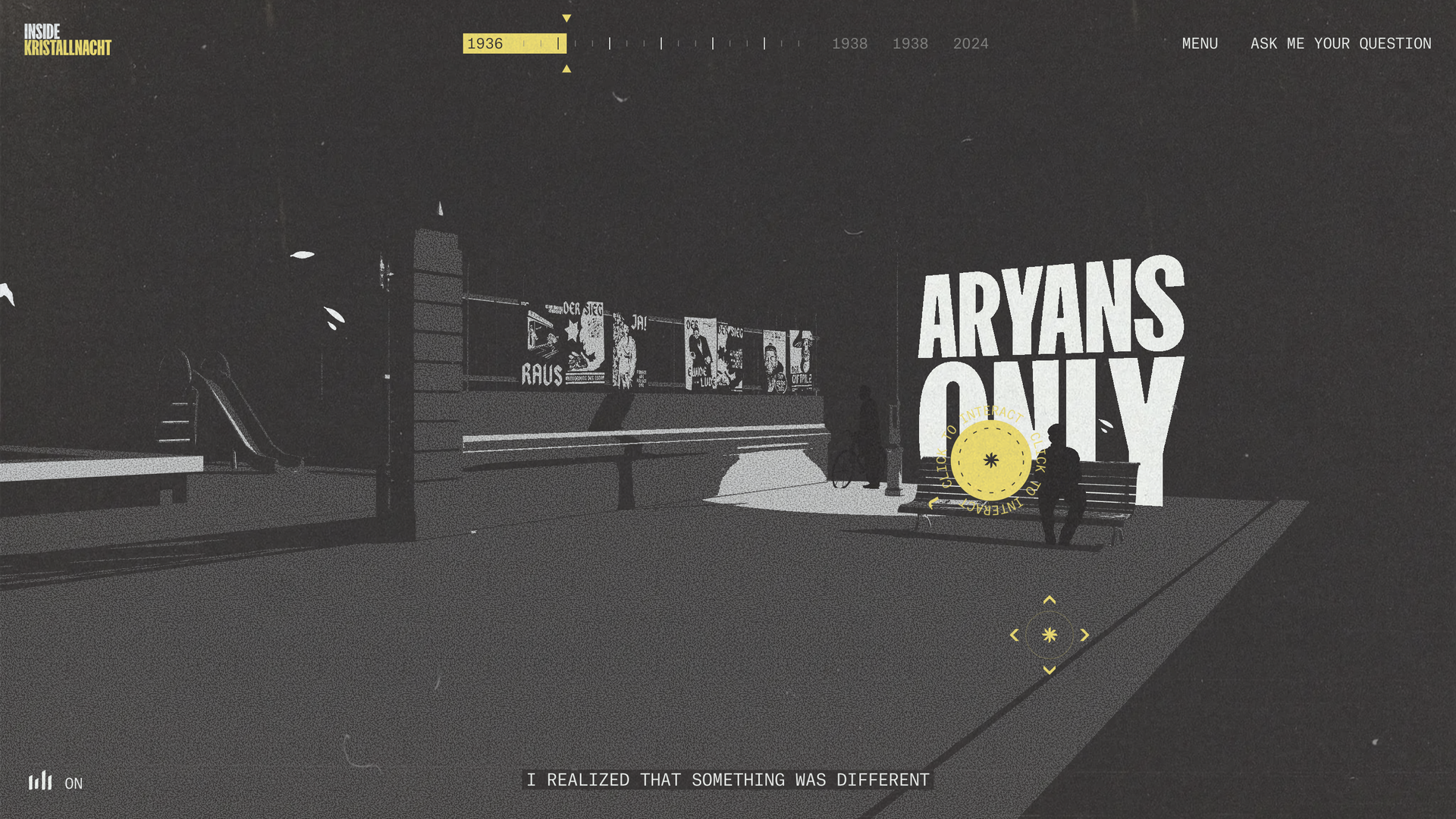
A scene from "Inside Kristallnacht," a mixed reality project narrated by Charlotte Knobloch of Munich, Germany, who experienced Kristallnacht firsthand as a 6-year-old. Photo: Courtesy of the Conference on Jewish Material Claims Against Germany (Claims Conference).
A new mixed-reality project uses the voice and images of a Holocaust survivor to take viewers into the "Night of Broken Glass", the Kristallnacht, and the terror of deportations to concentration camps.
The big picture: "Inside Kristallnacht" released Wednesday is the latest high-tech initiative aimed at educating a new generation about the Holocaust, following others that have used virtual reality, artificial intelligence and holograms.
Zoom in: The new XR project follows Charlotte Knobloch of Munich, Germany, now 92, who shares her Kristallnacht experience as a 6-year-old girl.
- Reliving the night of November 9, 1938, she recounts walking through the volatile German streets with her father as citizens turned on their longtime neighbors and broke windows of Jewish homes and shops.
- Users listen to her words and experience digital reenactments through VR headsets.
- The initiative is a joint project of the Conference on Jewish Material Claims Against Germany (Claims Conference) in partnership with the USC Shoah Foundation, Meta, Makemepulse and UNESCO.
Background: Kristallnacht, also known as the November pogrom or "Night of Broken Glass," refers to the Nazi regime's coordinated wave of antisemitic violence in Germany on the nights of November 9–10, 1938.
- The nationwide riot became known as Kristallnacht because of the shattered glass from store windows that littered the streets during and after the riot.
- Local Nazi mobs set hundreds of synagogues on fire and vandalized thousands of Jewish-owned businesses and homes.
Zoom out: "Inside Kristallnacht" comes as the number of Holocaust survivors globally has dwindled to less than a quarter of a million.
- Child survivors — the last generation of the Holocaust — are aging as advocates race to record their testimonies and as rising antisemitism and misinformation threaten to erase their stories.
What they're saying: "It's essential that the technology is available because it allows us to some continuity (and) to continue to tell the stories for decades to come," Greg Schneider, executive vice president of the Claims Conference, tells Axios.
- Schneider says fewer survivors can travel and visit schools today because of health issues, making it hard for students to listen to firsthand accounts of the Holocaust. New technologies are changing that, he says.
- "These lessons can't die with the survivors themselves. Their voices have to continue to be heard," Schneider said.
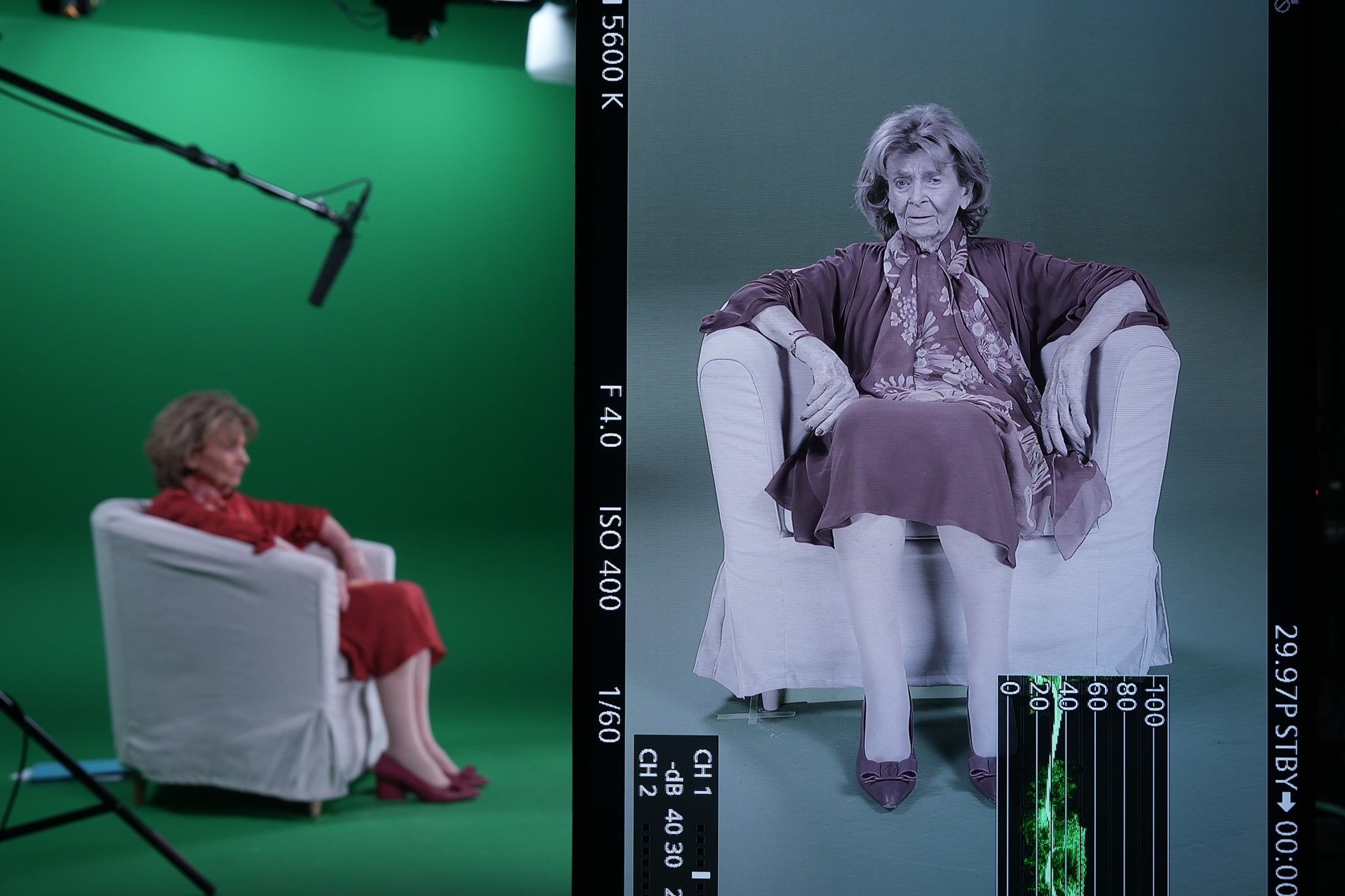
Behind the scenes: Knobloch was apprehensive about the project because she didn't understand the technology but embraced it as she learned about it, Schneider said.
- In a statement, she said participating in the high-tech experience gave her great pride.
- "There are fewer survivors every year who can share their memories of the Holocaust and knowing that the lessons they have to share will last beyond any of us gives me hope for the future and makes me feel that those lessons will not be lost."
State of play: The Illinois Holocaust Museum & Education Center in Skokie, Ill., and The Legacy Museum: From Enslavement to Mass Incarceration in Montgomery, Ala., are among the institutions aggressively deploying new technology to tell harrowing aspects of history.
- At the Illinois museum, holograms of actual Holocaust survivors and witnesses can respond to questions from visitors.
- Alabama's Legacy Museum — located on a site where enslaved people once were sold — features holograms of actors portraying enslaved people, using their words from saved writings or oral histories.
