Tricky pivots are ahead for the global economy

Add Axios as your preferred source to
see more of our stories on Google.
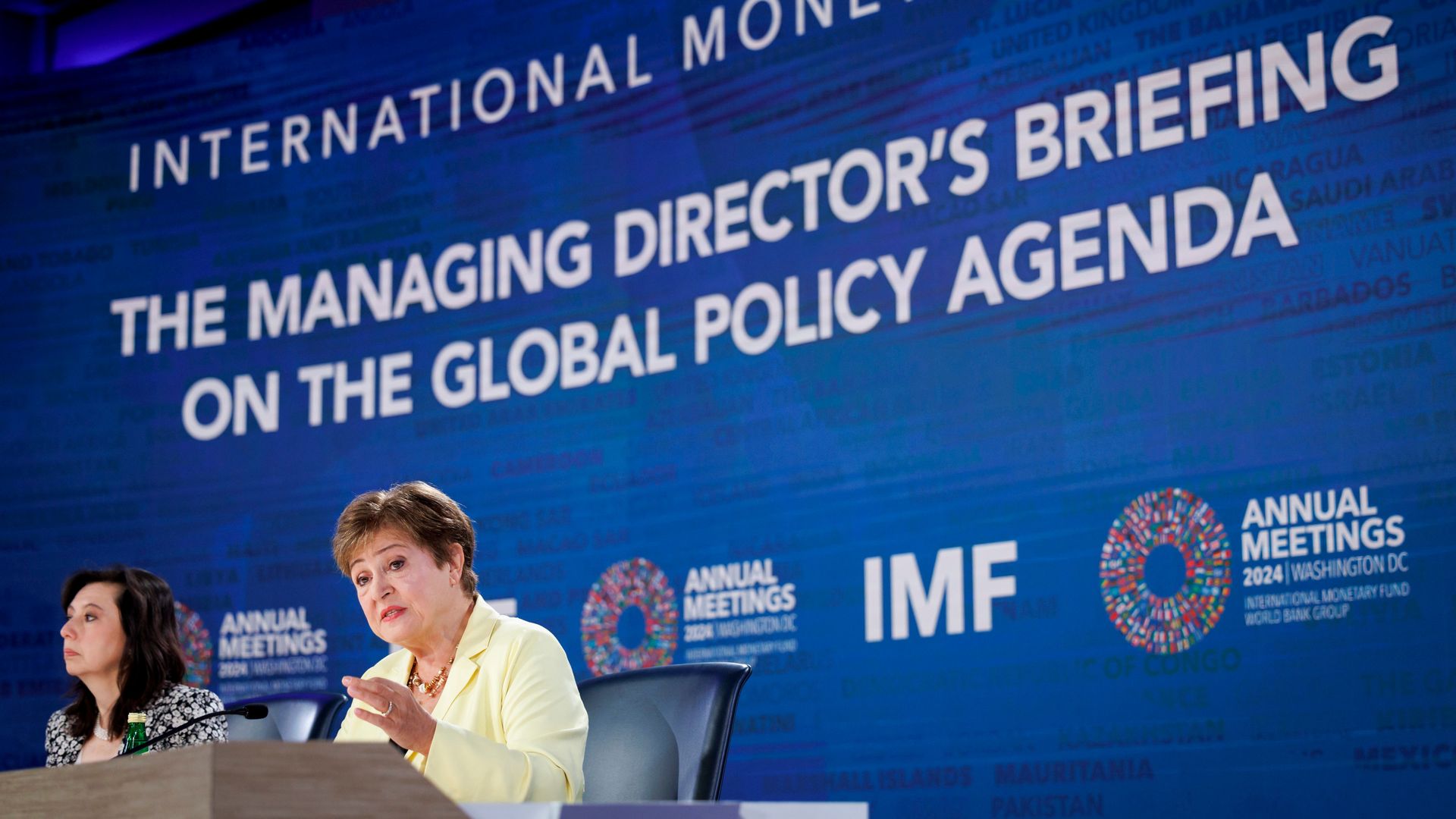
IMF managing director Kristalina Georgieva at a news conference this morning. Photo: Ting Shen/Bloomberg via Getty Images
Add a new term to your list of global economics catchphrases: the triple pivot.
The big picture: That's what IMF leadership believes the world's nations need to accomplish over the coming years to ensure a prosperous future. But as the term suggests, it won't be easy — and contains some internal contradictions that will bedevil global policymakers.
- The first pivot, already underway, is for central banks to cut interest rates to adjust to the return of more modest inflation.
- The second pivot is for nations to tighten fiscal policy to improve global public debt's (currently ominous) trajectory.
- The third is to make reforms and investments that will lift productivity, ease the burden of aging and shrinking populations, and adapt to climate change.
State of play: This is all occurring against a backdrop of a global economy which, at a minimum, no longer can enjoy the tailwind created by deepening global trade ties that helped propel the world economy for decades.
- At a news conference Thursday morning, IMF managing director Kristalina Georgieva noted that the fund's projection for 3.1% annual growth five years from now is the lowest medium-term outlook in decades.
- Trade "is no more a powerful engine of growth," she said. "We live in a more fragmented global economy."
Reality check: The elements of the IMF's recommended pivots include tensions with each other.
- Central bank monetary easing may reduce governments' urgency to tighten their fiscal policies because lower interest rates make the carrying cost of debt less burdensome.
- Reducing deficits while simultaneously making long-term investments to enhance growth potential is theoretically plausible but harder to execute in practice, particularly in a world of wary bond investors.
Driving the news: These tensions are already apparent in today's headlines.
- The French government is facing backlash from bond markets on its fiscal plans.
- Moreover, the U.K. government is preparing a budget that will aim to both put revenues and spending in balance for day-to-day government activities while investing in projects with longer-term payoffs. (Chancellor of the Exchequer Rachel Reeves outlined the plans in an op-ed Thursday morning).
Between the lines: Given those challenges, Georgieva didn't sound particularly confident Thursday morning that the triple pivot will land.
- "The global economy is in danger of getting stuck on a low-growth, high-debt path," she said.
- "That means lower incomes and fewer jobs," she added. "It also means lower government revenues, so less investment to support families and fight long-term challenges like climate change. These are anxious times. "
