Students face extended learning loss after hurricanes wreck schools


Add Axios as your preferred source to
see more of our stories on Google.
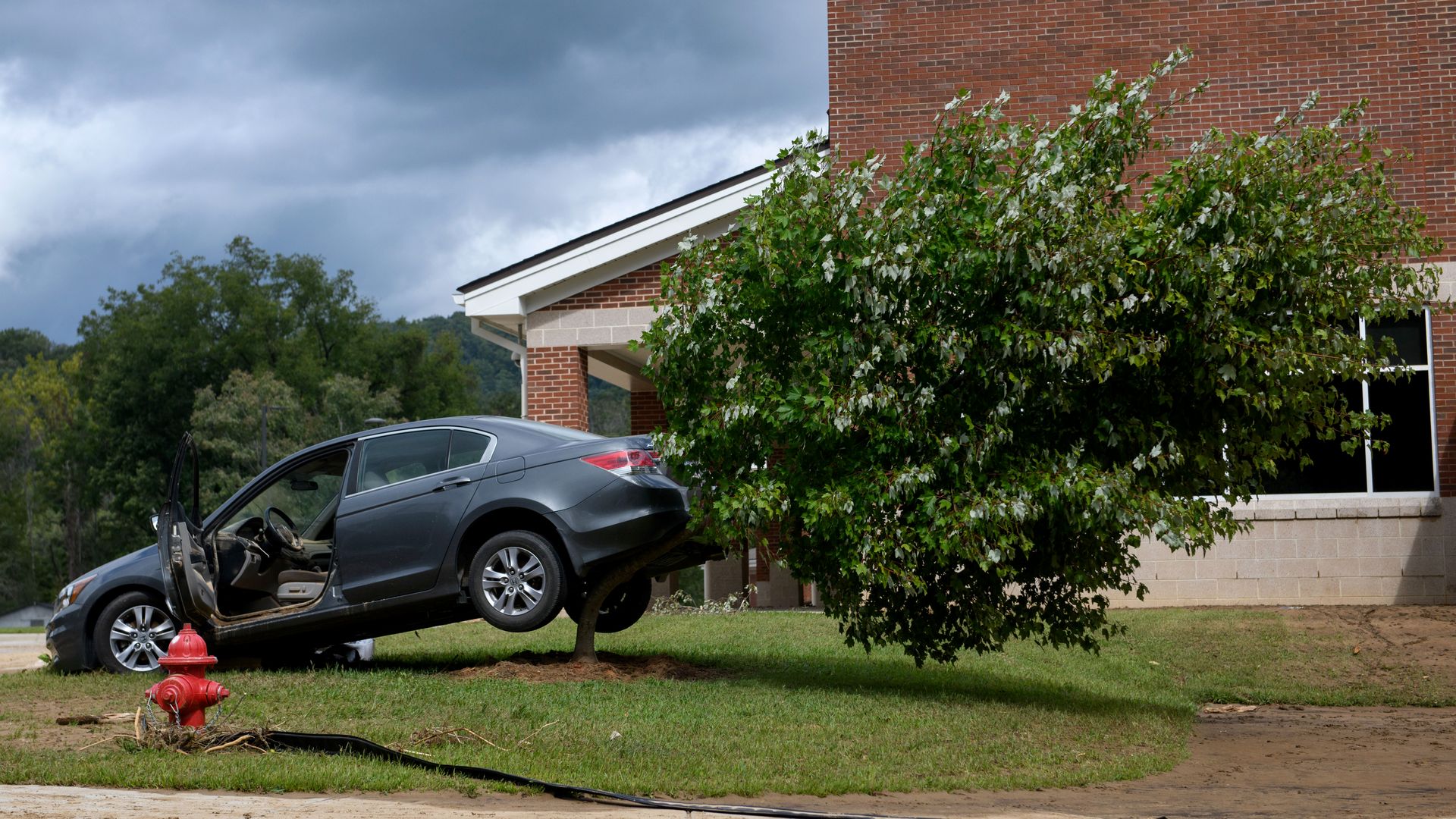
A vehicle backed up onto a tree outside of the Old Fort Elementary School in the aftermath of Hurricane Helene on Sept. 29 in Old Fort, North Carolina. Photo: Melissa Sue Gerrits/Getty Images
Tens of thousands of students across the southeast attend school in districts that remain closed after hurricanes Helene and Milton — some with no set date to reopen.
The big picture: Natural disasters, like the COVID crisis, can leave long-lasting marks on children's physical, mental and academic well-being. As school districts rebuild, they must consider how recurring absences can undermine student success.
- Hurricane Helene carved a path of devastation across the southeast, leaving over 220 dead across six states. More than 110 of those casualties were in North Carolina alone.
- "The impacts we see due to closures for hurricanes are not going to be uniform," Megan Kuhfeld, NWEA director of growth modeling and analytics who has researched large-scale learning disruptions, told Axios. "They'll probably be harder for schools that were already serving students with higher needs."
- Academic remediation could include extending the school year or accommodating online learning.
State of play: Six districts in North Carolina serving more than 31,000 students will remain closed beyond Friday, per Holly West-Pauley, a spokesperson for North Carolina's Department of Public Instruction. Seven charter schools in Asheville remained closed because of water issues, she said.
- All K-12 districts in Florida have reopened to students a week after Hurricane Milton's landfall, said Sydney Booker, a spokesperson for the Florida Department of Education.
- But some Florida schools remain closed, and students were sent to nearby relocation sites at other schools. Instruction hours shifted for both relocated and existing students at some of these schools.
Reopening schools "in any form possible" provides a critical sense of normalcy and routine for children in the wake of a disaster, Betty Lai, an associate professor at Boston College who researches the impacts of the climate crisis and disasters on children, told Axios.
Flashback: Hurricane Katrina offered a bleak example of disaster-induced absenteeism: After the deadly storm struck Louisiana in August 2005, an estimated 50,000 students did not attend school during the remainder of the academic year, per the DC-based nonprofit Children's Defense Fund.
Between the lines: So-called "recovery stressors," like changing campuses or grappling with the destruction, can have long-term impacts on kids' mental health, Lai said.
- Most children respond to a disaster with resilience, she said, but about 10% report chronic distress symptoms that can harm their ability to function in life and in school for years.
- Disasters disproportionately affect children from low-income communities, who are often more exposed to stressors during and in recovery from a severe climate event, Lai said.
Case in point: Kristin McKee's son is a sixth grade student at Madeira Beach Fundamental K-8 in Pinellas County, Florida. After six days off for Hurricane Helene, he returned to school — but this time, he walked into a new classroom at Osceola Fundamental High with temporary new hours (12:10 to 5:10pm ET) and a new schedule.
- It felt like the first day of middle school again, McKee told Axios. But she said she's confident his teachers will still equip him with the knowledge needed to succeed, even under new circumstances.
- "The schedule is definitely not ideal … but I appreciate everything the district has done to get the kids back in school, into a routine, and to keep them with their fellow classmates and teachers," she added.
Context: Children in preK through grade 12 displaced by natural disasters are protected by the federal McKinney-Vento Homeless Assistance Act, West-Pauley said.
- Schools must "immediately enroll" students, even if they don't have proof of residency or other documents like vaccination records at the time of enrollment.
The bottom line: "We're still understanding the impact, not in the remediation stage yet," Kuhfeld said.
- "But I do think that a lot of the lessons learned from the strategies that were implemented post-COVID will be relevant."
