Medicare Advantage retreat could squeeze seniors

Add Axios as your preferred source to
see more of our stories on Google.
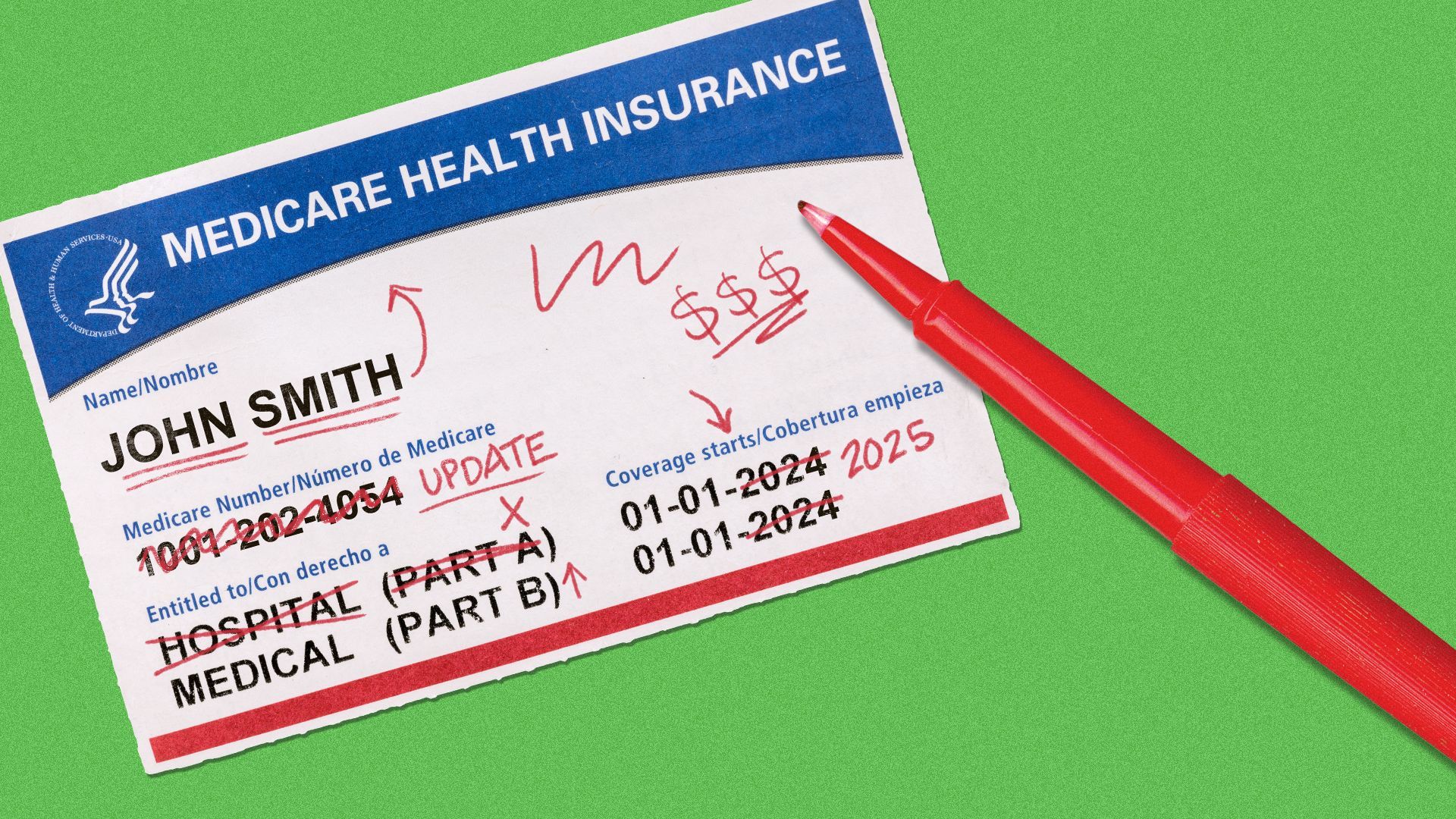
Illustration: Lindsey Bailey/Axios
Major insurers including Aetna and Humana are scaling back their Medicare Advantage plans for next year, leaving some seniors around the country hunting for new care arrangements just weeks before the 2025 sign-up period begins.
Why it matters: Private Medicare plans will cover more than half of Medicare beneficiaries, or 35.7 million people, next year. Even small disruptions to coverage could be difficult for seniors living on fixed incomes to manage.
The big picture: Medicare Advantage has been a lucrative and fast-growing business over the past couple of years, but the tide may be shifting after the Biden administration made a series of changes to reimbursements and other policies that didn't land well with insurers.
- "While we strive to deliver benefit stability to seniors, we will be adjusting plan level benefits and exiting counties as we construct our bid for 2025," Karen Lynch, CEO of Aetna's parent, CVS Health, said on an earnings call earlier this year. "We are committed to improving margins."
- Medicare advisers to Congress and other experts say the insurers are overpaid and that the program costs taxpayers billions more than it should.
State of play: Insurers on average decreased their offerings of Medicare Advantage plans that include prescription drug coverage by 6.6% for 2025, according to a Leerink Partners analysis of Centers for Medicare and Medicaid Services data.
- Aetna is selling 10% fewer MA-Part D plans next year, compared with 2024. UnitedHealth Group is offering 5.4% fewer and Humana 2.5% fewer. The analysis doesn't include MA plans without drug coverage or special needs plans.
- The open enrollment period to sign up for plans begins on Oct. 15.
Catch up quick: Medicare administrators last spring announced that MA plans would see a 0.16% cut to their base pay next year, though they'll likely see a net increase after their payments are risk-adjusted to account for the health of their customers.
- Since then, Humana, Centene and Blue Cross and Blue Shield of Kansas City have said they'll exit some MA markets, citing financial and regulatory pressures.
- Cigna earlier this year announced plans to sell off its Medicare Advantage business, though it's still offering plans in 600 counties next year.
- Humana's outlook is also clouded by a sharp drop in the government's quality ratings of its plans, which could affect the federal bonuses it gets and exert a drag on earnings in 2026.
CMS said last week that its analysis of plan offerings showed stability in the market. It announced that seniors' average monthly MA premiums will fall slightly to $17 next year, from the current average of $18.23.
- But the information didn't show whether copayments or popular supplemental benefits like meal deliveries after hospitalization will change.
- Additionally, CMS said each U.S. county will have an average of 34 MA plans for beneficiaries without special needs to choose from — down from an average of 43 plans per county in 2024.
Zoom in: Insurers compete for customers during the enrollment period by offering the lowest possible monthly premium. Those looking to cut costs might be more likely to tweak supplemental benefits like dental or vision care or meal services that aren't as visible, until they're needed.
- The national average premiums and other quick facts released by CMS last week may not "tell the full story about what's happening under the hood with some of these plans," said Jeannie Fuglesten Biniek, KFF's associate director for Medicare policy.
- Seniors also haven't done a great job of shopping around for coverage. According to KFF, 65% of Medicare Advantage beneficiaries didn't compare their coverage to other plans during 2021 open enrollment, and 43% didn't check for changes to their current plan's offerings.
The results of the Biden administration's Medicare Advantage changes will vary significantly across plans, and some seniors will see skimpier benefits or lose their plan altogether, Chris Bond, spokesperson for health insurance trade association AHIP, said in a statement.
- "AHIP is carefully reviewing the data, but it is clear that national averages don't tell the full story," he said.
The bottom line: This year more than ever, seniors enrolled in MA need to double-check that they're in the plan that best fits their needs, said Vijay Kotte, CEO of Medicare brokerage service GoHealth.
- "I am still screaming as loud as I can that every Medicare consumer needs to shop and compare their benefits," Kotte said. "These averages are dangerous ways to play."
