One or two hospitals control many metro areas: KFF

Add Axios as your preferred source to
see more of our stories on Google.
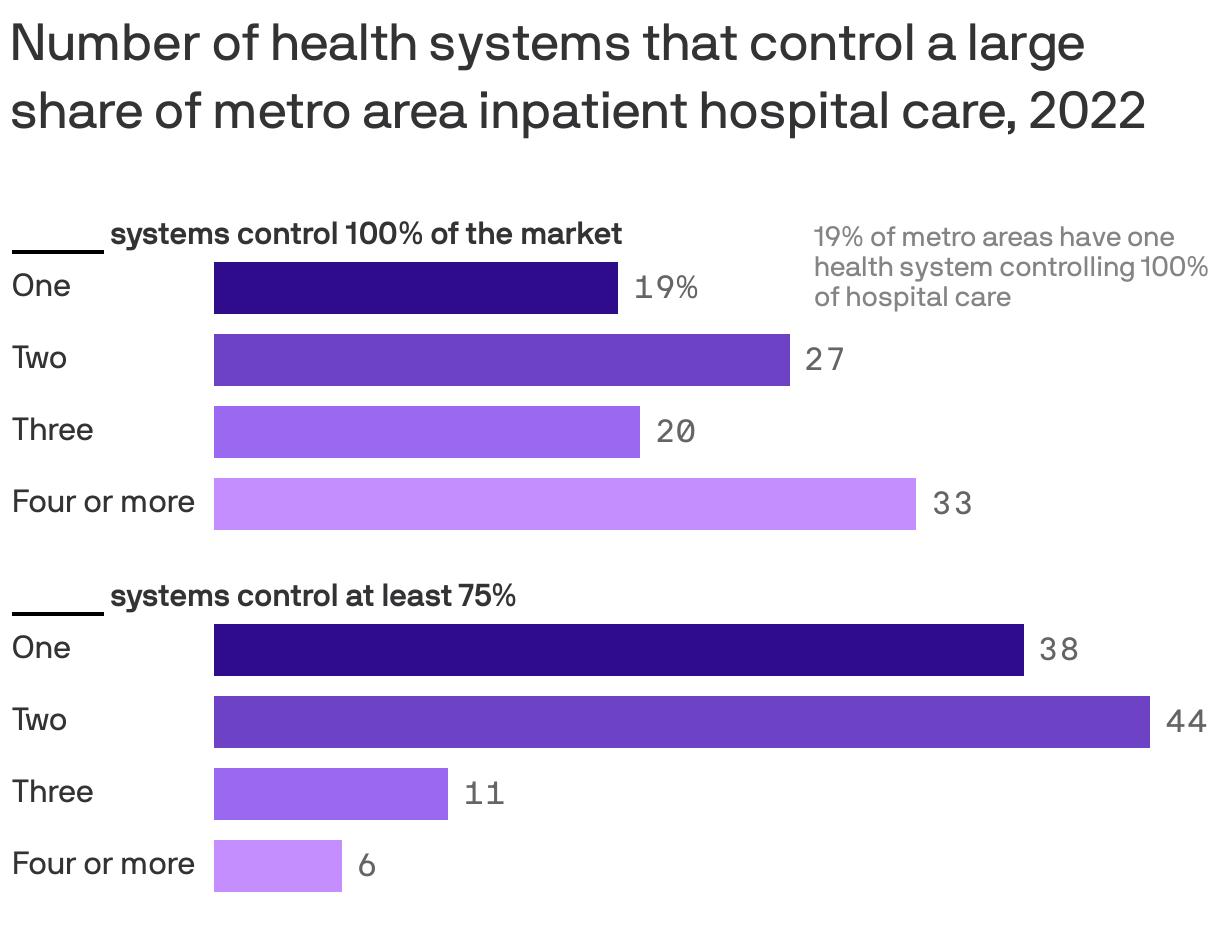
Hospital mergers and acquisitions have left nearly half of the metropolitan areas in the U.S. with just one or two health systems controlling all inpatient care, according to a new KFF study.
Why it matters: Hospital consolidation is seen as a big driver of rising health costs and has become a prominent focus of Congress and antitrust regulators.
- Nearly a third of all health spending goes toward hospital care, and critics question if the efficiencies from alliances and mergers are benefiting patients through higher quality care or lower costs.
What they found: Two thirds (67%) of hospitals nationwide were affiliated with health systems in 2022, up from 56% in 2010.
- Almost all metropolitan areas in the U.S. (97%) have highly concentrated hospital markets as defined by federal competitiveness guidelines.
- Hospital cost data from 2022, the most recent year available, shows that one or two health systems control the entire market for inpatient care in 47% of metropolitan areas in the country.
- One or two hospitals control three-quarters of the market in more than 80% of metro areas.
Go deeper: Larger metropolitan areas tend to have more health system competition, KFF found.
- 79% of the U.S. population lives in an area with four or more health systems, including in Detroit, Miami and Phoenix.
- Still, the two biggest health systems control at least half the market in most of those large-population metropolitan areas. Austin, Texas, for example, has multiple health systems, but HCA Healthcare and Ascension Health capture 85% of the inpatient market, KFF said.
Hospital markets have become increasingly consolidated in the last decade, the analysis shows.
- Consolidating hospitals into larger systems doesn't always curb local competition, especially when acquisitions involve health systems moving into new geographic areas, KFF noted.
Zoom out: Both Democrats and Republicans in Congress are increasing their scrutiny of hospital deals and working on policy ideas to control hospital prices.
- But it's much harder to roll back mergers that have already happened, Axios' Caitlin Owens reported this summer.
- The American Hospital Association has said mergers and acquisitions help hospitals serve more patients.
