FDA eyes first schizophrenia drug shift in decades

Add Axios as your preferred source to
see more of our stories on Google.
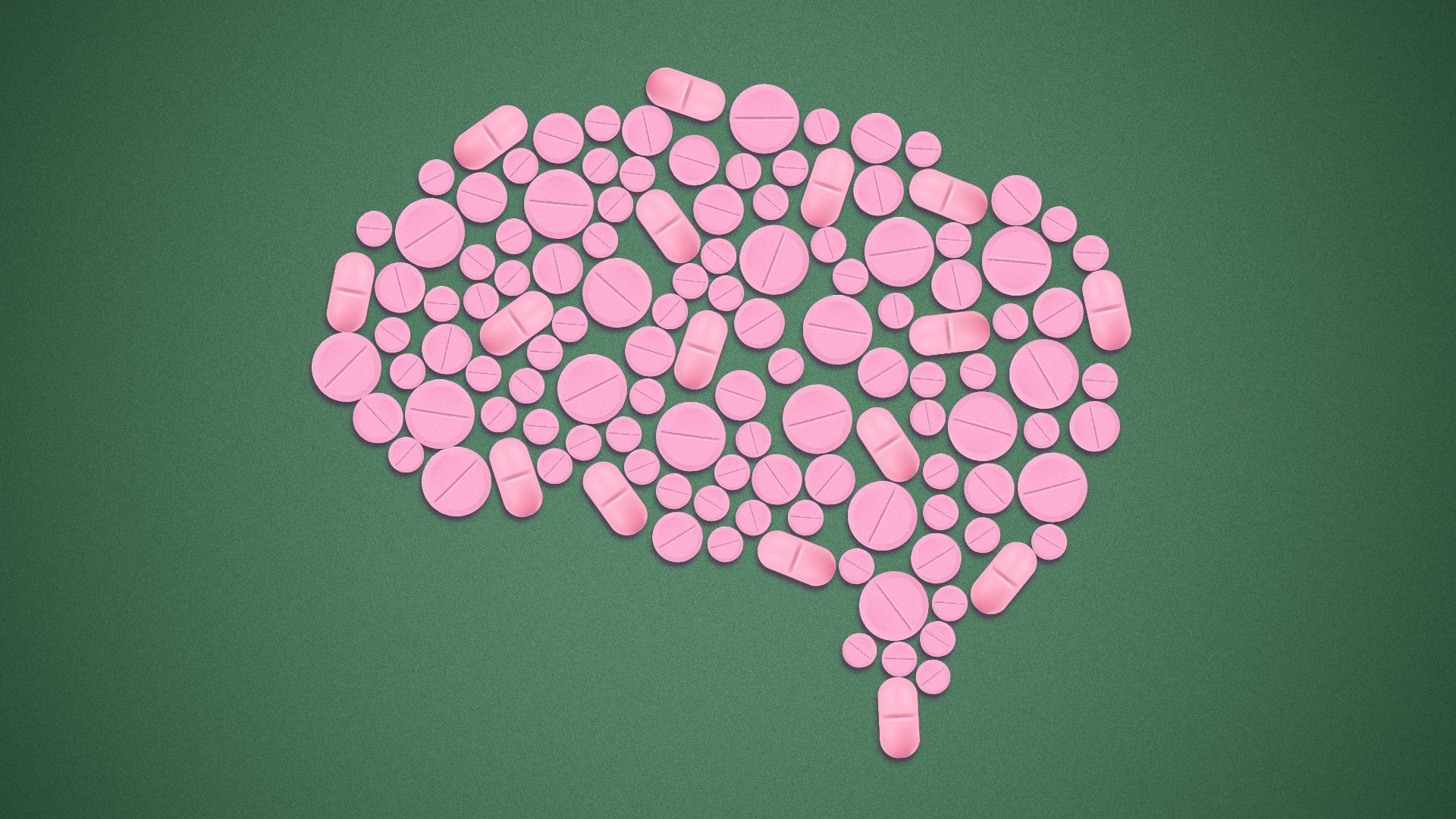
Illustration: Aïda Amer/Axios
The Food and Drug Administration is slated to decide Thursday whether to approve the first new schizophrenia drug in at least three decades.
Why it matters: The complex condition is currently treated with antipsychotics that carry safety risks like metabolic disorders, cause weight gain and often cause people to stop taking their medications.
- Bristol Myers Squibb's KarXT uses a different mechanism that clinical trials suggest doesn't cause serious adverse events — and has the potential to be used to treat psychosis associated with Alzheimer's disease and bipolar disorder.
The big picture: The drug is part of a focus that's made neuroscience one of the pharmaceutical industry's fastest-growing market segments and prompted Bristol Myers to buy the drug's developer, Karuna Therapeutics, for $14 billion late last year.
- KarXT's novel mechanism could help people with schizophrenia "achieve a far better quality of life," Jonathan Alpert, chair of the American Psychiatric Association's council on research, said in an email.
State of play: Schizophrenia affects 1 in 300 people around the world and leads to an estimated $343 billion burden annually in the United States, according to the independent Institute for Clinical and Economic Review.
- The condition can cause hallucinations, withdrawal from social life and cognitive difficulties.
- Experts say the FDA is likely to approve the drug. KarXT could make BMS an estimated $8.2 billion by the end of the decade, the Financial Times reported.
How it works: KarXT is a twice-daily pill that combines two drugs: one that targets muscarinic receptors, which increase activity in the parasympathetic nervous system, and another that lessens side effects from activating those receptors.
- The majority of clinical trial participants achieved a more than 30% improvement in symptoms after a year on the drug, BMS announced in April. Most participants experienced weight loss during the trial. The drug has been shown to cause some gastrointestinal side effects.
Yes, but: Even if the FDA approves the drug, it may not be accessible to everyone. BMS hasn't announced a price point for the drug, but ICER calculated a price benchmark of $16,000 to $20,000 per year.
- People living with schizophrenia and their caregivers told ICER they were optimistic KarXT could offer better treatment of symptoms with fewer side effects. But patients also said other drugs have had similar promises and fallen short, ICER's January report on the drug said.
- "This is only one piece of a larger puzzle but it is like that piece of the jigsaw puzzle we've been looking for for a long time," said Ken Duckworth, chief medical officer at the National Alliance on Mental Illness.
- Policymakers also need to focus on early intervention for schizophrenia and eliminating insurer pre-approvals and other barriers that can keep patients from finding the right medication, added Debbie Plotnick, executive vice president for state and federal advocacy at Mental Health America.
Zoom out: Pharmaceutical companies' interest in neuroscience and brain health cooled off after a series of antidepressants and antipsychotics hit the market in the early 2000s.
- But Alzheimer's drugs have rekindled interest in the field — especially due to favorable Medicare coverage decisions — as have psychedelic-assisted therapies for conditions like PTSD.
What we're watching: An AbbVie drug similar to KarXT is also showing promising results in clinical trials, and only requires patients to take one pill a day.
- There's some indication that this new class of drugs could also help improve cognition, which could make it a helpful treatment for people with dementia as well as schizophrenia, Duckworth said.
The bottom line: "We need all the antipsychotic medications we have," said Alpert, who also leads the psychiatry and behavioral sciences department at Albert Einstein College of Medicine.
- "No single medication will be tolerated by or helpful to all people with schizophrenia."
