Altman's hazy AI utopia

Add Axios as your preferred source to
see more of our stories on Google.
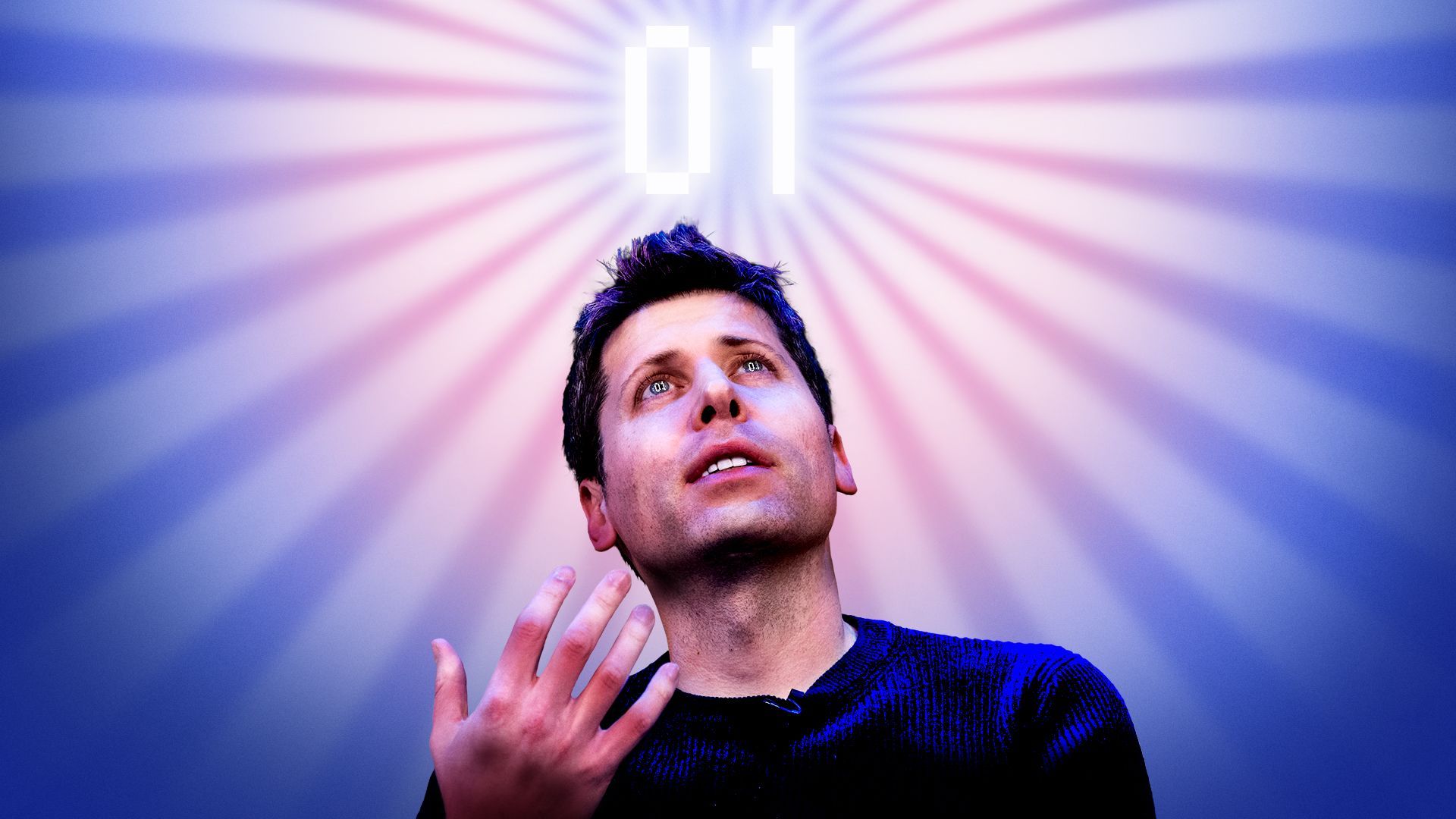
Photo illustration: Sarah Grillo/Axios. Photo: Chris Ratcliffe/Bloomberg via Getty Images
OpenAI CEO Sam Altman sees AI producing "massive prosperity" in a future that is "so bright that no one can do it justice by trying to write about it now."
Why it matters: That sounds pretty great, but "now" is where we all live and work — and right now, the tech industry is locked in an epic debate about whether AI can deliver on its flood of promises.
The big picture: Since ChatGPT's debut nearly two years ago, millions of users around the world have been mesmerized by the ability of generative AI to produce text and images — but AI still makes things up, behaves unpredictably and costs a ton to build and run.
In Altman's view, the jury is in and the verdict on AI is clear: "Deep learning works, and we will solve the remaining problems."
- In a manifesto titled "The Intelligence Age," posted to his personal website Monday, Altman said that OpenAI's strategy of scaling AI up will continue to pay off.
- "AI is going to get better with scale, and that will lead to meaningful improvements to the lives of people around the world."
- "It will not be an entirely positive story," Altman admits, mentioning the prospect of labor-market disruptions.
- But he doesn't even bother to counter the fears many experts in the field still hold — that a superintelligent AI could turn against its creators and threaten civilization.
The other side: Altman's bright vision faces three different tides of skepticism from different constituencies in tech.
- A significant number of people with technical expertise believe that the OpenAI approach alone will not "solve the remaining problems," and that different kinds of machine learning approaches beyond today's genAI norms will be needed.
- Meanwhile, some on Wall Street have begun to doubt that AI will deliver near-term profits that would support the massive valuations the stock market has given AI firms.
- At the same time, while some programmers and specialists are wowed by AI-aided productivity gains, many everyday users are still trying to figure out what all the fuss is about.
Altman's answers are long on enthusiasm but short on specifics.
- To the technical community, Altman is saying, Trust me, I'm seeing things you wouldn't believe coming down the pike!
- To investors, Altman is saying the long-term payoff will be so huge that they should stop worrying about next quarter. After all, "superintelligence" is coming in "a few thousand days."
- To the rest of us, Altman is saying, Just hold on and eventually AI will be teaching your kids, curing your health problems and changing your world.
Zoom out: Altman's essay, like Marc Andreessen's more libertarian-driven "Techno-Optimist Manifesto," foresees tech eventually delivering a tide of prosperity so massive it will sweep away all humanity's social and political problems.
- The vision, which has transfixed many of Silicon Valley's leaders in recent years, is rooted in science fiction portrayals of "superabundant" civilizations to come.
- Many AI enthusiasts cite the influence of Iain M. Banks' popular "Culture" novels, which portray a far future in which people are fully liberated by technology from material want (but still in search of meaning).
Yes, but: Altman admits that the Intelligence Age might have some distribution problems.
- "If we don't build enough infrastructure, AI will be a very limited resource that wars get fought over and that becomes mostly a tool for rich people," Altman writes.
- To avoid that nightmare, he says, "we need to drive down the cost of compute and make it abundant (which requires lots of energy and chips)."
- "I think, you know, intelligence 'too cheap to meter' is not a literal statement, but it's a nice aspiration," he told Axios' Ina Fried in a Monday onstage interview.
Reality check: OpenAI is reportedly closing on a new investment round of around $6 billion that values the startup at roughly $150 billion.
- That gives Altman plenty of incentive to lay out just how phenomenally valuable AI could be down the road.
The bottom line: Today's AI might really usher in a promised land of plenty, and that's a gamble many in the industry believe is worth the risk.
- But for those who study the history of technology, Altman's lofty rhetoric carries echoes of similar forecasts that have accompanied every wave of technical innovation — from steam power to electricity to cars, and from phones and TV to the internet.
- Yes, each of those changed the world, but none of them solved the world's stubborn problems the way their giddy promoters predicted.
