Hill GOP sets sights on scrapping drug price talks

Add Axios as your preferred source to
see more of our stories on Google.
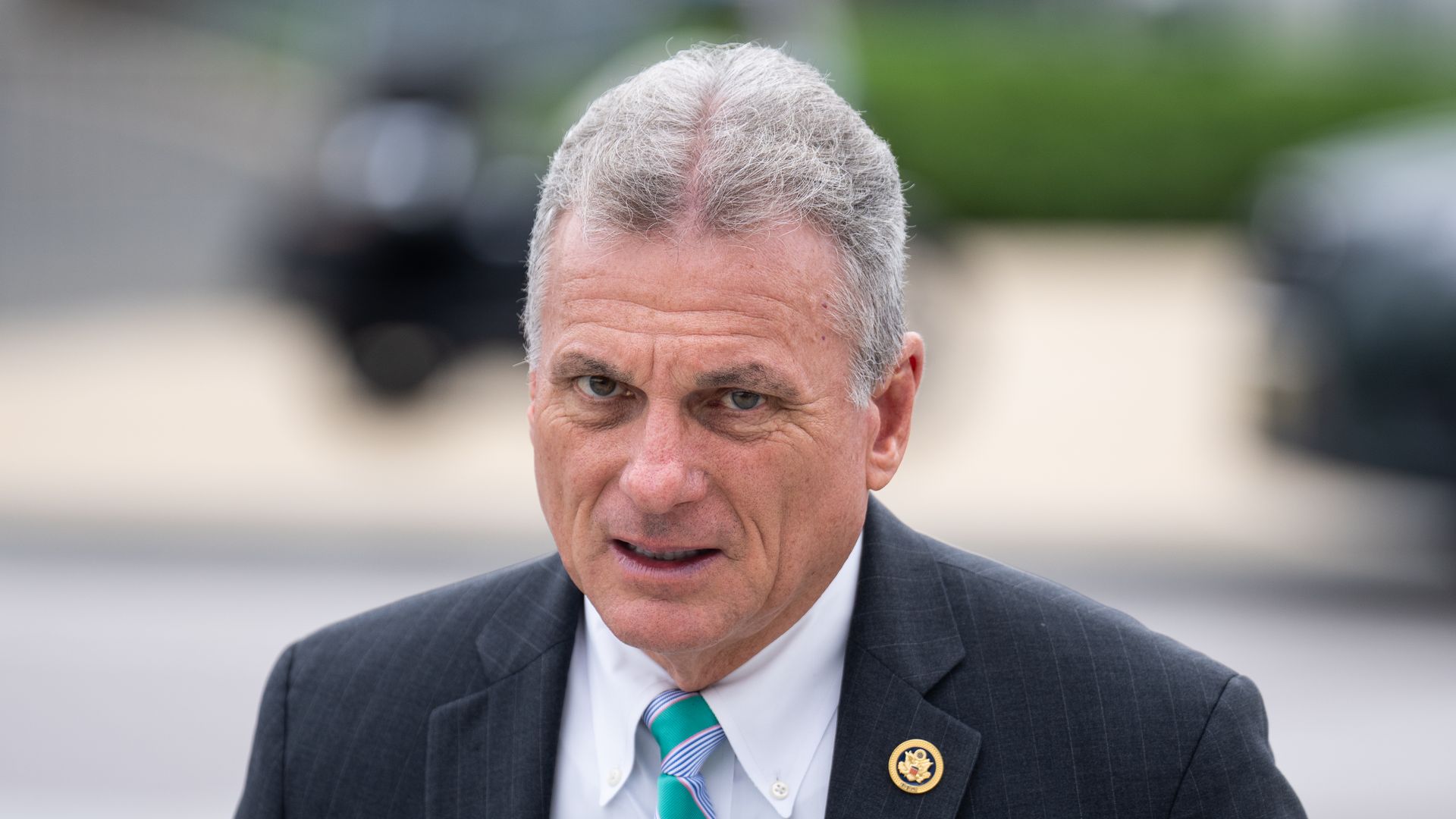
Rep. Buddy Carter. Photo: Bill Clark/CQ-Roll Call via Getty Images
The Trump campaign's populist rhetoric on drug pricing is colliding with more traditional GOP concerns in Congress about heavy-handed government squelching pharmaceutical innovation.
The big picture: The tension surfaced this week when multiple high-ranking Republicans told Axios they want to repeal the Inflation Reduction Act's Medicare drug price negotiations next year if they prevail in the elections.
- The law requires the next president to negotiate prices for some drugs, after the first round of talks yielded agreements to lower the list prices of 10 widely used drugs this year.
- Trump has pledged to "take on Big Pharma" through administrative actions like tying what Medicare pays to prices in other developed nations. But he could still be open to repealing the IRA drug price measures, and his campaign isn't elaborating.
Future administrations won't be able to dismantle or water down the IRA without Congress' help. It's possible that Republicans could diverge, with Trump focused on "gutting" the IRA's climate and energy provisions while Republican lawmakers aim for the drug talks.
What they're saying: "I would try to remove that and replace it, but I can't tell you the exact, you know, what it would be yet," Sen. Mike Crapo (R-Idaho), who's in line to be the next chair of the Senate Finance Committee if Republicans flip the chamber, told Axios when asked about the drug price talks.
- Rep. Buddy Carter (R-Ga.) said the IRA drug pricing provisions are "the worst legislation I've ever witnessed in 10 years in Congress and 10 years in the state legislature" and he "absolutely" wants to repeal them.
- Asked about Trump's criticism of pharma, Carter said "that's OK, pharma needs to be criticized," but it should not be done in a way that is "destroying research and development."
- Sen. Thom Tillis (R-N.C.) said he "100%" wants to repeal the negotiation provisions, while other drug pricing sections of the law would need to be evaluated based on whether they have "a positive impact on business."
Yes, but: The lack of a consensus replacement plan could mean a long, grinding health care debate with echoes of the failed 2017 Affordable Care Act repeal-replace fight.
Zoom out: Trump has attacked the pharmaceutical industry more than traditional Republicans have, though he hasn't clarified exactly how he would approach the IRA drug pricing provisions.
- "As President Trump said, he will release more details but his overall position on health care remains the same: bring down costs and increase the quality of care by improving competition in the market place," Trump campaign spokesperson Karoline Leavitt said in a statement.
- During his presidency, his staff engaged in talks with then-Speaker Nancy Pelosi's office, but he ended up opposing what Democrats put forward on Medicare negotiating prices, embracing GOP arguments it would lead to fewer cures.
- His own plan envisions using executive action to have Medicare pay no more than the lowest price that select other developed countries pay for drugs — a proposal that never was realized during his presidency.
Between the lines: No congressional Republicans asked by Axios argued for keeping the IRA drug pricing talks. But some indicated repeal is not their priority.
- Wisconsin Sen. Ron Johnson said he was focused on tax issues. "We have this looming massive tax increase in 2026," he said.
- "I'm probably more primarily focused on the energy provisions in the IRA," said Pennsylvania Rep. Scott Perry, a Freedom Caucus member.
- Senate HELP Committee ranking member Bill Cassidy (R-La.) called the question a "total theoretical," adding, "Ask me that question then" if there really is a GOP sweep.
By the numbers: The Congressional Budget Office found that the negotiation provisions would save about $100 billion over 10 years.
- That poses its own obstacle, since any repeal effort would wind up costing the government money instead of generating savings that could be applied to GOP priorities like tax cut extensions.
Vice President Kamala Harris has called for expanding the negotiations and making more drugs subject to price talks, if she's elected.
- And congressional Democrats are trying to showcase how the talks are already yielding savings for seniors and working-class Americans, through forums like a hearing today in the Senate Finance Committee.
Republicans nonetheless argue that the IRA provision is not a real "negotiation" because companies that opt out would be hit with a steep tax for nonparticipation, and that the process amounts to price setting.
- They also say it harms innovation that leads to new cures and have warned of potential premium increases in Medicare Part D.
- Crapo and other Republicans put forward a more modest alternative drug pricing plan in 2021 that did not include negotiation but had other elements similar to the IRA, like an out-of-pocket cap on drug costs.
- "The problem with price fixing is that it inevitably leads to scarcity, so it's kind of a conundrum," Sen. John Cornyn, the possible next Senate GOP leader, told Axios when asked about repeal. He said one potential area for bipartisan consensus is reforming pharmacy benefit managers' business practices.
If you need smart, quick intel on health care policy for your job, get Axios Pro Policy.
