"Tourist taxes" help hotspots in Europe cope with surges of visitors

Add Axios as your preferred source to
see more of our stories on Google.
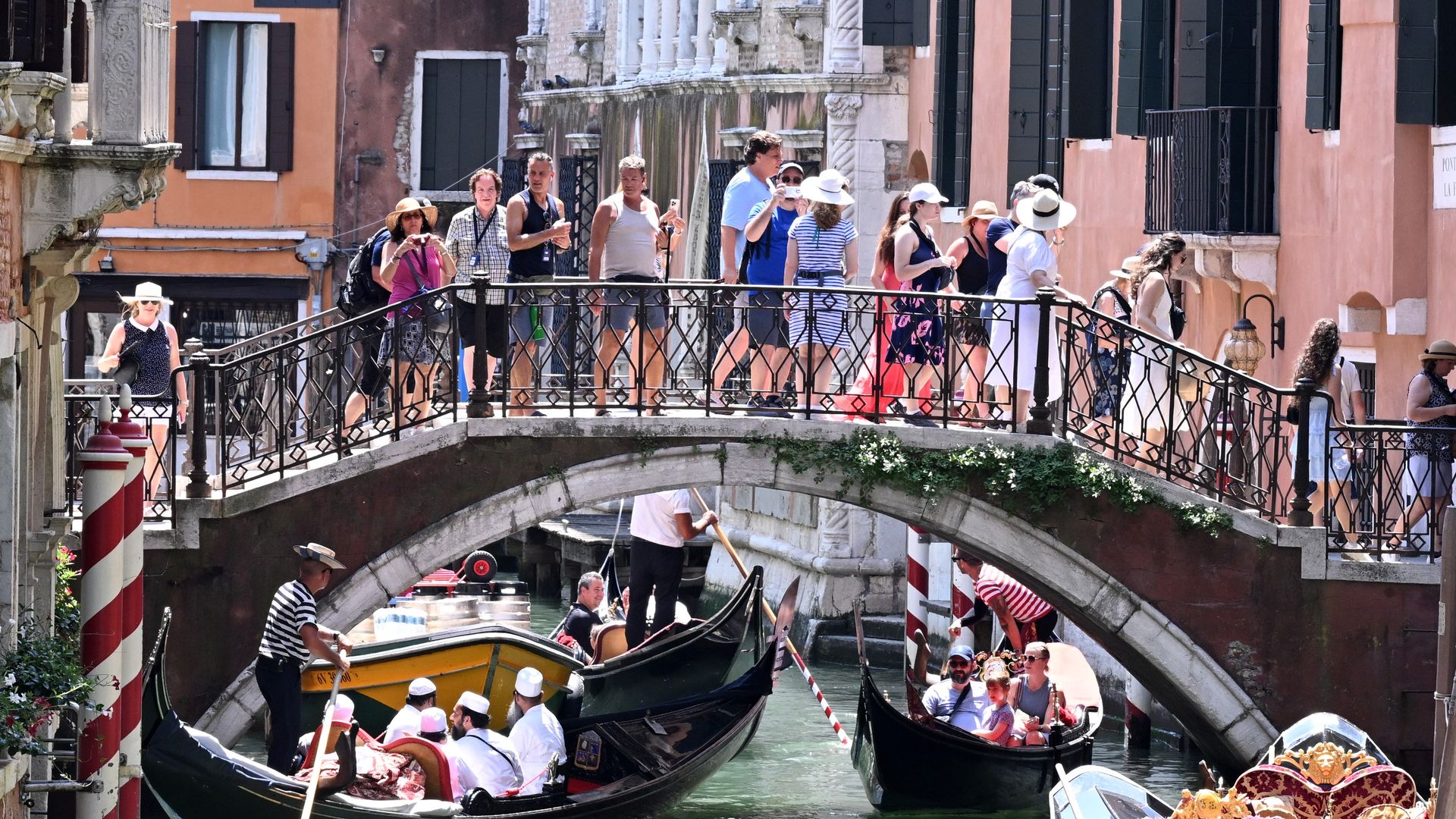
Tourists are seen sightseeing by gondola in Venice, Italy, on July 18. Photo: Alberto Lingria/Xinhua via Getty Images
Many of the world's most popular global destinations are hiking fees for tourists to help manage the growing onslaught of visitors.
Why it matters: Tourist destinations, especially in Europe, want to charge globetrotters for the stress they can place on the environment, historical sites and local businesses.
- Tourist fees are aimed at decreasing the total number of visitors and supporting municipalities strained by overtourism.
- How or where travelers pay tourist fees can vary. Some are tacked onto a traveler's hotel or Airbnb bill. Others can be added to the cost of airfare or charged at immigration or upon entry into a city or jurisdiction.
State of play: New Zealand on Tuesday became the latest in an increasing number of tourist hotspots that are taking action to tackle overtourism
- Officials there announced the country is nearly tripling its entry fees for tourists, effective Oct. 1.
- While tourism benefits the country's economy, it "also comes with costs" for infrastructure and other conservation maintenance, Matt Doocey, New Zealand's Minister for Hospitality and Tourism, said in a news release.
Other destinations across Europe, Asia and the U.S. have introduced or considered similar measures.
- Bali began charging foreign travelers an extra fee in February.
- Venice charged day trippers an entry fee this year during 29 days between between April 25 and July 14. Last month, the Italian city also instituted a ban on tourist groups larger than 25 people and prohibited them from using loudspeakers on the streets.
- Hawaii lawmakers have sought to institute fees for tourists to help fund protection for the state's natural resources, but the measure has yet to pass.
The big picture: Global tourism has continued to boom in recent years to unprecedented levels, spurring anti-tourism sentiments from locals in places like Barcelona and Dubrovnik, Croatia.
- The UN's tourism arm predicted in January that international tourism would return to — and perhaps surpass — pre-pandemic levels this year.
- However, studies examining the ties between tourist taxes and visitor numbers have provided mixed results, CNN reported.
Zoom in: Destinations with tourist fees already in place are increasing the costs of these sums.
- This summer Lisbon doubled its tourist tax from €2 ($2.21) to €4 ($4.41) per person per night and the measure entered into effect on Sunday.
- In July, the mayor of Barcelona announced the city was considering hiking its tourist tax for some visitors, per Reuters. The city has already raised fees for tourist stays several times in recent years.
- This year, Amsterdam increased its tourist tax to 12.5% of the cost of a traveler's overnight stay, up from 7% before.
- Italy is currently considering increasing its tourist taxes, per Semafor.
Between the lines: Other destinations are finding creative approaches to curb overtourism.
- In Japan, many restaurants offer local customers a discount while charging tourists higher prices.
- Barcelona's mayor has announced a plan to ban all Airbnb-style apartment rentals to tourists by 2028.
- Earlier this year, Milan attempted to crack down on the sale of takeaway food and drink after midnight in the city's busy nightlife area but the measure ultimately failed, Business Insider reported.
Go deeper: There's too much tourism
