Private equity PAC favors Republican candidates

Add Axios as your preferred source to
see more of our stories on Google.
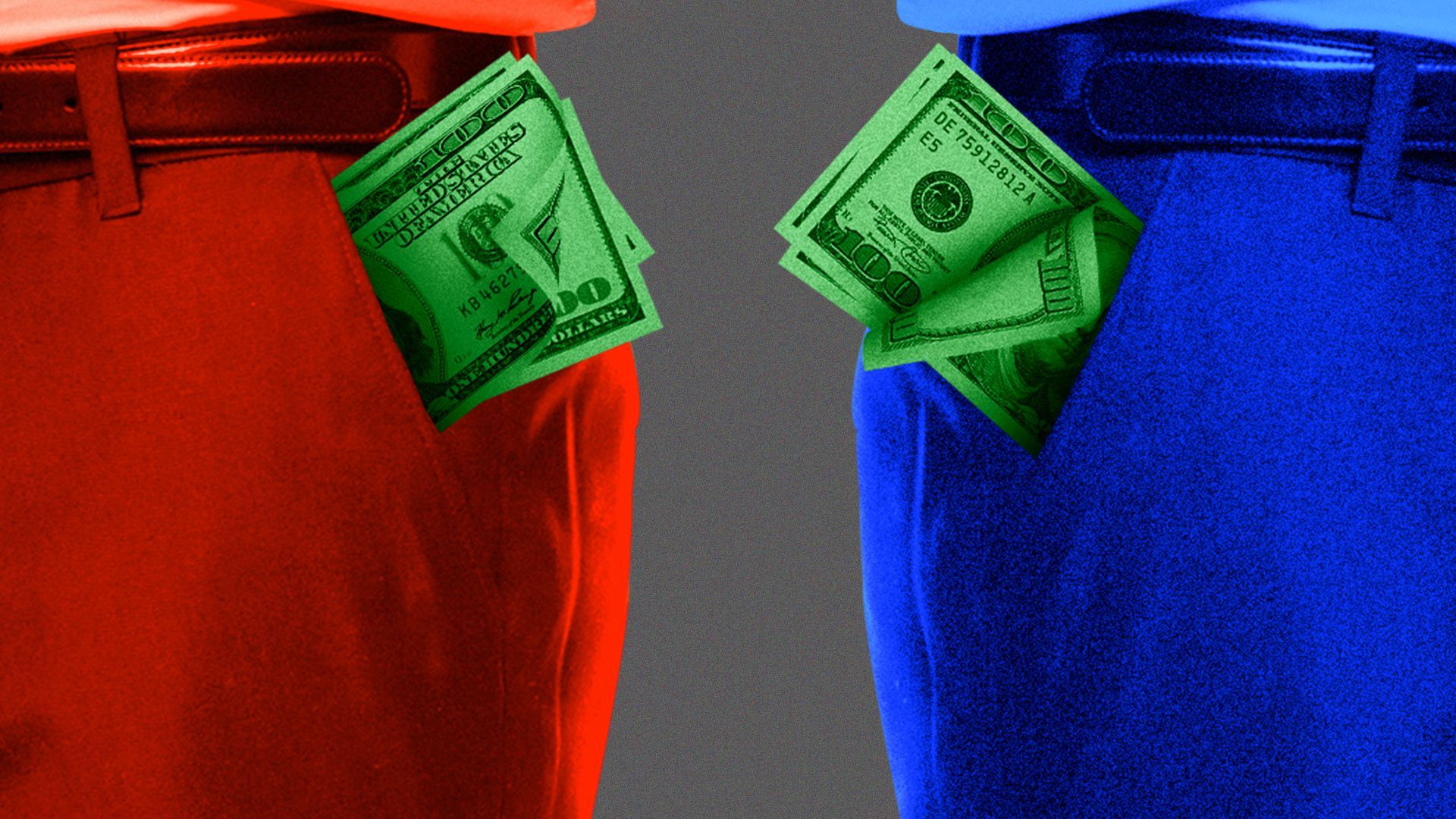
Illustration: Victoria Ellis/Axios
Private equity's top trade group is donating more to Republicans than to Democrats during this election cycle, as it hopes to head off major tax increases.
By the numbers: The American Investment Council's political action committee made over $787,000 in donations to candidates and committees through the end of July, according to OpenSecrets, which already is a record amount for the group.
- This includes $307,000 to individual GOP candidates, versus $206,000 to Democratic Party candidates.
- That puts the partisan preference closer to how AIC PAC donated in 2020 (59% Republican) than in 2022 (55% Republican).
- It has not donated to any presidential candidates, in keeping with its historical precedent.
The big picture: The PAC's primary mission is to support candidates who support the private equity industry, and right now that's mostly about tax policy.
- Many of the 2017 tax cuts are set to expire at the end of next year, with everyone in D.C. expecting intense negotiations that could encompass the entire tax code.
- For the American Investment Council, that means giving money to those pledging to hold the line on corporate rates, capital gains rates, carried interest treatment, and aggregation treatment.
Zoom in: A secondary issue for AIC PAC is regulation, namely at the SEC and FTC.
- The group believes the Gary Gensler-led SEC has been too aggressive, particularly on the private funds rule, and fears an increase in enforcement actions were Gensler to be reappointed.
- It also thinks that Lina Khan's FTC has chilled the broader M&A market, including for sales of PE portfolio companies, by seeking to block a variety of mergers.
- Both the SEC and FTC are part of the executive branch, but their leaders must receive Senate confirmation.
The bottom line: A source close to AIC PAC suggests that picking candidates used to be easier, when there were more centrists. Today, particularly in many of the toss-up races, the candidates have moved further to winged edges that can be less biz-friendly.
