Skydio CEO: Ukraine is "where the future of defense is being shaped"

Add Axios as your preferred source to
see more of our stories on Google.
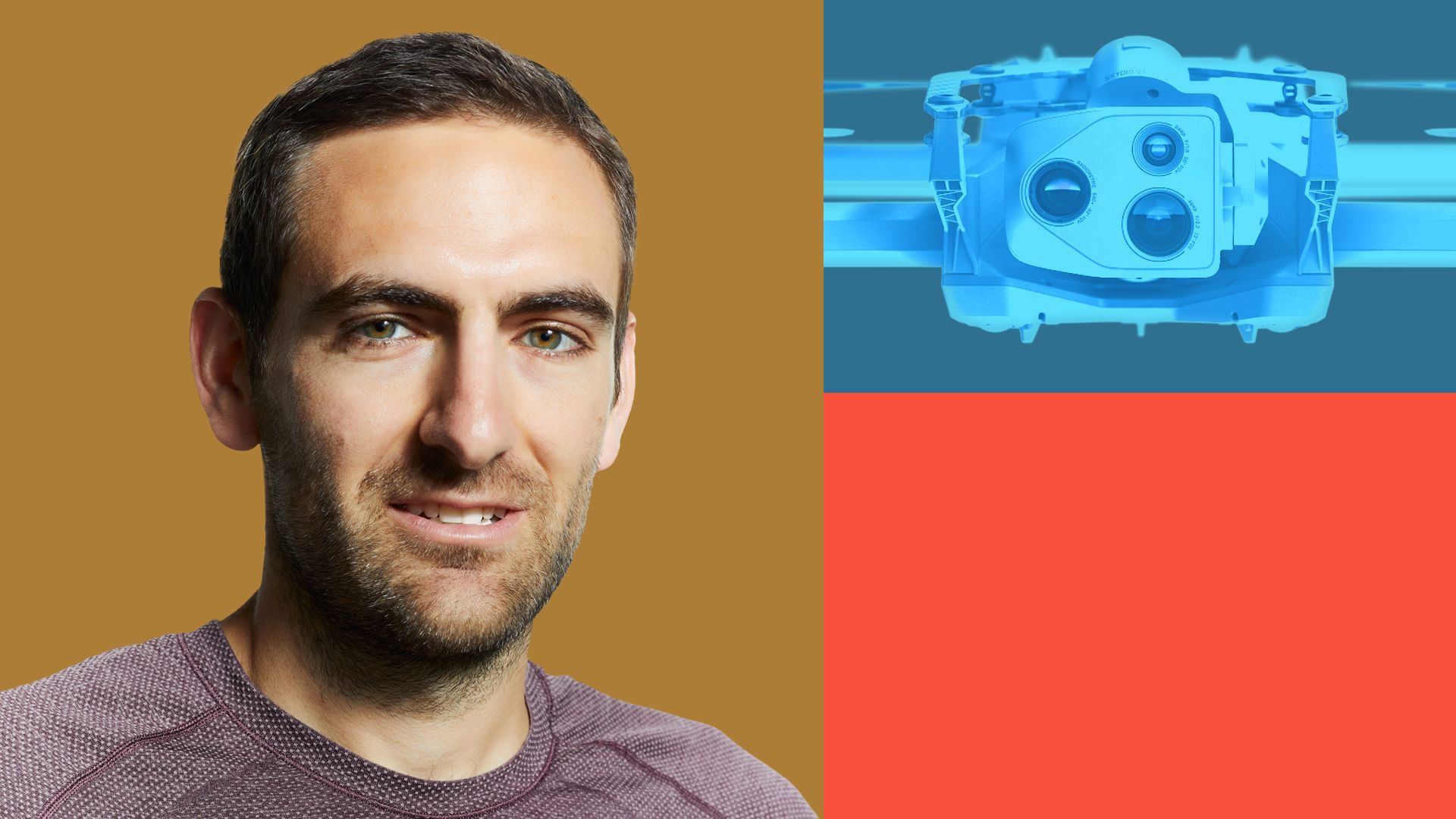
Photo illustration: Axios Visuals. Photos: Courtesy of Skydio
Keeping abreast of the evolving defense landscape requires talking to those shaping it.
This week's conversation is with Adam Bry, Skydio's chief executive.
- We connected over email and later chatted on Zoom. My dogs were barking nonstop, putting my mute-then-unmute skills to the test.
Why he matters: Bry is at the helm of one of the world's largest drone manufacturers — and one that is eager to arm Ukrainians with its products.
Q: When will wars be waged solely by robots?
A: Never. I believe we are on a faster track to artificial general intelligence than much of our civilization realizes. But even in a world with AGI, human intent, initiative, empathy and judgment will remain essential ingredients for ethical conflict.
- In the optimistic view, future conflicts will have fewer human casualties and be direct technology and production competitions.
Q: What's the biggest challenge the defense industry faces? What can be done to alleviate it?
A: Right now, the defense industry is oriented toward large, expensive, static hardware systems. Our biggest challenge is shifting toward smaller, cheaper, simpler software-defined systems from suppliers that can rapidly innovate and adapt in the face of whatever threat arises.
- We already have phenomenal, forward-leaning programs like Replicator or the existing Army drone programs like short range reconnaissance that are headed in exactly the right direction but consume a minuscule fraction of attention and resources.
Q: What's a national security trend we aren't paying enough attention to?
A: The increasingly tight linkage between civilian — even consumer — technology and defense technology. Starlink provides consumers living in rural areas internet connectivity, but it's also become a pivotal technology on the modern battlefield in Ukraine, outpacing traditional defense satellite communication systems.
- Consumer drones that started off looking like kids toys are the dominant intelligence, surveillance and reconnaissance tools. Smartphones are the ultimate edge compute and communication devices on the front lines.
Q: Where are you investing internally, and how could it shake up the status quo?
A: Almost all of our research and development is self-funded. We bet early and big on AI and autonomy and continue to do so. These will become the defining characteristics of drones and, eventually, all of aviation.
Q: What region of the world should we be watching? Why?
A: Ukraine. I've never met drone users as sophisticated as the folks in Ukraine. I've visited twice this year and we're hiring a team there to support Ukraine because we believe it's where the future of defense is being shaped.
- Succeeding in Ukraine is vital to defending a democracy and ensuring our technology is capable of succeeding in a future high-end fight involving the U.S.
Q: What's your secret to a successful overnight flight?
A: Appreciating what a miracle it is that technology enables us to be anywhere in the world in half a day. Contemplating taking a boat, instead, makes it easier to feel fresh when you get off the plane.
Q: What's a piece of gear or tech you can't go without?
A: My Kindle.
Q: What are you currently reading, or what's a book you'd recommend?
A: Right now, I'm reading "Chip War" by Chris Miller, who I was fortunate to testify alongside in front of the China Select Committee.
- I'd recommend "Only the Paranoid Survive" by Andy Grove, the former Intel CEO.
Q: What advice would you give your younger self?
A: Prioritize studying whatever is interesting, above all else. I mostly did this when I was in school, but the times I veered toward trying to fill requirements or any other objective were big mistakes with hindsight.
