Economists pan Harris-nomics

Add Axios as your preferred source to
see more of our stories on Google.
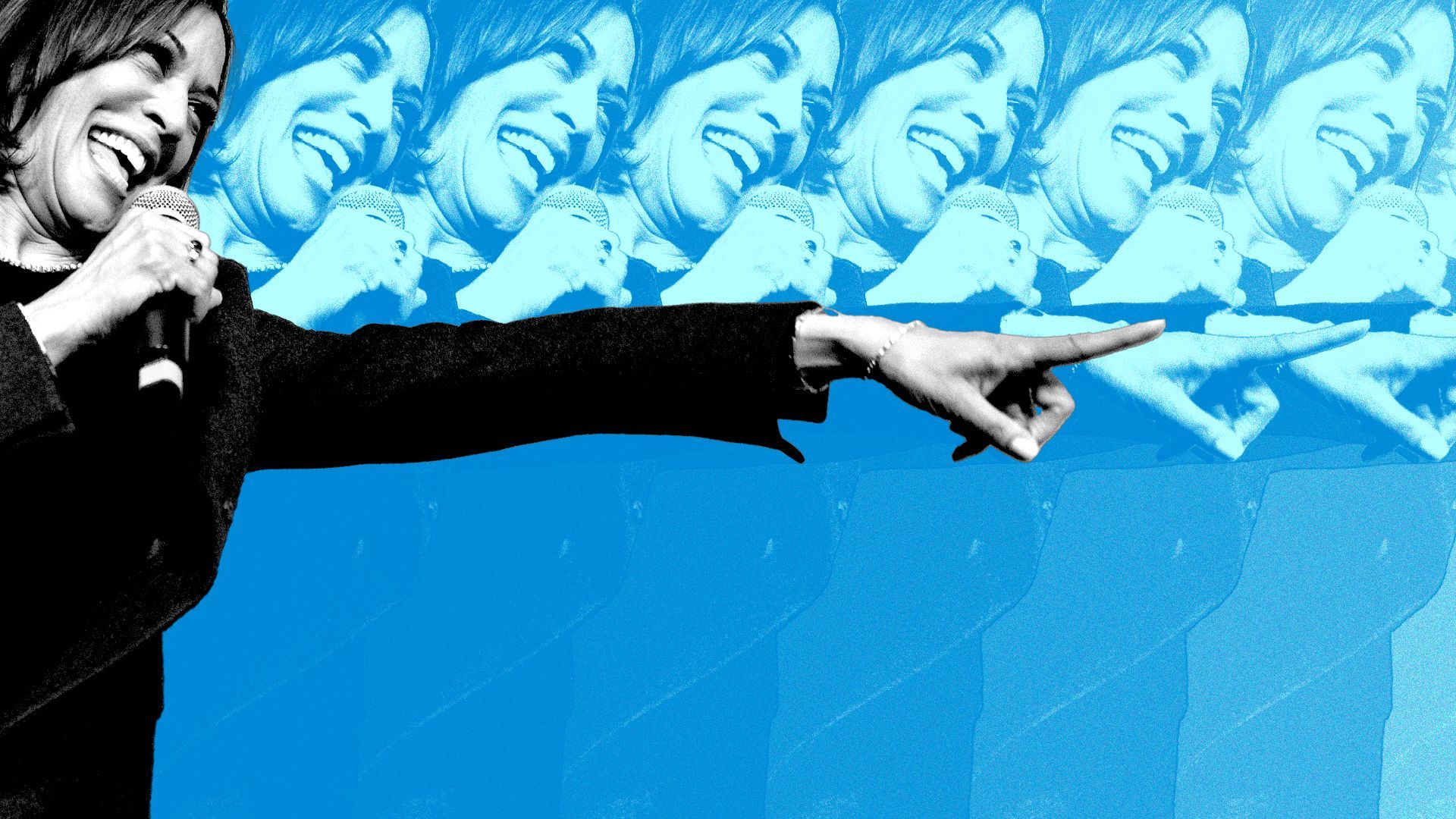
Photo illustration: Brendan Lynch/Axios. Photo: Daniel Acker/Bloomberg via Getty Images
Kamala Harris, presidential candidate, has proved herself unafraid of chasing votes with populist policy promises — no taxes on tips! money to buy houses! — that abandon orthodox economics.
Why it matters: Such policies tend to elicit eye-rolls from economists, who see them as counterproductive and say they would push up prices and worsen the inflation problem they're attempting to address.
- Mainstream left-leaning economic pundits including Jason Furman, Ernie Tedeschi, the Washington Post editorial board, Josh Barro, and Catherine Rampell have all criticized the Harris campaign's proposals.
The big picture: Sound politics doesn't always align with sound economics. In an election both sides are treating as existential, political considerations often trump other practicalities.
- Most economic policies can be placed somewhere on a spectrum from "sensible" to "unhelpful" to "harmful."
- The paradox of democracy is that many of the worse policies also tend to poll very well, especially among swing voters. The job of politicians, at least when they're campaigning, is to espouse the kind of policies that Americans want to vote for.
Zoom out: The main concern of voters is high prices — a complaint which is referred to using the word "inflation."
- Both Harris and Trump are focusing their economic policies on ways to alleviate the pain of high prices — which they, too, call "inflation."
- Economists, on the other hand, have broadly declared the fight against inflation to be won, and are beginning to be more worried about employment.
Between the lines: A large part of Harris' economic agenda involves providing voters with more cash to pay for high-priced goods.
- She wants to expand the child tax credit and the earned income tax credit — and she also wants to provide $25,000 in down payment support for new homebuyers. (More on that below.)
- Harris also wants to ban price gouging at the grocery store — something that polls well on the campaign trail, even as it's hellishly difficult to define or implement in practice.
Zoom in: Harris promised in Nevada — a key swing state with a disproportionate number of service-industry workers — that she would eliminate taxes on tips, matching a two-month-old Trump pledge.
- That policy, too, tends to underwhelm economists who point out that it would help very few workers while also encouraging tip-weary consumers to tip even more, for ever more services.
- Still, it plays well with the powerful Culinary Union in Nevada.
How it works: If Harris were to stick firmly to "more of the same" policies that don't directly and immediately promise to give voters more spending power, she could end up losing votes to an opponent whose policies are more popular and less sensible.
- If on the other hand she embraces "gimmicks" on the more populist end of the spectrum, that can effectively defuse a key rationale for voting Trump.
- After all, voters who believe in economic orthodoxy are almost certain to continue to vote for Harris so long as she continues to be more sensible than Trump. And voters who prefer populist red meat can now find their preferred protein in both candidates' agendas.
State of play: While Trump's policies are almost entirely populist, many of Harris' economic proposals do receive high marks from economists.
- Raising the minimum wage helps to decrease inequality, for instance, while targeted assistance, through the child tax credit and the earned income tax credit, is generally less fiscally damaging than broad-based tax cuts.
The bottom line: "The parties are trying to outcompete each other by effectively buying votes," Marc Goldwein of the Committee for a Responsible Federal Budget tells Axios' Emily Peck.
- "That's not a good way to govern," he adds.
- That said, it could be an entirely rational way of getting elected.
Go deeper... Behind the Curtain: The Harris plan to redefine herself
