Tim Walz and Warren Buffett exemplify two ways to achieve financial security

Add Axios as your preferred source to
see more of our stories on Google.
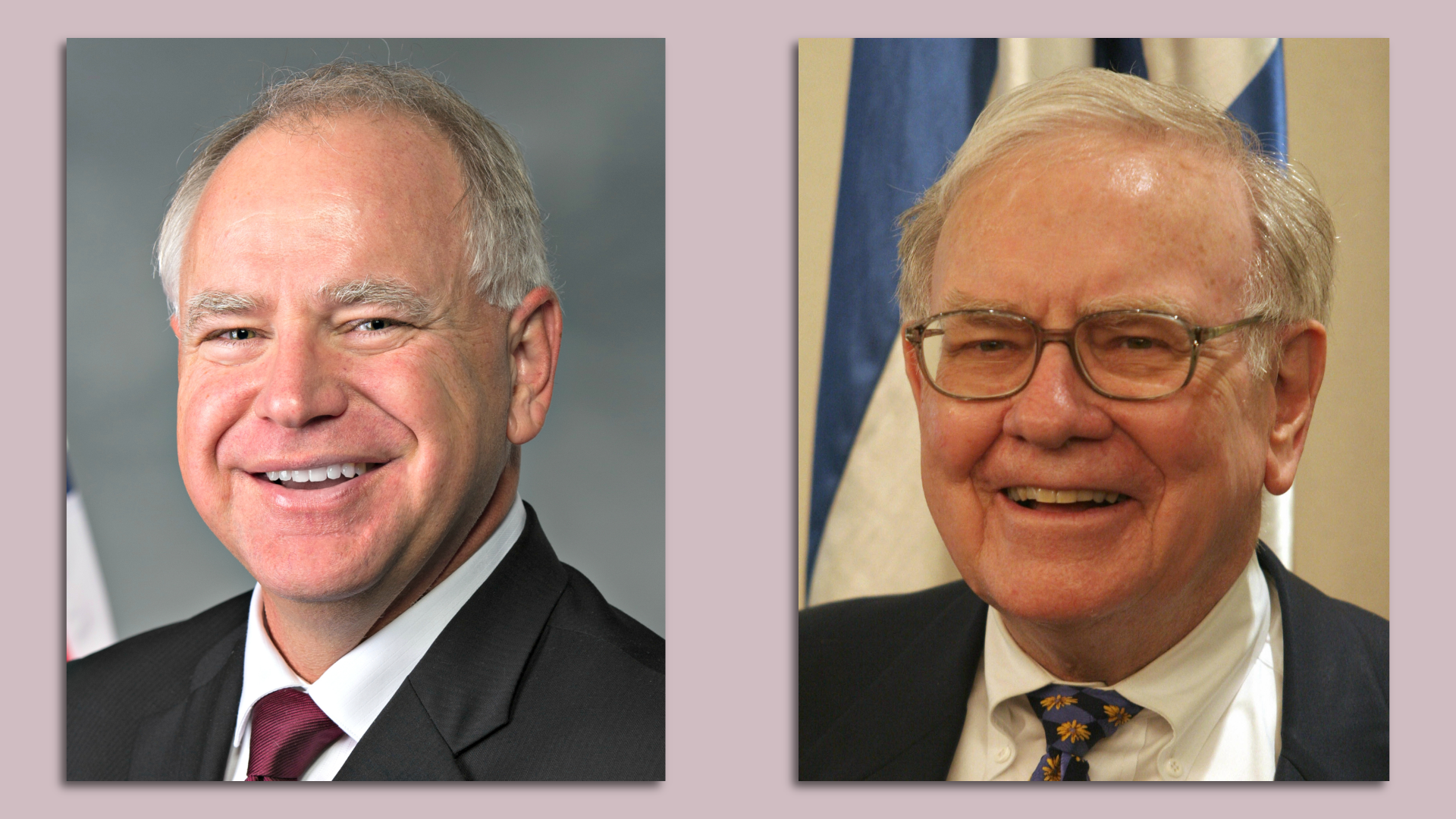
Tim Walz, left, and Warren Buffett. Photos, via Getty Images: HUM Images/Universal Images Group; Gali Tibbon/AFP
Tim Walz and Warren Buffett, two genial sons of the Midwest, exemplify the socialist and capitalist visions of financial security.
Why it matters: Neither is really possible without the other.
Follow the money: Walz owns no stocks, not even in mutual funds or ETFs; his net worth is in the low six digits. Buffett owns shares worth $136 billion.
Between the lines: Walz lives in public housing (the Minnesota governor's mansion) and owns no real estate. He and his wife earned $166,719 in 2022 — a decent middle-class salary, but not one that affords many luxuries in a family of four.
- Both Walz and his wife, as well as much of their extended family, became teachers. That's a profession where the pay is often modest but still generally comes with a defined-benefit pension.
The big picture: Walz exemplifies how neither wealth nor a high income is necessary to live a happy and fulfilling life with great career success.
- His financial security comes largely from the state, which provides his income, housing, health care and pension for his valuable labor.
- Walz's daughter, Hope, is a social worker who graduated from Montana State University, while his son, Gus, is still in high school. Neither will be expecting a significant financial inheritance, but both will have received the priceless gift of having loving, educated parents who encouraged them to follow their dreams and live their best lives.
The other side: Buffett coveted money from an early age, and grew up to become the richest person in the world.
- He has no pension — indeed, the 93-year-old investor will likely never retire — but he has more than enough wealth to pay for any expense he might ever want or need to incur.
- If wealth is deferred consumption, then Buffett is going to fail in consuming the overwhelming majority of his wealth before he dies.
Where it stands: Buffett is famous for telling Fortune Magazine that the perfect amount to leave children is ''enough money so that they would feel they could do anything, but not so much that they could do nothing.''
- All the same, none of his three children — who will inherit the task of overseeing his fortune — have earned anything like the kind of money necessary to support their lifestyles.
- Each of them can count on having access to substantially anything they want, now and for the rest of their lives.
The intrigue: Both models work in terms of creating happiness, but only one can scale. America can support millions of Walzes, but only a handful of Buffetts.
- The insurance model — where someone like Walz draws on resources only if and when he lives long enough or has health issues — allows wealth to be spread across many people at once.
- On the other hand, millions of Americans' desire to become a billionaire — wealthy enough that building up insurance against future expenses is no longer any kind of motivator — is a large part of what creates the tax revenues that support the insurance model.
The bottom line: Walzes need Buffetts, and Buffetts need Walzes. America's unique greatness emerges when the two appreciate what they owe each other, and when they support each other in their endeavors.
- That means politicians being business-friendly, while businesses and billionaires are happy to pay their fair share in taxes.
