The country's first cargo e-bike share is live in Boston

Add Axios as your preferred source to
see more of our stories on Google.
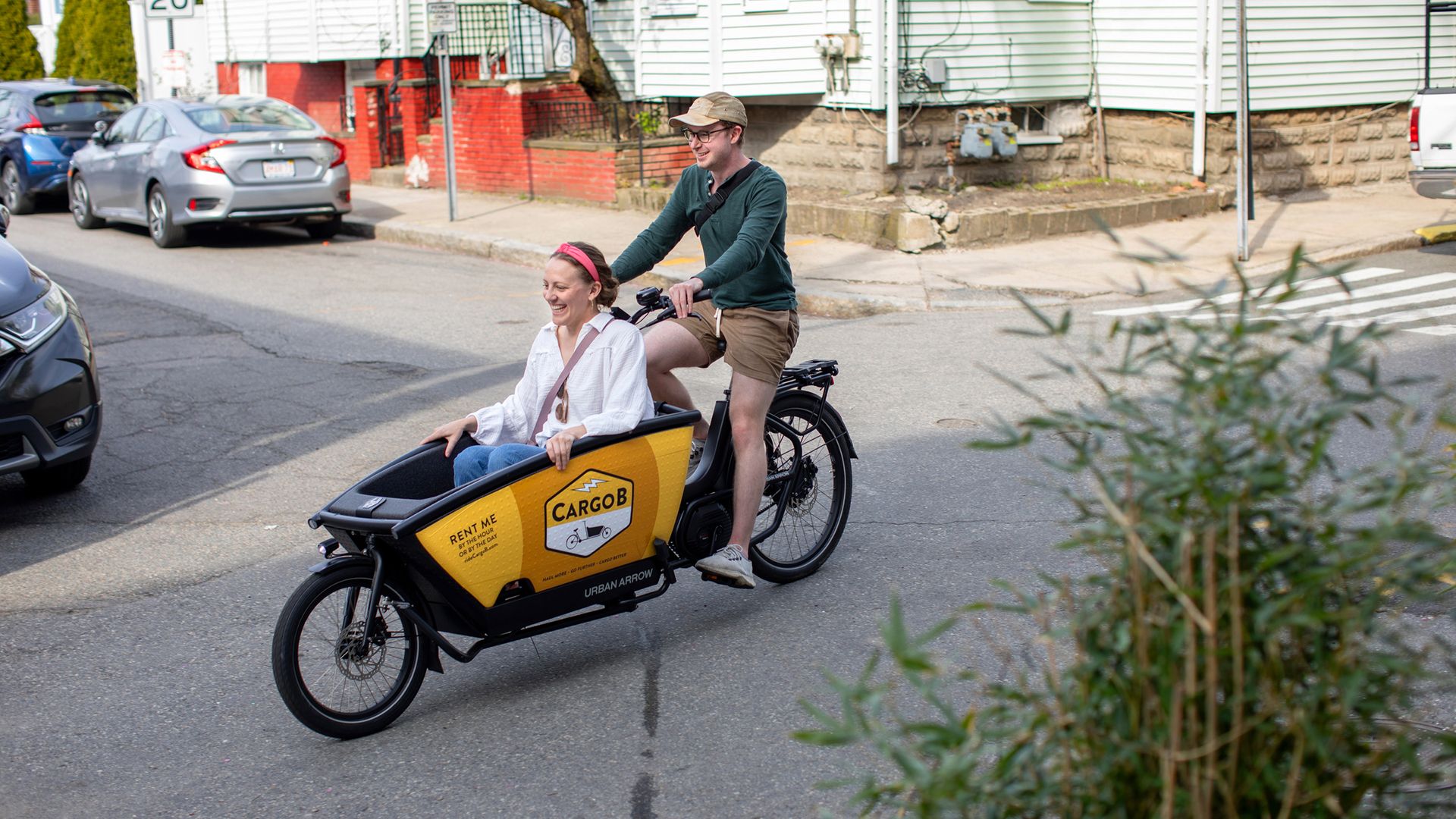
CargoB's Urban Arrow cargo e-bike. Photo: Courtesy of CargoB
A first-in-the-nation bike-sharing program specifically offering cargo e-bikes recently launched in the Boston area.
Why it matters: Bike-share services — like Bluebikes in Boston, Citi Bike in New York City and Divvy Bikes in Chicago — have proven remarkably popular, offering people an alternative transportation option in big cities without the hassles of bike ownership.
- But cargo e-bikes are closer to an actual car replacement, with lots of room for groceries and other goods — or even passengers.
Driving the news: CargoB, the new Boston operation, is starting off with a small fleet of bikes from Urban Arrow, a favorite among cargo e-bike fans.
- It costs $2.50 to unlock a CargoB bike using a dedicated app. Then it's 25 cents a minute until you bring the bike back to its home station. (That's about the same price Boston's Bluebikes charges for single rides on its non-cargo e-bikes.)
- The bikes get about 30 miles of range on a single charge, CargoB says.
- And they're pedal-assist — meaning an electric motor helps push you along, making it easier to go long distances or carry heavy loads.
Zoom in: Locals or visitors can find CargoB's bikes in Jamaica Plain, Cambridge and Somerville, with a downtown location coming soon.
- The company has four bikes on offer so far, with two more on the way.
Caveat: CargoB's bikes aren't free floating, so they must be brought back to the location where you picked them up.
- That makes it easier for the startup's small team to manage its fleet without worrying about the bikes' condition or where they wind up.
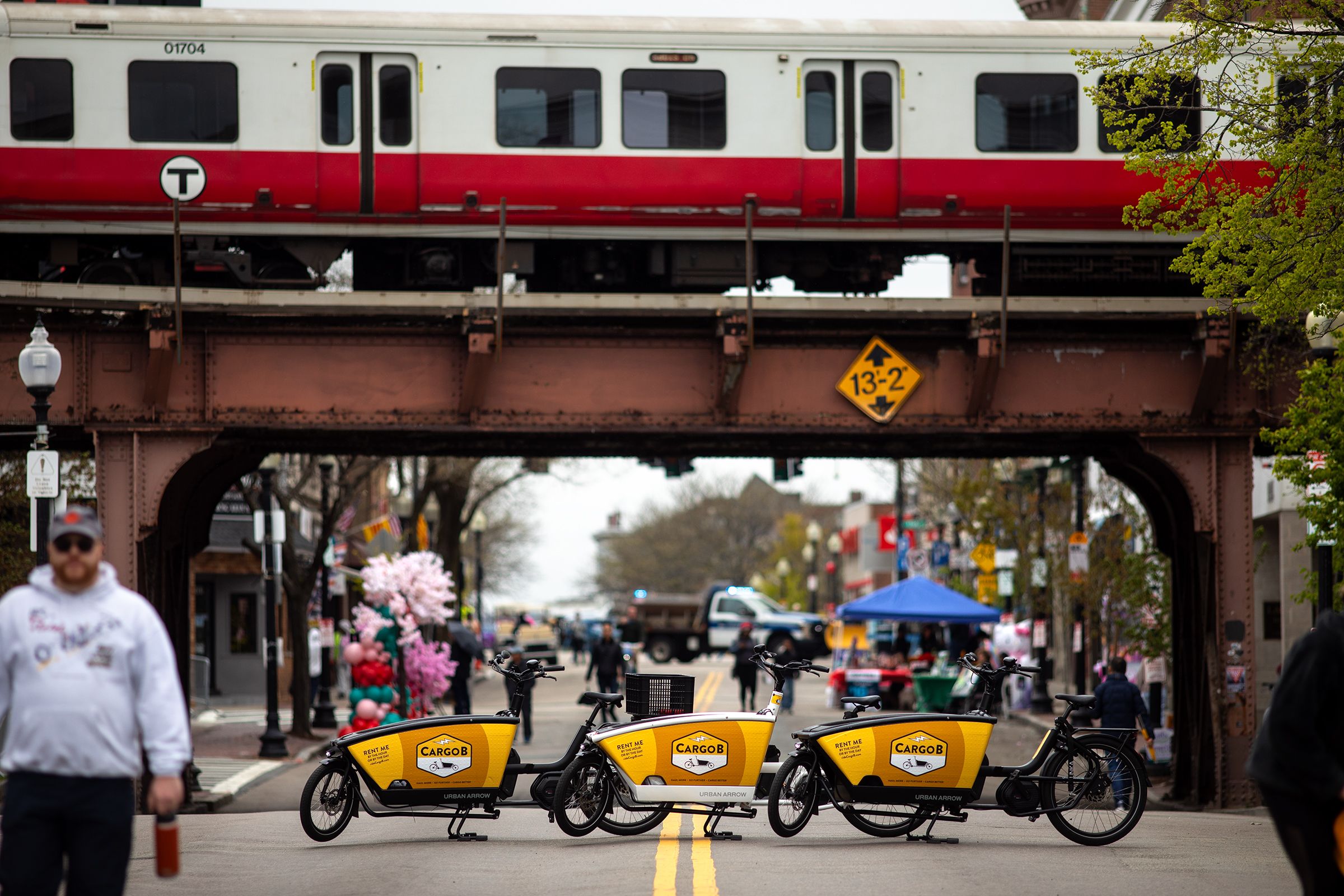
Reality check: Riding any kind of bike in the rain or snow — and Boston gets plenty of both — is only for the most dedicated bikeheads, even with Urban Arrow's rain cover accessory.
- But less hardcore users can always plan around the weather.
What they're saying: "We find ourselves white-knuckling our way through our commutes, and so I'm just like — let's just, where we can, hop on a bike and not have to be so stressed out about things," CargoB co-founder and CEO Dorothy Fennell tells Axios.
- "I could be worried about climate and housing prices and all kinds of stuff," adds Fennell, who's also a transportation planner.
- "But I'm like — okay, what can I control? I know cargo bikes, I know transportation policy, and I know how to stack features on a business to unlock barriers to these things. It's a very small thing that could have a massive impact... getting people out of their car."
The bottom line: Pretty much any time a bike trip replaces a car journey is a win, environmentally speaking.
